

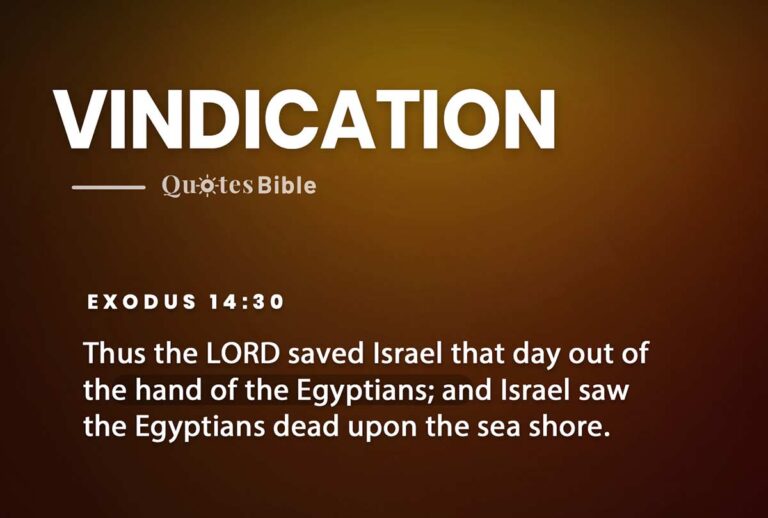
Vindication is a term that resonates profoundly within biblical contexts, holding both moral and spiritual significance. When exploring its intricacies, we uncover layers of meaning that extend beyond mere justification; they touch the very essence of faith, righteousness, and divine justice. In the biblical narrative, vindication often reflects a multifaceted process of establishing truth and restoring one’s reputation. This concept captivates and intrigues, as it not only addresses human adversity but also highlights the celestial principles governing divine interactions with humanity.
To comprehend vindication in the Bible, one must first recognize its occurrences within pivotal narratives. The story of Job stands as a quintessential illustration. Job, a man known for his unwavering faith, experiences a tumultuous series of hardships that challenge his motives and righteousness. His friends arrive with accusations, asserting that his suffering must be a consequence of sin. Yet, through a series of divine encounters, God eventually vindicates Job, restoring his health and prosperity. This powerful moment elucidates the idea that vindication is not merely about defense against false accusations, but also about divine acknowledgment of true righteousness.
Another profound instance is found in the life of King David. A figure marked by both triumph and failure, David’s life oscillates between moments of splendor and desolation. After being wrongfully pursued by King Saul, David expresses deep anguish and despair. His psalms often reflect a yearning for vindication, where he pleads for God to demonstrate His justice. Ultimately, David is restored to his rightful place as king, symbolizing that divine vindication not only reaffirms one’s integrity but also restores community and leadership.
Central to the biblical interpretation of vindication is the theological underpinning of divine justice. This concept introduces a significant dichotomy: human understanding of justice often differs starkly from divine perspectives. The biblical narrative is replete with examples where immediate circumstances may suggest moral chaos, yet the overarching divine order remains intact. This perspective invites an exploration into the patience required in awaiting vindication; a theme resonant in both the Old and New Testaments. The faithful are called to trust in God’s timing, understanding that true vindication may unfold in an eschatological context, where the ultimate relevance of earthly struggles is unveiled.
Moreover, the New Testament amplifies this notion of vindication through the lens of Christ’s passion and resurrection. Jesus, who embodied the ultimate expression of innocence, faced condemnation and brutality. His crucifixion appears to signify a profound injustice; however, the resurrection serves as the pinnacle of divine vindication. By conquering death, Christ not only vindicates His mission but also grants believers assurance of their own justification. This interconnectedness underscores a core theological principle: vindication is inextricably linked with redemption, illuminating the path from condemnation to salvation.
This intricate relationship between vindication and redemption garners fascination—from scholars to lay individuals. It resonates with the human condition’s inherent desire for justice and recognition. Reflecting upon our lives, we often endure moments of unfairness where our character is questioned, our actions misconstrued. In those times of trial, biblical narratives empower individuals with the promise of divine vindication, instilling hope amidst the storm. Additionally, it incites introspection regarding personal integrity and the very nature of justice we wish to see manifest in our lives and communities.
In conclusion, the biblical concept of vindication invites a deeper understanding of justice that transcends earthly measures. It serves as a reminder of divine sovereignty—wherein lies the ultimate truth of our existence. As we navigate our paths, the call to seek righteousness and trust in divine timing remains as relevant today as it was in ancient scripture. Through the lens of vindication, we find solace, purpose, and the assurance that ultimately, truth and justice prevail.

