

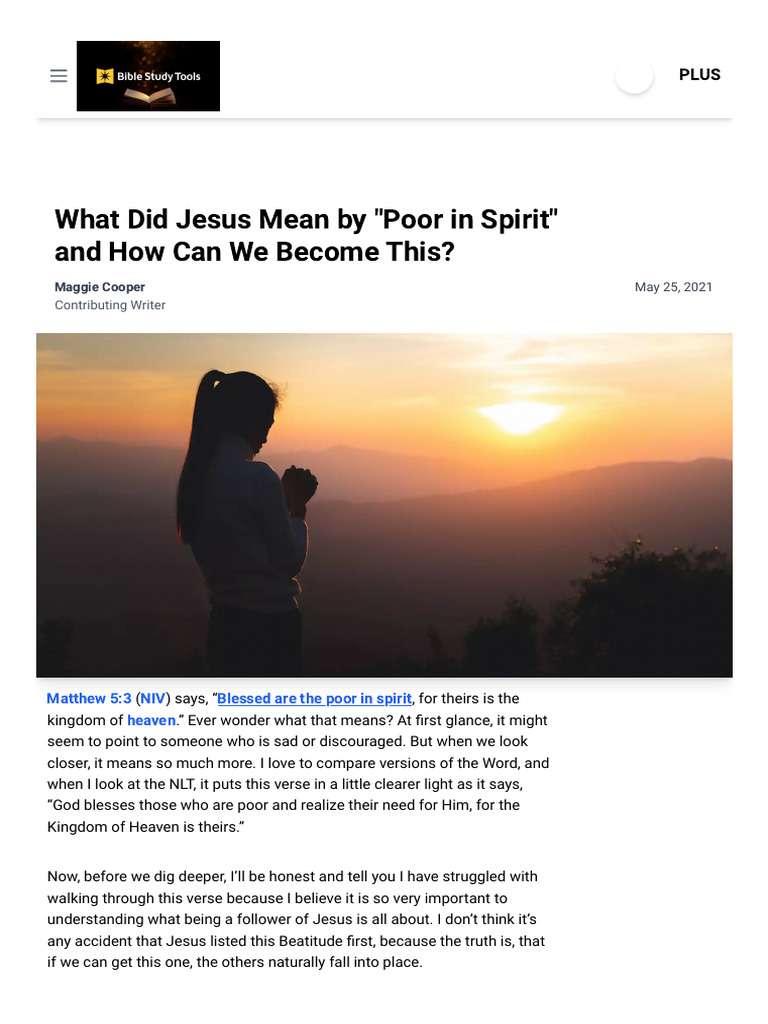
In the vast tapestry of Biblical teachings, the phrase “poor in spirit” emerges as a beguiling enigma, ensconced within the Beatitudes of the Sermon on the Mount. Yet what exactly does it mean to be poor in spirit? At its essence, this concept, rich with spiritual connotation, invites an exploration into the depths of humility and dependence on God.
To begin to unravel this profound notion, one must envision the metaphor of a barren tree, standing against the horizon. Though stripped of foliage—a semblance of vitality—it possesses potential, its roots firmly anchored in the soil, drawing sustenance and life from unseen sources beneath the surface. Similarly, being poor in spirit is akin to acknowledging one’s own spiritual barrenness, a posture of humility that recognizes our need for divine intervention and grace.
In contrast to worldly wealth, which often breeds pride and a sense of self-sufficiency, poverty in spirit encourages an embracing of vulnerability. This is not a defeatist mindset; rather, it embodies a willingness to confront our intrinsic shortcomings. It is a call to recognize that human effort alone is insufficient in the face of existential questions and spiritual realities. Just as a thirsty traveler seeks water in the desert, the spiritually impoverished are those who yearn for the living waters that only Jesus can provide.
Moreover, to be poor in spirit is to release the burden of self-reliance. In societies that value dominance and achievement, this attitude can seem counterintuitive. However, it is precisely within this surrender that one finds an extraordinary paradox: strength manifests through weakness. The humble heart, stripped of pretensions, finds solace in the acknowledgment that reliance on God is the gateway to true empowerment. The Apostle Paul encapsulates this truth when he famously states, “My grace is sufficient for you, for my power is made perfect in weakness.” This poignant affirmation underscores that fragility can be the crucible through which divine grace flourishes.
Furthermore, embracing a poor-in-spirit disposition engenders profound empathy. As individuals recognize their own spiritual neediness, they become attuned to the collective struggles of humanity. This awareness shapes a compassionate worldview, one that motivates individuals to offer assistance, validation, and love to those who find themselves ensnared by the trials of life. The act of walking alongside others, bolstered by a shared understanding of vulnerability, fosters deep connections that transcend superficiality.
In exploring the implications of being poor in spirit, it is essential to consider the ultimate outcomes of such an ethos. Not only does this humble posture invite an authentic connection with the Divine, but it also facilitates a transformative process within the individual. The recognition of spiritual poverty paves the way for enrichment—a kind of soul metamorphosis. When one submits to the refining fire of God’s grace, they emerge as gold, imbued with wisdom, compassion, and strength.
In conclusion, to be poor in spirit is to embark on a journey from barrenness to spiritual abundance. This paradoxical truth invites believers into a deep, relational understanding of God as the source of all sustenance, healing, and strength. In a world often obsessed with self-sufficiency and pride, the call to spiritual poverty resonates like an echo of refreshing clarity. It invites us to relinquish the façade of strength and embrace the profound beauty found within our own fragility—a path illuminated by grace, compassion, and a deep-seated reliance on the Divine.

