

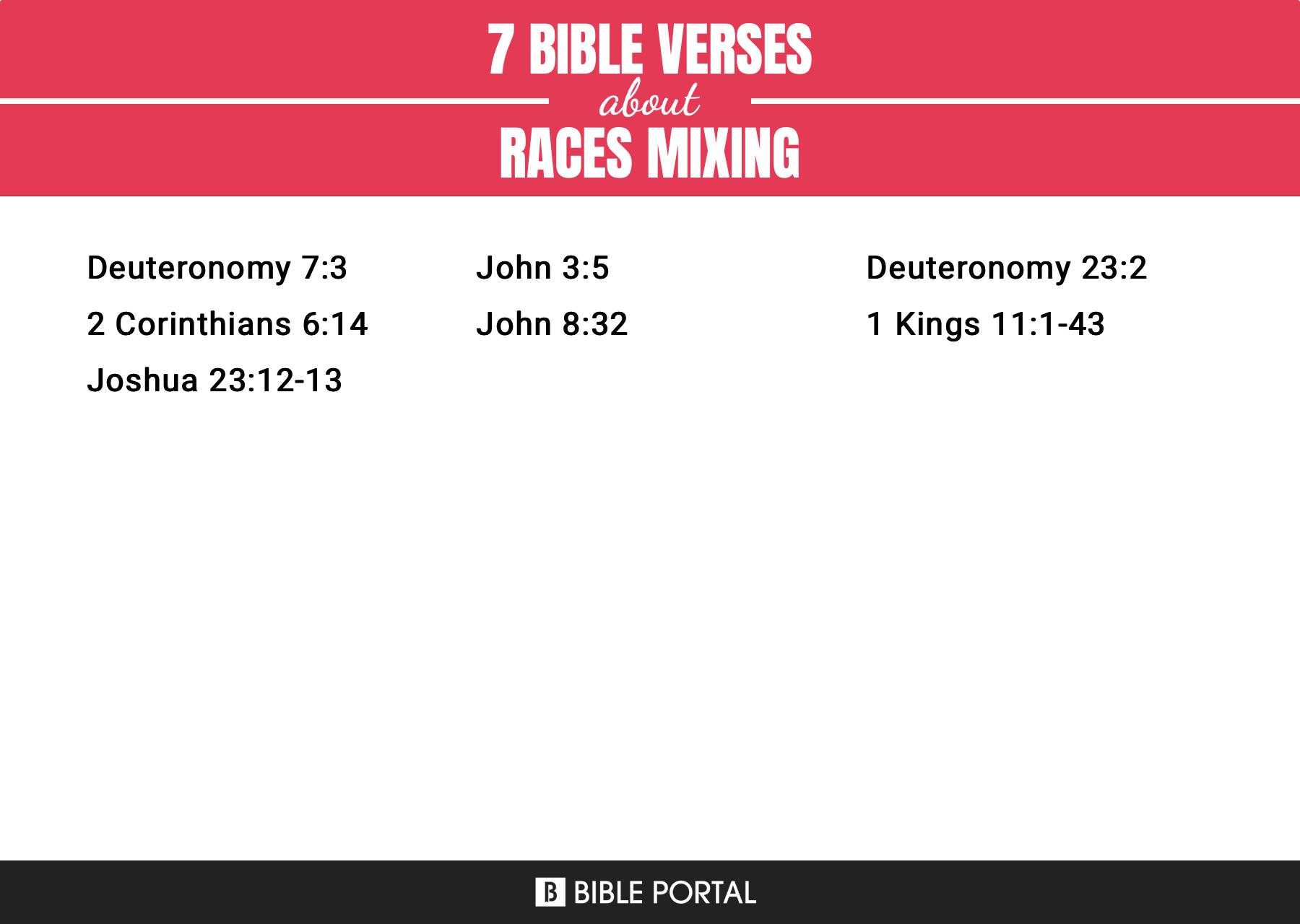
As society continues to evolve, the concept of race and its implications reverberates through various dimensions of human interaction. Intriguingly, the Bible offers a plethora of insights regarding the subject. The perception of races mixing has long been a topic fraught with misconceptions and prejudices. However, a closer examination of biblical texts unveils profound truths that challenge such biases and encourage unity.
One of the central tenets found in scripture revolves around the idea of creation. Genesis 1:27 states, “So God created mankind in his own image.” This verse underscores the inherent dignity and value of every individual, irrespective of their racial or ethnic background. Hence, if all humanity bears the divine image, the implications are vast—racial differentiation should not draw lines of division but, rather, serve as a canvas for humanity’s tapestry.
Furthermore, the narrative of the Good Samaritan in Luke 10:25-37 serves as a poignant reminder of the importance of transcending ethnic barriers. The story illustrates that true neighborliness is characterized by compassion rather than prejudice. It is an imploring call to embrace one another, breaking down the silo of racial stereotypes. Through this parable, the Bible beckons individuals to reexamine their perceptions and relationships with others, particularly those from different backgrounds.
In addition to those narratives, the Apostle Paul contributes significantly to this discourse. In Galatians 3:28, he proclaims, “There is neither Jew nor Gentile, neither slave nor free, nor is there male and female, for you are all one in Christ Jesus.” This radical statement boldly asserts that, in the eyes of God, race, social status, and gender are rendered inconsequential. Instead, the focus shifts to unity and equality in Christ, a revolutionary promise that reverberates through the ages.
Moreover, the Bible depicts the atonement of Christ as a unifying force. In Ephesians 2:14, it articulates, “For he himself is our peace, who has made the two groups one and has destroyed the barrier, the dividing wall of hostility.” This passage suggests that through Christ’s sacrifice, the chasm created by racial divisions is bridged, ushering in an era of reconciliation and harmony. Such proclamations challenge contemporary societal norms, invoking readers to reconsider their stances toward racial mixing.
Additionally, the Book of Revelation presents a vivid scene of the culmination of God’s promise of diversity within unity. In Revelation 7:9, the vision of a multitude “from every nation, tribe, people, and language” standing before the throne of God reinforces the divine intent for a harmonious coexistence among varied races. This eschatological image stirs curiosity and anticipation, suggesting that God’s ultimate plan embraces all of humanity’s colors and cultures.
As one reflects on these teachings, it compels an introspective examination of personal biases and societal norms. The scriptural admonitions beckon individuals to shed prejudicial views and embrace a broader perspective that acknowledges the beauty in diversity. In a world increasingly polarized by race, the Bible’s assertions serve as an invitation to foster inclusivity and understanding. By recognizing that diversity is not merely tolerated but cherished in the divine narrative, one can embark on a transformative journey toward unity.
In conclusion, the biblical perspective on mixing races is multi-layered and rich with promises of unity, equality, and reconciliation. It encourages a departure from outdated stereotypes and a journey toward a more inclusive society, where differences are celebrated rather than viewed as divisions. The dialogue initiated by these scriptures holds the potential to radically shift how individuals perceive race mixing, challenging them to envision a world where all are seen as one.

