

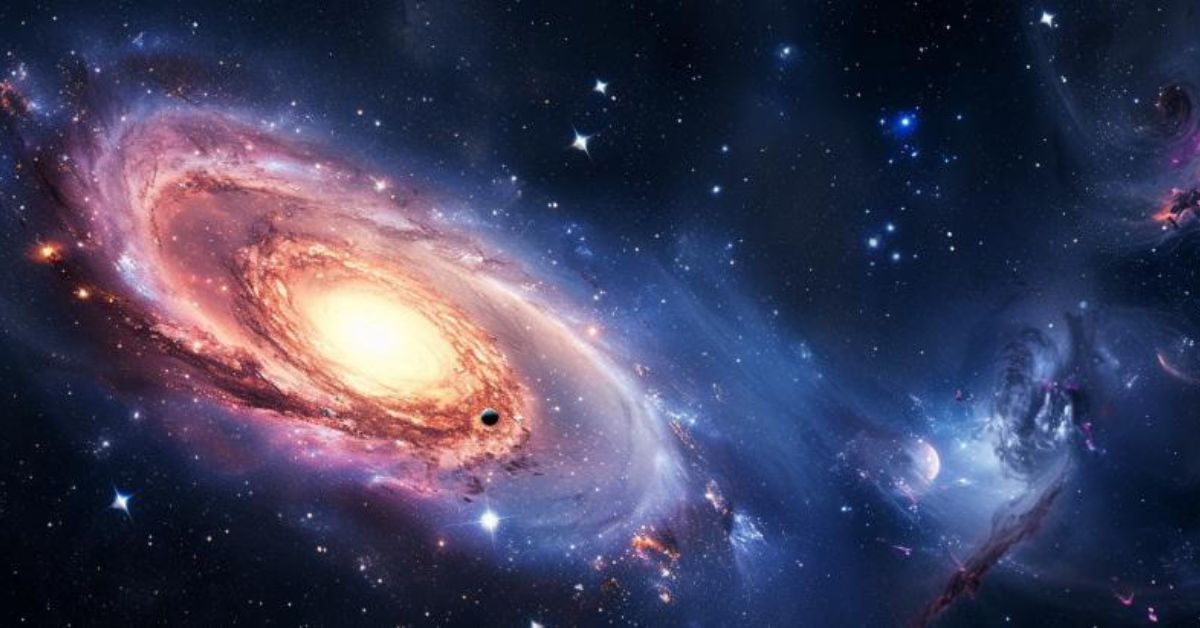
When contemplating the cosmic expanse of the universe, one might wonder about the celestial narratives woven into the fabric of sacred scripture. The question arises: what does the Bible elucidate about the vastness beyond our own galaxy? While the scriptures primarily focus on earthly matters and the relationship between humanity and the divine, they touch momentarily on the grandeur of the cosmos—a theme rich with metaphorical significance and spiritual contemplation.
The Genesis narrative introduces us to the Creator, whose omnipotence is illustrated through the act of creation itself. “In the beginning, God created the heavens and the earth,” opens a portal into a universe teeming with possibility. While these verses do not specify galaxies as we understand them today, they offer a grand depiction of a universe filled with stars, planets, and mysteries yet to be unraveled. The heavens, akin to an expansive, cosmic tapestry, serve as a backdrop for the divine story that unfolds. They suggest a cosmos resplendent with splendor and depth far beyond the confines of our own Milky Way.
As one navigates through the Bible, passages referencing stars and celestial bodies abound. Consider Psalm 19:1, “The heavens declare the glory of God; the skies proclaim the work of his hands.” Here, the heavens resonate with a symphony of praise, a testament to the Creator’s ingenuity. This imagery evokes the vastness of the night sky, where innumerable stars twinkle like scattered diamonds, captivating the imagination and inviting awe. Although the text doesn’t explicitly mention galaxies, it significantly hints at a universe inhabited by countless celestial wonders, each a reflection of divine craftsmanship.
In the prophetic literature, the use of cosmic imagery is profound. The book of Isaiah speaks of God stretching out the heavens like a curtain and laying the foundations of the earth (Isaiah 40:22). Such language encourages us to envision a cosmos that extends far beyond our earthly perception, inviting contemplation of galaxies that might exist beyond the veil of our understanding. Here, the metaphor of stretching resonates powerfully, suggesting an unfathomable universe where divine creativity knows no bounds.
Furthermore, the New Testament enriches this celestial dialogue. The Apostle Paul, in his epistles, articulates a vision of believers as “children of light” who are called to shine in a world lit by the brilliance of Christ. This notion extends to the cosmos—our lives reflect the light of the divine, suggesting that the influence of light and goodness may permeate beyond our earthly realm into the galaxies that spiral in the vast unknown.
As one contemplates these themes, it is essential to acknowledge the Bible’s primary focus on humanity’s spiritual journey rather than offering a scientific treatise on the cosmos. Nevertheless, the scriptures resonate with the idea that the creation extends beyond earthly confines, invoking a sense of wonder about other possible galaxies, life forms, and celestial phenomena existing beyond our present comprehension. The implicit message is clear: the universe, with its myriad galaxies, serves as a stage for the divine narrative that connects all creation.
In conclusion, while the Bible does not explicitly spell out references to other galaxies, it invites readers to ponder the grandeur of creation as a whole. Just as the stars scatter across the infinite skies, the essence of the divine permeates through the cosmos, beckoning us to explore the mysteries that lie ahead. Each celestial body, whether ancient or undiscovered, dances in harmony with the biblical narrative—a narrative that transcends time and space, endlessly inviting humanity to ask, ponder, and seek in the endless tapestry of the universe.

