

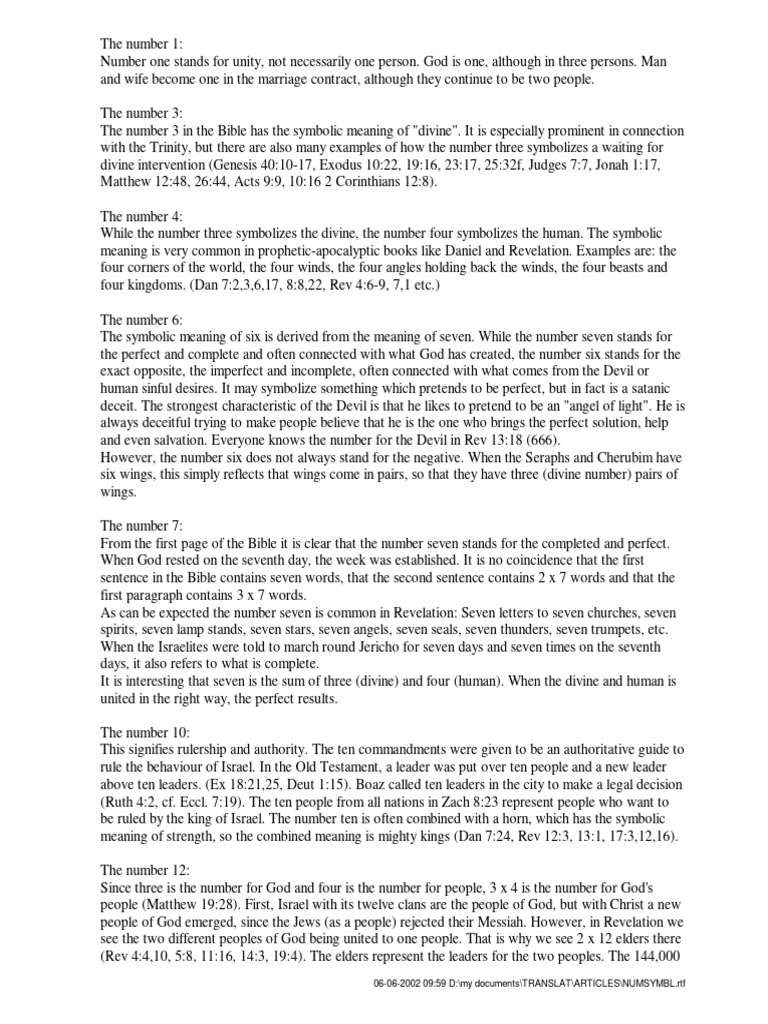
Have you ever paused to ponder the significance of numbers in the Bible? Numbers, often perceived as mere symbols of quantity, can hold profound spiritual meanings that invite contemplation. Among these, the number two stands out, brimming with duality and partnership. What does it mean, and how can an exploration of this numeral uncover hidden depths in biblical narratives?
The number two is prominently featured throughout Scripture, symbolizing division as well as unity. This contradiction ostensibly poses a challenge: How can something that signifies separation also embody harmony? At its core, the number two often represents relationships, particularly the covenantal bond found within marriage and companionship. The foundation of human relationships can be traced back to the creation narrative in Genesis, where God proclaims, “It is not good for the man to be alone; I will make a helper suitable for him” (Genesis 2:18). The introduction of Eve directly illustrates the significance of duality—a partnership designed for mutual support and shared destiny.
Beyond the domestic realm, the number two resonates within the broader theological context. The two Testaments of the Bible—the Old and the New—demonstrate a continuity of God’s unfolding plan for humanity. The Old Testament establishes the groundwork of divine principles, while the New Testament reveals their fulfillment through Jesus Christ. Together, they represent a complete narrative arc that not only pertains to individual spiritual journeys but also to collective human experiences.
Additionally, the concept of two is reflected in the idea of witness. The Bible frequently emphasizes the necessity of two or more witnesses to affirm truth and validity. For instance, in the Old Testament, Deuteronomy 19:15 states, “A single witness shall not suffice against a person for any crime or for any wrong in connection with any offense that he has committed. Only on the evidence of two witnesses, or of three witnesses, shall a charge be established.” In this way, the number two becomes a cornerstone for establishing accountability and justice within communal religious life.
Shifting to the New Testament, the significance of two can hardly be overstated. When Jesus sent out His disciples, He intentionally paired them. “He sent them out two by two” (Mark 6:7). This structure not only fosters collaboration but ensures that they can support one another in their quest to spread the Gospel, reflecting the fundamental belief in fellowship. Interestingly, this pairing can also symbolize the interconnectedness of faith communities—spiritual camaraderie that amplifies the message of hope and redemption.
Moreover, the duality inherent in the number two serves as a metaphor for the spiritual struggle within each individual. The Apostle Paul vividly articulates this in Romans 7:15-20, where he elaborates on the conflict between the flesh and the spirit. This ongoing battle illustrates the tension between two opposing forces—the carnal desires versus the divine purpose—highlighting the complexity of human existence.
As we delve deeper into the meaning of the number two, we are reminded of the importance of balance. This numeral invites individuals to cultivate harmony amid disarray. It challenges us to seek partnerships in our lives, whether in our personal relationships or communal worship. The biblical narrative surrounding the number two becomes an invitation to embrace unity amidst diversity, fostering inclusivity and understanding.
In conclusion, the number two in the Bible encapsulates a rich tapestry of meanings that encourage reflection on partnership, accountability, and internal conflict. As we navigate the intricate narratives of Scripture, we are invited to ask ourselves: How can these dualities manifest in our own lives? What does the number two challenge us to reconsider about our relationships and faith? Perhaps, the exploration of such inquiries can lead to a deeper understanding of both the divine and our place within the broader human experience.

