

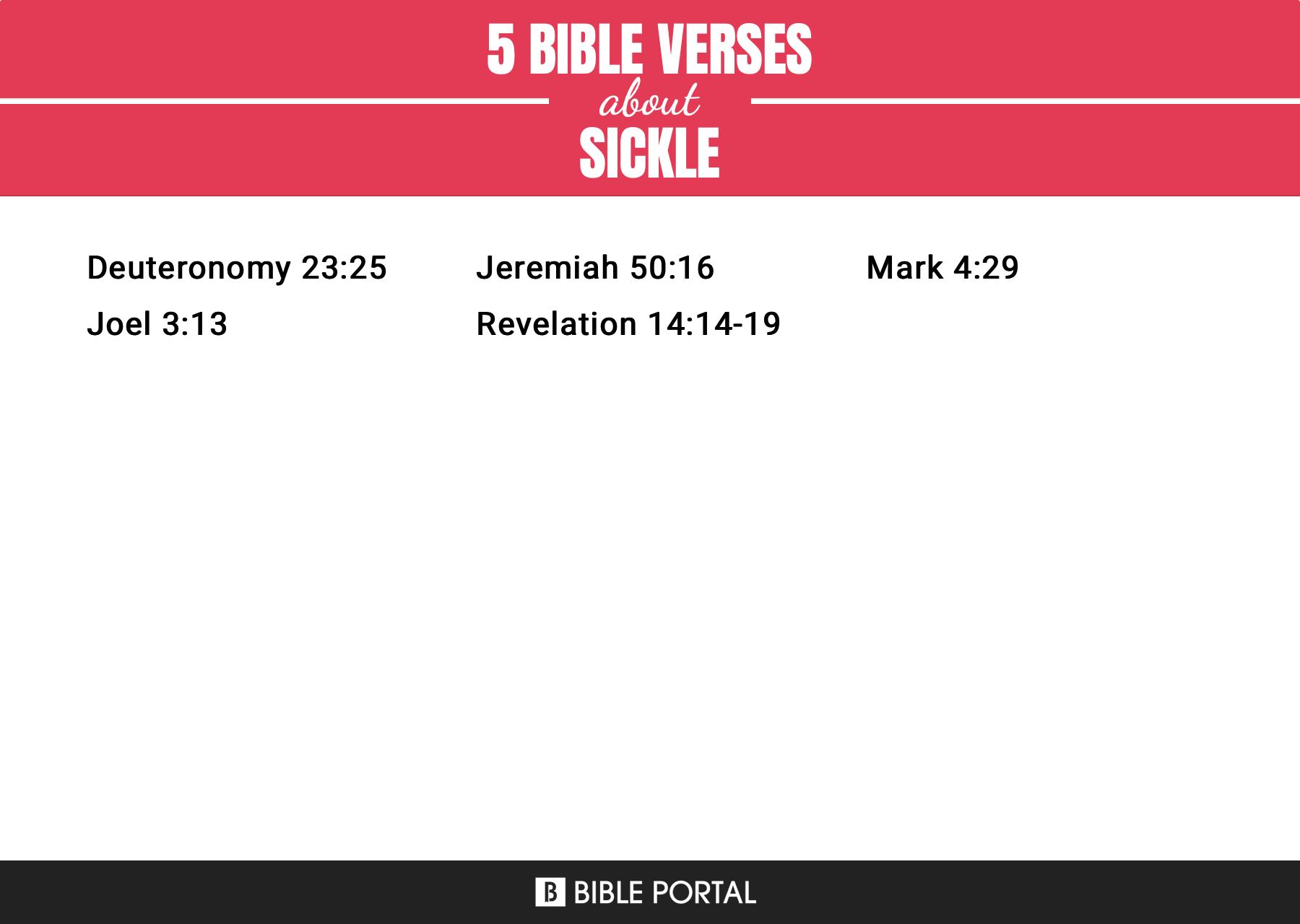
In an era where the utilitarian tools of agriculture fade into obscurity, the sickle remains a potent symbol within the biblical narrative, evoking a profound sense of the cyclic nature of life, judgment, and divine providence. Defined as a curved farming tool used for harvesting grain or cutting grass, the sickle transcends its mundane purpose, embedding itself in theological discourse and cultural consciousness.
The sickle features prominently in several passages of scripture, serving as a metaphor for divine judgment and the end of an era. One of the most striking references can be found in the Book of Revelation. Here, the sickle is wielded by Christ Himself to gather the harvest of the earth, a vivid portrayal of the separation of the wheat from the chaff. The imagery evokes a sense of urgency and impending transformation, prompting believers to reflect on their spiritual state and the consequences of moral choices.
This concept of harvesting is rich with implications. Just as the sickle reaps the rewards of diligent labor, it also signifies the retribution that follows wrongdoing. The act of gathering souls, as depicted in biblical texts, hints at a deeper, cosmic order that balances justice and mercy. The harvest metaphor permeates various scripture, illustrating that divine timing is paramount—a reminder that nothing escapes God’s notice and that every action will ultimately bear fruit.
Moreover, the sickle intertwines with themes of abundance and scarcity. In agrarian societies depicted in the Bible, the sickle heralds the fruitful season, a moment of communion with the earth and its Creator. The celebration of harvest festivals not only acknowledges the labor of the hands but also the divine provision that fuels survival. These seasonal cycles foster a communal identity, connecting individuals to each other and to the sacred narrative in which their lives are entwined.
Equally intriguing is the sickle’s representation of spiritual awakening. In the gospels, the call to laborers for the harvest resonates with the urgency of spiritual outreach. Jesus’ exhortation to look at the fields, which are “white for harvest,” serves as a clarion call for believers to engage earnestly in their mission. This dual role of the sickle—not merely as a tool of destruction but also as an instrument of gathering—offers a nuanced exploration of the interplay between grace and accountability.
Interestingly, the sickle’s flexibility as both a literal and metaphorical device positions it at the intersection of life and death. In one breath, it is a symbol of hope, representing God’s bounteous provision; in another, it embodies the finality of divine judgment. This dichotomy illuminates the multifaceted nature of faith, urging adherents to ponder their life’s trajectory and their ultimate alignment with divine will.
Additionally, the motif of the sickle invites contemplation of nature’s rhythms. The agricultural implications remind us of humanity’s profound connection to the land, evoking gratitude and reverence for creation. The act of harvesting is a communal endeavor that reflects not just a physical gathering but also a spiritual unification as individuals come together to celebrate growth, redundance, and renewal.
Ultimately, the sickle in the Bible serves as a powerful emblem of divine sovereignty and human responsibility. It encapsulates the tension between judgment and mercy, fortune and desolation, drawing the faithful into deeper contemplation about their role in the divine economy. Through the lens of this ancient tool, one can glean invaluable insights into the sacred order that governs both earthly and celestial realms, inviting each individual to partake in the ongoing narrative of salvation and transcendence.

