

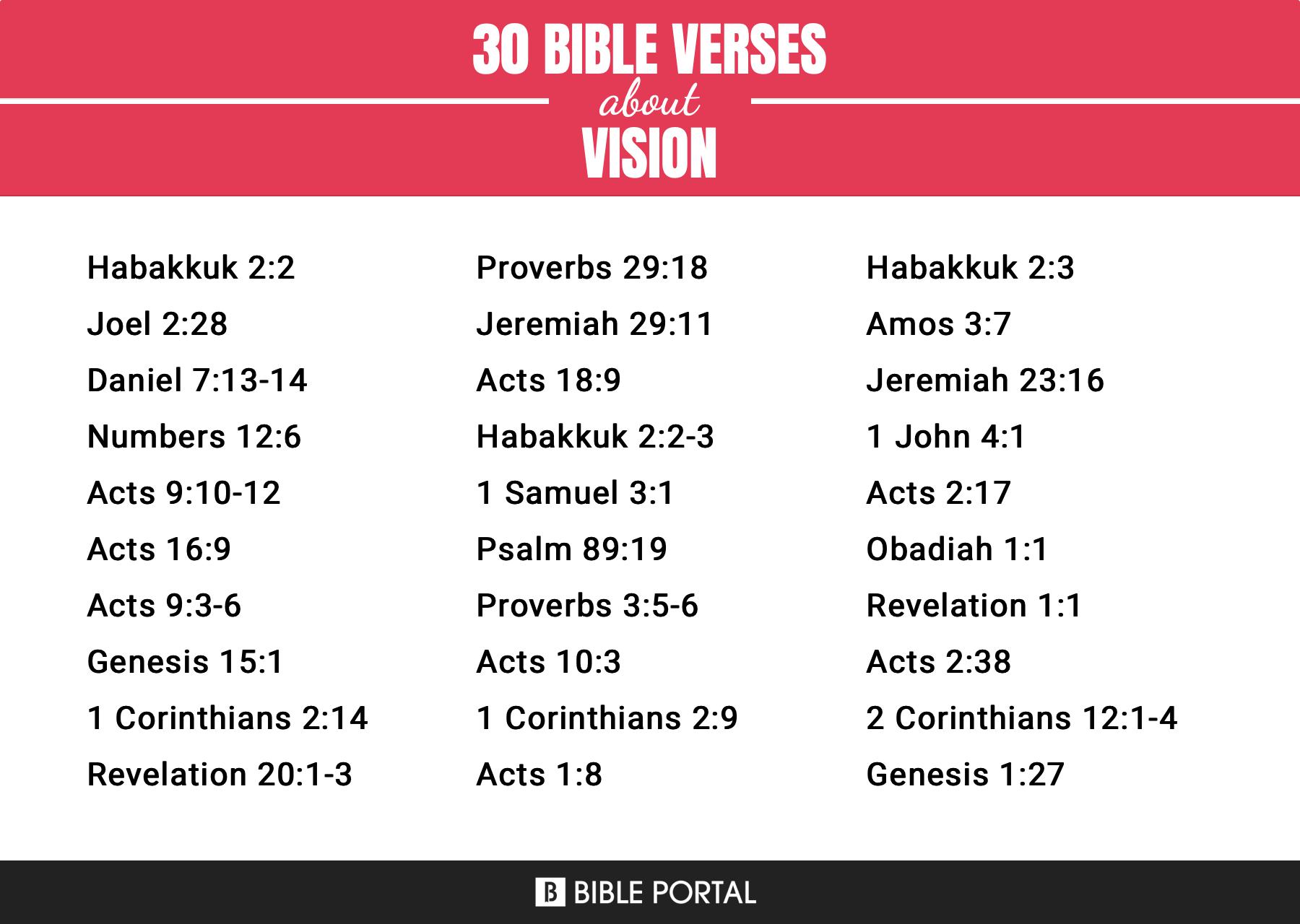
The concept of vision holds a profound significance within the biblical narrative, weaving a rich tapestry of spiritual insight, aspiration, and divine purpose. The Scriptures extol vision not merely as sight, but as an illuminating pathway guiding believers toward a higher calling. From the Old Testament prophets to New Testament revelations, the messages encapsulated about vision invite a transformative rethinking of one’s life and place in the cosmos.
In the Book of Proverbs, wisdom is portrayed as a guiding light, suggesting that a lack of vision can lead to chaos and despair. “Where there is no vision, the people perish,” Proverbs 29:18 succinctly declares, positing vision as an essential cornerstone of life. This verse emphasizes the necessity for clarity and foresight, underlining an intrinsic truth: without a grander purpose, societies become fragmented, languishing in a state of disarray. Vision, therefore, serves as the compass that aligns individuals and communities toward a collective aim.
Moving into the prophetic literature, figures such as Isaiah and Jeremiah intricately weave themes of divine vision into their proclamations. Isaiah 40:31 promises that “those who hope in the Lord will renew their strength; they will soar on wings like eagles.” This profound metaphor not only paints a vivid picture of elevation and liberation but also underscores the emotional and spiritual rejuvenation found in recognizing a greater purpose. This allows the faithful to experience a transformed perspective, urging them to soar above life’s tribulations.
In the New Testament, Jesus often spoke of vision in parables, utilizing everyday scenarios to elucidate deeper spiritual truths. The parable of the blind man, notably chronicled in John 9, serves as a compelling narrative where physical blindness transcends to a metaphor for spiritual blindness. As Jesus engages with the man, he illustrates that true sight extends beyond mere physical perception. The blind man’s subsequent journey from darkness into light symbolizes an awakening—a shift in understanding that ignites curiosity and a thirst for spiritual enlightenment.
Moreover, 2 Corinthians 5:7 states, “For we walk by faith, not by sight,” vividly encapsulating the notion that faith offers a kind of vision that surpasses ordinary understanding. This verse accentuates the essence of looking beyond the superficial and glimpsing the unseen. It promotes an internal transformation where believers are invited to trust in divine orchestrations—a perspective shift that aligns earthly existence with heavenly realities.
The biblical discourse on vision also entails promises of hope. In Habakkuk 2:2, it is written, “Write the vision; make it plain on tablets, so he may run who reads it.” This injunction emphasizes the importance of clarity in one’s life purpose. To document visions, aspirations, and even dreams underscores the imperative to articulate one’s goals. When ambitions are made tangible, they catalyze action and inspire others, fostering a community that rallies together in pursuit of shared aspirations.
Furthermore, vision encourages not only individual transformation but also collective responsibility. With vision comes accountability—the call to guide others toward their own clarity and purpose. In this sense, community becomes a vital aspect of vision; as individuals uplift one another, the potential for a more significant impact increases exponentially. This echoes the sentiment found in Romans 12:2, urging individuals to not conform to the patterns of this world, but to be transformed through the renewing of their minds. Such renewal is inherently linked to the conception of vision—an inner metamorphosis leading to outward manifestation.
In conclusion, the Bible encapsulates multifaceted layers of what vision represents. It is a dynamic interplay of faith, hope, and communal aspiration. Engaging with these texts reveals a profound invitation for believers to explore their own visions, question their perspectives, and embolden their hearts towards a more luminous existence. Exploring biblical perspectives on vision incites curiosity and cultivates a desire to embark on a journey marked by divine revelation and transformative clarity.

