

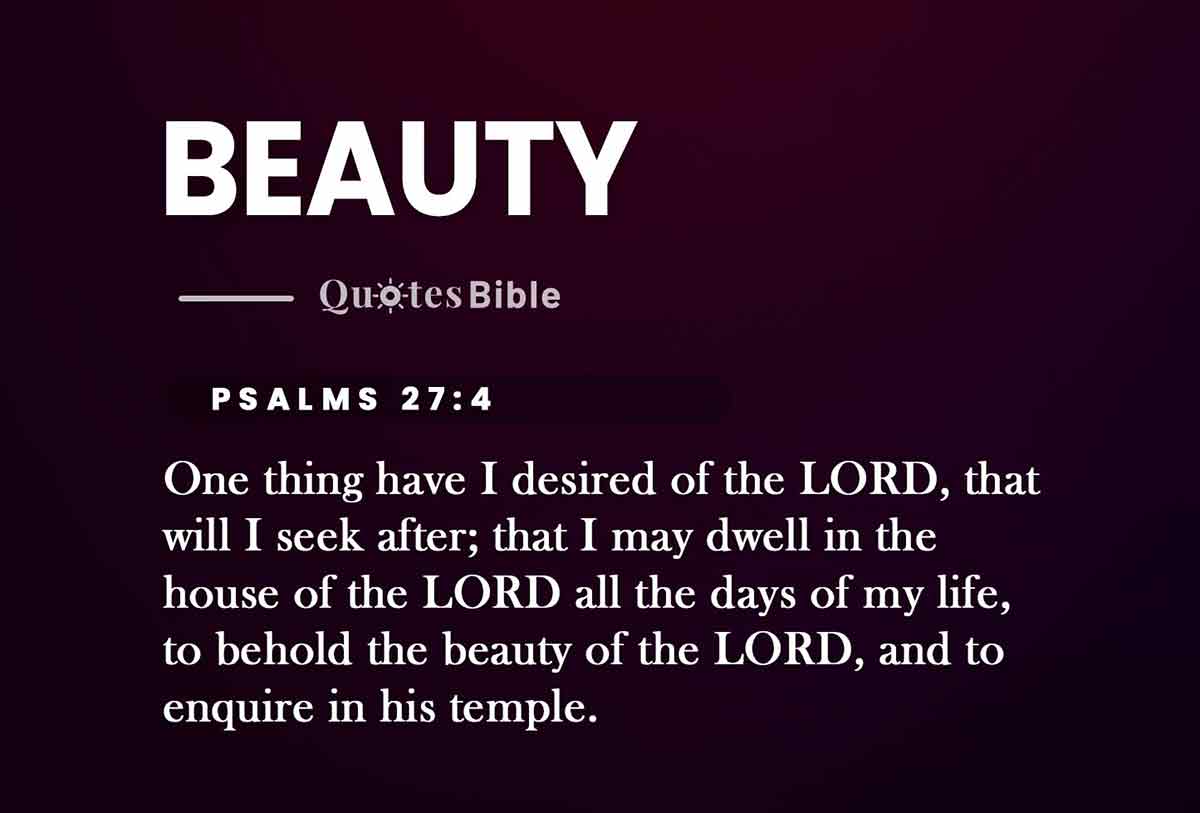
Beauty is a concept that transcends cultural boundaries and temporal constraints, alluring us with its multifaceted nature. The Bible offers a profound examination of beauty, inviting us to reconsider our societal notions of what it means to be beautiful. Instead of merely focusing on the superficial or transient aspects, sacred texts illuminate an inner radiance that stems from virtue, integrity, and the essence of our souls. This exploration impels us to shift our perspectives and delve into a more profound understanding of beauty through biblical scriptures.
In the Old Testament, beauty is often depicted in the context of creation. For instance, in the book of Genesis, the world is termed “very good” after the creation of humankind. This notion of beauty ties intricately with the divine craftsmanship of creation, reflecting a natural order that conveys harmony and perfection. Psalm 139:14 encapsulates this sentiment beautifully, as it proclaims, “I praise you because I am fearfully and wonderfully made.” This acknowledgment not only celebrates individuality but also emphasizes that authentic beauty emanates from our intrinsic value as creations of God.
Delving deeper, the Proverbs vividly articulate the distinction between outward beauty and inner goodness. Proverbs 31:30 notably states, “Charm is deceptive, and beauty is fleeting; but a woman who fears the Lord is to be praised.” This verse challenges the ephemeral allure of physical appearance and elevates the importance of a virtuous character. It suggests that true beauty transcends the mere aesthetic, placing value on grace, kindness, and wisdom. Such internal attributes cultivate a strength and allure that outlasts physical decline, highlighting a deeply rooted spiritual beauty that is enduring and enriching.
Moreover, the New Testament continues this exploration of inner beauty by connecting it with the notion of love and grace. In 1 Peter 3:3-4, it is emphasized that “Your beauty should not come from outward adornment, such as elaborate hairstyles and the wearing of gold jewelry or fine clothes. Rather, it should be that of your inner self, the unfading beauty of a gentle and quiet spirit, which is of great worth in God’s sight.” This powerful reminder shifts the focus away from materialistic embellishments and directs it towards cultivating a serene and compassionate spirit. It posits that such inner beauty resonates not only with divine approval but also profoundly impacts those around us.
As one navigates the myriad verses addressing beauty, it becomes evident that the biblical perspective fosters a transformative journey. This perspective emboldens individuals to embrace their unique attributes, recognizing that divine beauty is not about conformity to societal standards but rather an authentic expression of the self. It invites an exploration of inner qualities such as love, kindness, and faith, thus fostering a holistic perception of beauty that resonates with individuals at a spiritual level.
Ultimately, the Bible’s portrayal of beauty as a blend of inner virtues and divine creation prompts an enlightening shift in how beauty is perceived in our contemporary world. The scriptures inspire an appreciation for the ephemeral nature of outward appearances while encouraging a deeper quest for the intrinsic qualities that truly define us. Perhaps through this lens, beauty can be redefined as an ongoing journey towards developing the soul’s attributes, reminding us that the most resplendent radiance emanates from within.
In conclusion, the biblical discourse on beauty serves as a compelling call to action, urging individuals to transcend superficial standards and seek the truth nestled within their essence. It evokes curiosity, urging a deeper exploration of what makes one genuinely beautiful in the sight of God and humanity alike. In embracing this transformative view of beauty, one may find an unending source of inspiration and fulfillment, illuminating the path towards grace and authenticity.

