

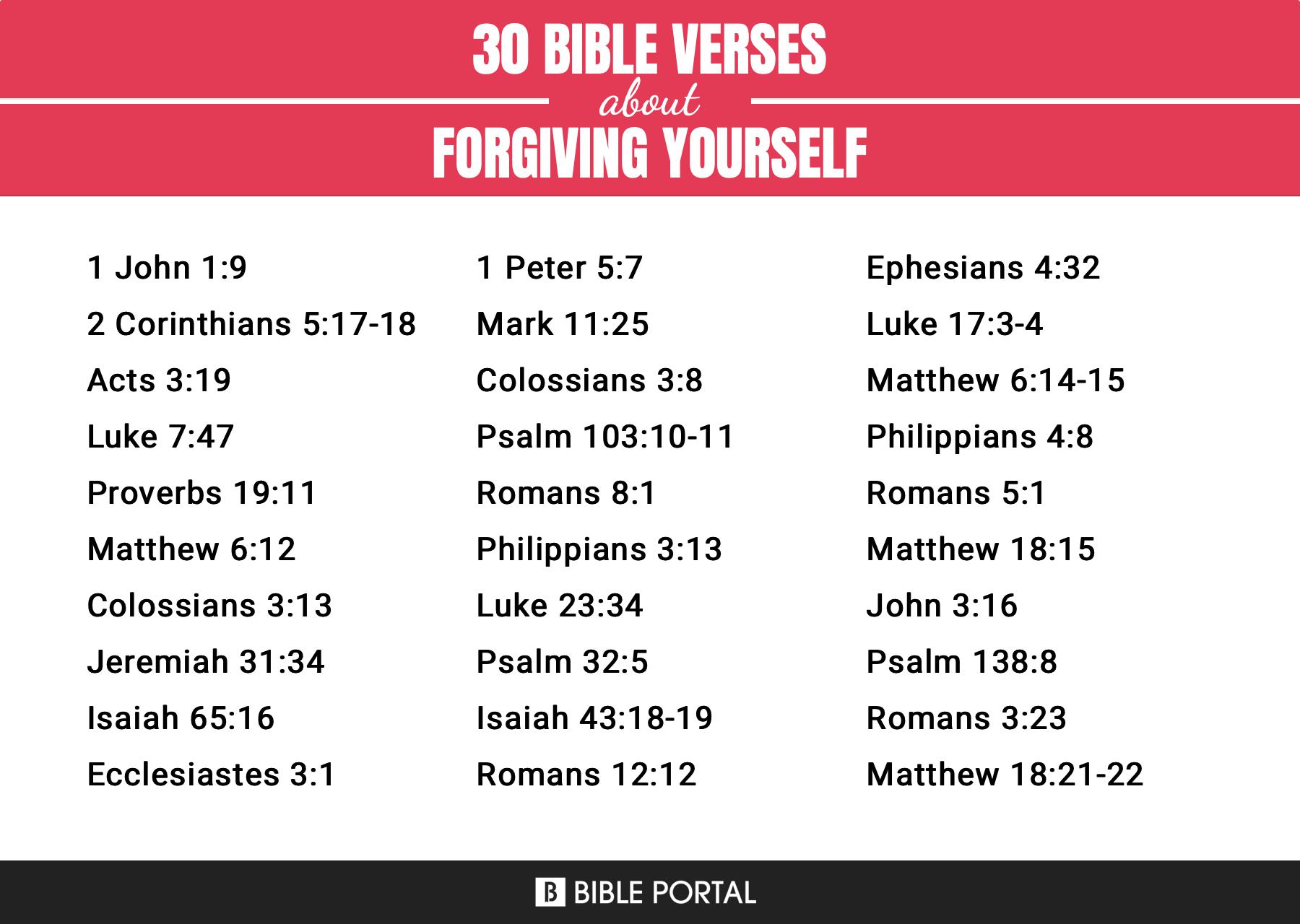
Forgiveness is a profound and often elusive concept in the tapestry of human experience. Within the sacred texts of the Bible, the notion of forgiving oneself emerges as an intricate theme, woven delicately through the verses, inviting contemplation and introspection. In this exploration, we delve into the essence of self-forgiveness, seeking illumination from ancient wisdoms that resonate with contemporary hearts.
To understand what the Bible says about forgiving oneself, one must first recognize the intricate struggle that lies within the human spirit. The weight of guilt and regret can feel like an albatross, heavy and suffocating, as we navigate the sinuous pathways of life. Proverbs 28:13 whispers a gentle admonition: “He who covers his sins will not prosper, but whoever confesses and forsakes them will have mercy.” This verse encapsulates the necessity of confronting our missteps—an act akin to shedding old skin to allow new growth. Just as a tree must let go of its leaves in the autumn, so too must we recognize our transgressions and release the grip of shame that binds us.
The act of forgiving oneself is not merely a fleeting emotion but a profound transformation. Romans 8:1 heralds this metamorphosis with the evocative declaration: “There is therefore now no condemnation for those who are in Christ Jesus.” In this powerful assertion, the possibility of redemption shines through, illuminating the path to self-acceptance. The metaphor of light piercing through a dense fog becomes palpable here; through the tenets of faith, we can navigate the obscured waters of our past and emerge into clarity.
However, understanding self-forgiveness is akin to anchoring oneself amidst a tempestuous sea. Emotions swell and converge, making even the prospect of releasing self-condemnation feel Herculean. Many are haunted by the echoes of their past, imprisoned by memories of perceived failures and ephemeral lapses in judgment. Yet, Philippians 3:13-14 serves as a compass: “Forgetting what is behind and straining toward what is ahead, I press on toward the goal.” The imagery of a marathon runner propelling forward, eyes fixed unwaveringly on the finish line, resonates deeply. It encourages a focus on what lies ahead rather than being ensnared by the shadows of what once was.
The journey to self-forgiveness beckons one to authenticity. Embracing vulnerability can often feel daunting. Yet, James 5:16 exhorts, “Therefore confess your sins to each other and pray for each other so that you may be healed.” Sharing our burdens can serve as cathartic release, fostering a community of understanding and support. In exposing our vulnerabilities, we craft connections that are resilient; these bonds can hold us accountable while simultaneously enveloping us in compassion.
Moreover, the Bible elucidates on the intertwining of forgiveness for others and oneself. Matthew 6:14-15 states, “For if you forgive others their trespasses, your heavenly Father will also forgive you, but if you do not forgive others their trespasses, neither will your Father forgive your trespasses.” This symbiotic relationship accentuates a reciprocal nature—by showing grace towards others, we simultaneously cultivate grace within ourselves. The metaphorical release of an anchor intertwined with the hope of renewal allows for growth; it becomes the catalyst for inner liberation.
Ultimately, self-forgiveness as described within biblical principles is not an insular journey but a communal experience. It invites introspection, connection, and ultimately, transcendent healing. As we traverse the landscape of grace, let us remember that to forgive oneself is to acknowledge our humanity—an intimate dance of imperfection and divine acceptance. With every step we take towards forgiving ourselves, we envelop our hearts in the promise of renewal, much like the dawn that follows a long, dark night.

