

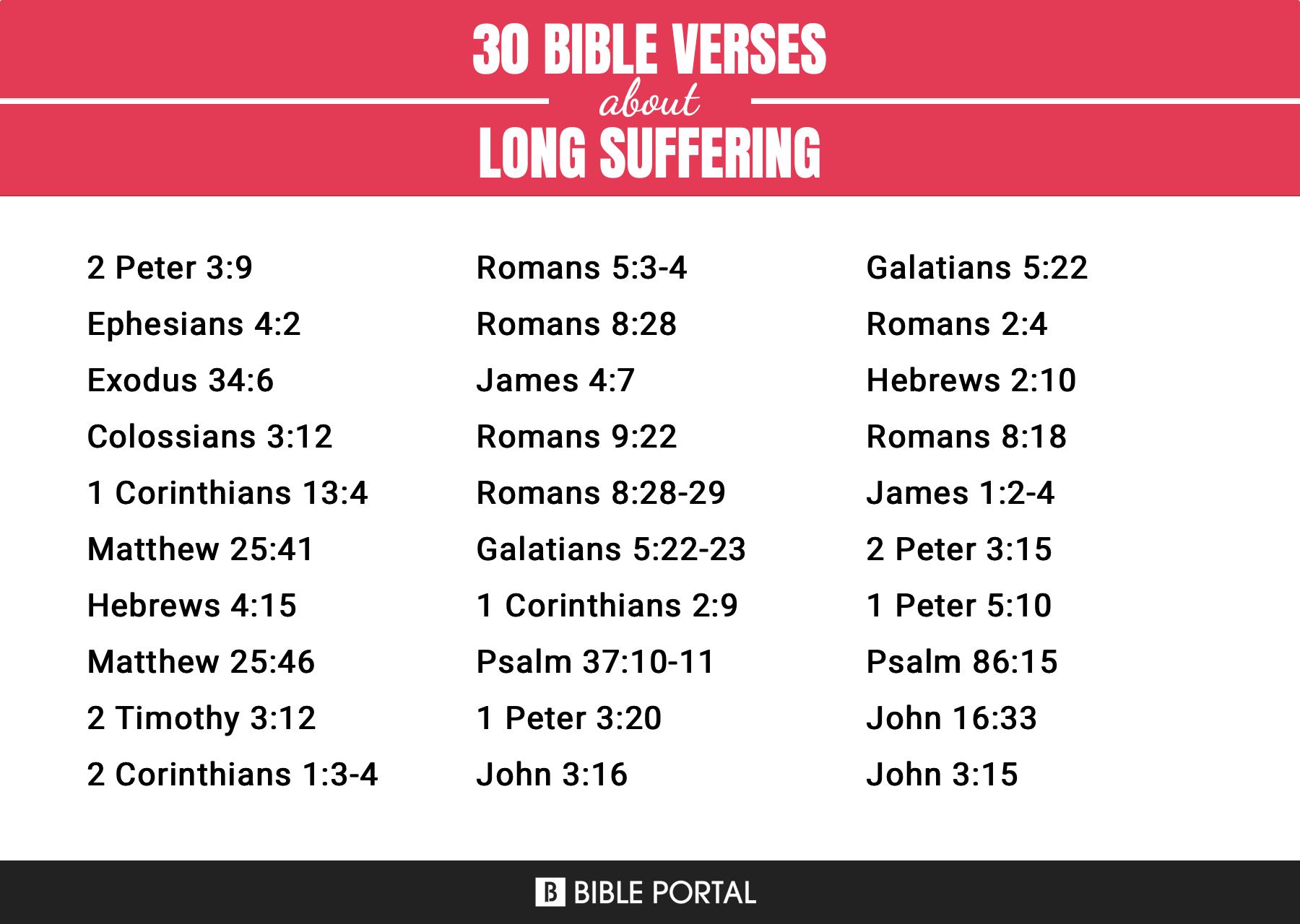
Long suffering, often misunderstood, evokes an intriguing tapestry of endurance woven through the fabric of biblical teachings. This term does not simply connote the act of enduring pain or discomfort; instead, it encapsulates a deeper, more profound state of resilience and patience. Indeed, the term “long suffering” serves as a nuanced representation of the human condition, elevated to a divine principle in the scriptures.
At its essence, long suffering signifies the capacity to bear the burdens of others without succumbing to bitterness or despair. It embodies a steadfast spirit, akin to a mighty oak weathering the harshest of storms, deeply rooted yet gracefully swaying in the tempest. This metaphor elucidates an essential biblical truth: that true strength lies not in unyielding rigidity but in compassionate endurance.
The divine nature of long suffering is vividly illustrated in the scriptures. Take, for instance, the narrative of Job, a man besieged by unimaginable afflictions yet steadfast in his faith. Job’s journey exemplifies how long suffering transcends mere patience; it is a discernible manifestation of hope and trust in divine providence. He dared to believe in the goodness of God even while mired in affliction, embodying the essence of patient endurance.
Long suffering extends beyond personal endurance—it encompasses the relational dynamics that bind communities. In the New Testament, Paul exhorts the faithful to “bear one another’s burdens” (Galatians 6:2), emphasizing the communal aspect of this virtue. Long suffering fosters empathy, urging individuals to shoulder one another’s pain and to offer solace in times of turmoil, transforming the collective suffering into a divine tapestry of unity.
The appeal of long suffering is distinctly multifaceted. Firstly, it resonates with the universal human experience where trials and tribulations serve as the crucible for character development. The cultivation of long suffering facilitates spiritual maturation, enabling individuals to rise above their circumstances and evolve into wiser, more compassionate beings. It becomes the alchemical process through which one learns to transform suffering into strength, akin to the metamorphosis of a caterpillar into a butterfly.
Moreover, long suffering imparts a sense of grace and forgiveness, fostering an environment where reconciliation can flourish. It invites a paradigm shift in perspective; rather than perceiving others’ faults through a lens of condemnation, long suffering encourages understanding and mercy. This transformative view crystallizes the idea that everyone contends with their own struggles—an invitation to extend grace as we navigate the complexities of human relationships.
In the grand tapestry of faith, long suffering stands as a luminous thread, intricately entwined with themes of love, endurance, and divine mercy. It reflects the character of God, who is described in the scriptures as “slow to anger and abounding in steadfast love” (Psalm 103:8). This divine attribute models the essence of long suffering, portraying a God who patiently bears with humanity, inviting us to embrace this divine trait in our own lives.
Ultimately, long suffering is more than merely a passive endurance—it is an active commitment to love amidst adversity. It challenges the individual to rise above their instincts, nurturing a spirit of compassion that reverberates through generations. As this principle is woven into the fabric of everyday life, it creates an enduring legacy of resilience and hope, reminding us that in the face of trials, we are called not merely to endure, but to thrive with grace and dignity.

