

In the vast narrative tapestry of the Bible, themes of unity and diversity weave through the verses like threads of gold and silver, illuminating the intricate patterns of humanity. It is often said that the blending of colors creates a more vibrant picture; similarly, the mixing of races and cultures can yield a more profound understanding of our shared existence. Yet, what does scripture reveal about the amalgamation of different races? It is a question steeped in both historical context and modern relevance.
To embark on this exploration, one must first consider the biblical creation story. In the Book of Genesis, the narrative unfolds with humanity being created in the imago Dei, or the image of God. This foundational truth asserts that all people, regardless of race, are endowed with inherent dignity and worth. The Apostle Paul later elaborates on this idea, famously stating, “There is neither Jew nor Gentile, neither slave nor free, nor is there male and female, for you are all one in Christ Jesus.” Here, Paul captures the essence of a united family under the banner of faith. The inherent equality of all souls is an unwavering declaration against any notion of racial superiority or divisiveness.
Throughout the Old Testament, we encounter tales of interaction between differing people groups. One poignant narrative is that of Ruth, a Moabite woman who, through her loyalty and commitment, becomes an ancestor of King David and ultimately Jesus Christ. This story serves as a powerful testament that race should not be a barrier to inclusion within the fold of faith. Ruth’s embrace of Naomi’s God showcases that faith transcends ethnic boundaries. In this light, the act of mixing races can be likened to a symphony, where diverse instruments create a harmonious sound, each note contributing to the grander piece.
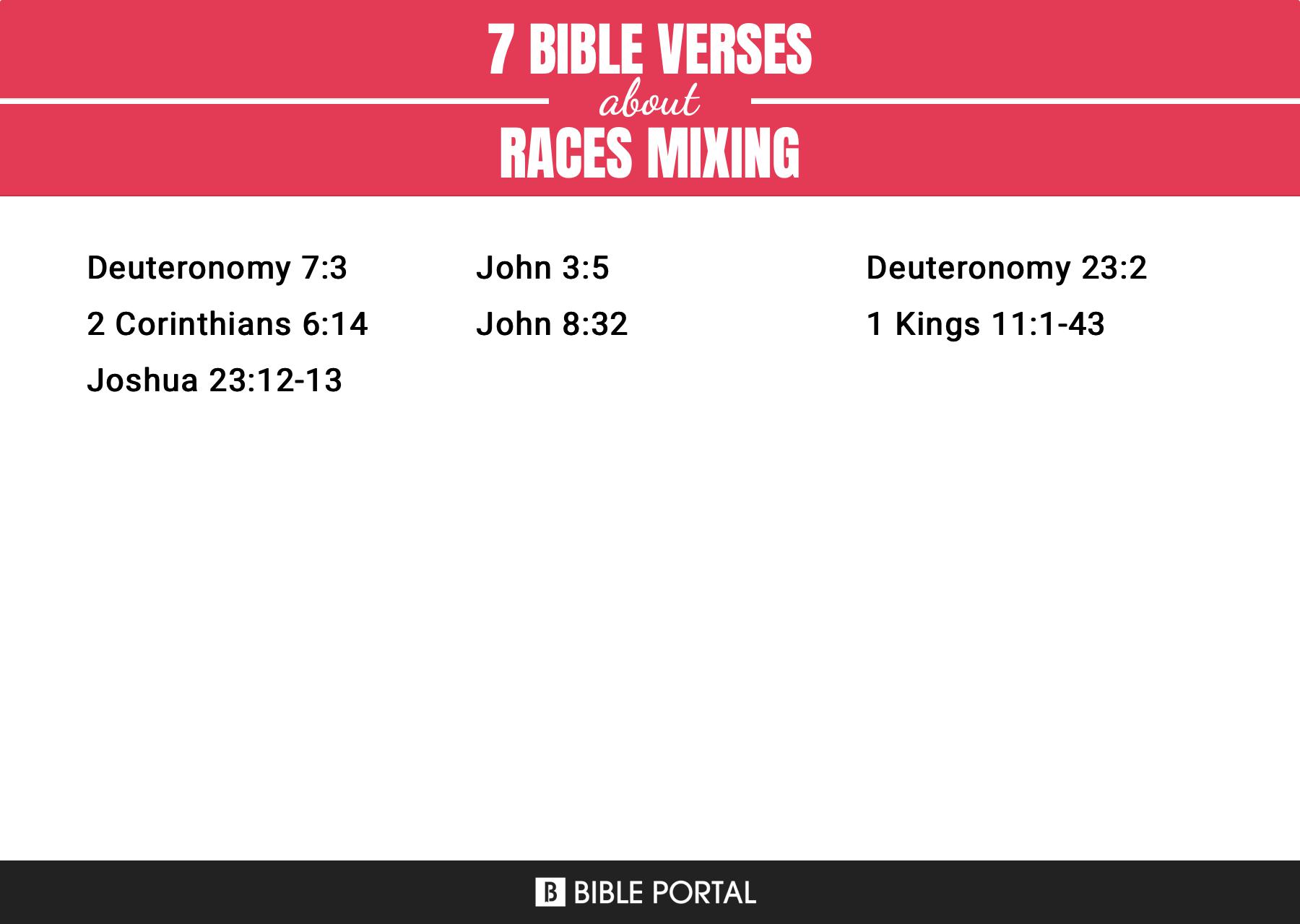
Yet, the issue of mixed races has at times been clouded by misunderstanding and misinterpretation. Some verses, when taken out of the broader biblical context, have been misused to justify segregation and exclusion. For instance, Deuteronomy 7:3 advises against intermarriage with certain groups. However, it is imperative to interpret such passages within their historical milieu, where the concern was more about the preservation of cultural and spiritual integrity than an outright prohibition against interracial unions. Embracing differences can indeed enhance our collective faith and foster an environment of mutual respect.
The New Testament further solidifies the notion of inclusivity, particularly through the Great Commission. Jesus commanded His disciples to “go therefore and make disciples of all nations.” The word “nations” in this context translates from the Greek word “ethnos,” encompassing all ethnicities and races. This mandate is a clarion call for embracing the rich tapestry of humanity, encouraging believers to reach beyond their immediate cultural confines. Christianity’s universal message serves as an invitation to a banquet where all are welcome, regardless of their pedigree.
In this prophetic vision, the Apostle John provides a glimpse into the eschatological promise of unity among the nations. In Revelation 7:9, he describes a multitude from every nation, tribe, and language standing before the throne of God. This portrayal is a profound reminder that God’s kingdom will be a mosaic of diversity, where every hue contributes to the beauty of worship. The act of mixing races, therefore, is not merely a social construct; it resonates with a divine narrative that reveals God’s heart for humanity.
To further amplify the discourse on the implications of mixing races, we must consider the roles of justice and reconciliation woven throughout Scripture. In the Prophet Micah’s exhortation to act justly, love mercy, and walk humbly, we find an ethical framework that advocates for the dismantling of societal barriers. This call to action beckons believers to be champions of inclusivity, fostering spaces where diverse cultures can intermingle without fear of stigmatization. It reminds us that the mixing of races is an opportunity for transformation—not just for individuals, but for entire communities.
However, the journey towards embracing racial diversity is not without challenges. Perceptible biases and entrenched prejudices can hinder progress. Yet, in confronting these barriers, believers are called to embody Christ’s teachings wholeheartedly. The parable of the Good Samaritan serves as an instructive guide in this context. Here, the Samaritan—historically marginalized and despised—demonstrates love and compassion that transcends societal boundaries. The essence of this narrative invites believers to extend grace beyond racial divides, recognizing that love is the greatest unifier.
The implication of mixing races extends beyond mere coexistence; it reverberates throughout the Christian ethos as an essential aspect of the faith journey. As the body of Christ, Christians are called to invite, embrace, and uplift one another amidst differing backgrounds. In doing so, we exemplify the very heart of the Gospel, which champions love, equality, and partnership in the divine mission. Through this lens, mixing races transforms into a profound metaphor for unity in diversity—a testament to the creative genius of the Almighty.
In conclusion, the biblical narrative does not shy away from the complexities and beauties of mixing races. Through stories of acceptance, calls to justice, and prophetic visions of a diverse future, Scripture beckons humanity to venture into the realm of inclusivity. The act of embracing racial diversity is not only a reflection of God’s design but also a pivotal step towards realizing the fullness of God’s kingdom. As we continue to navigate our shared existence, may we strive to embody the essence of love and unity in our communities, celebrating the remarkable tapestry of life that God has woven.

