

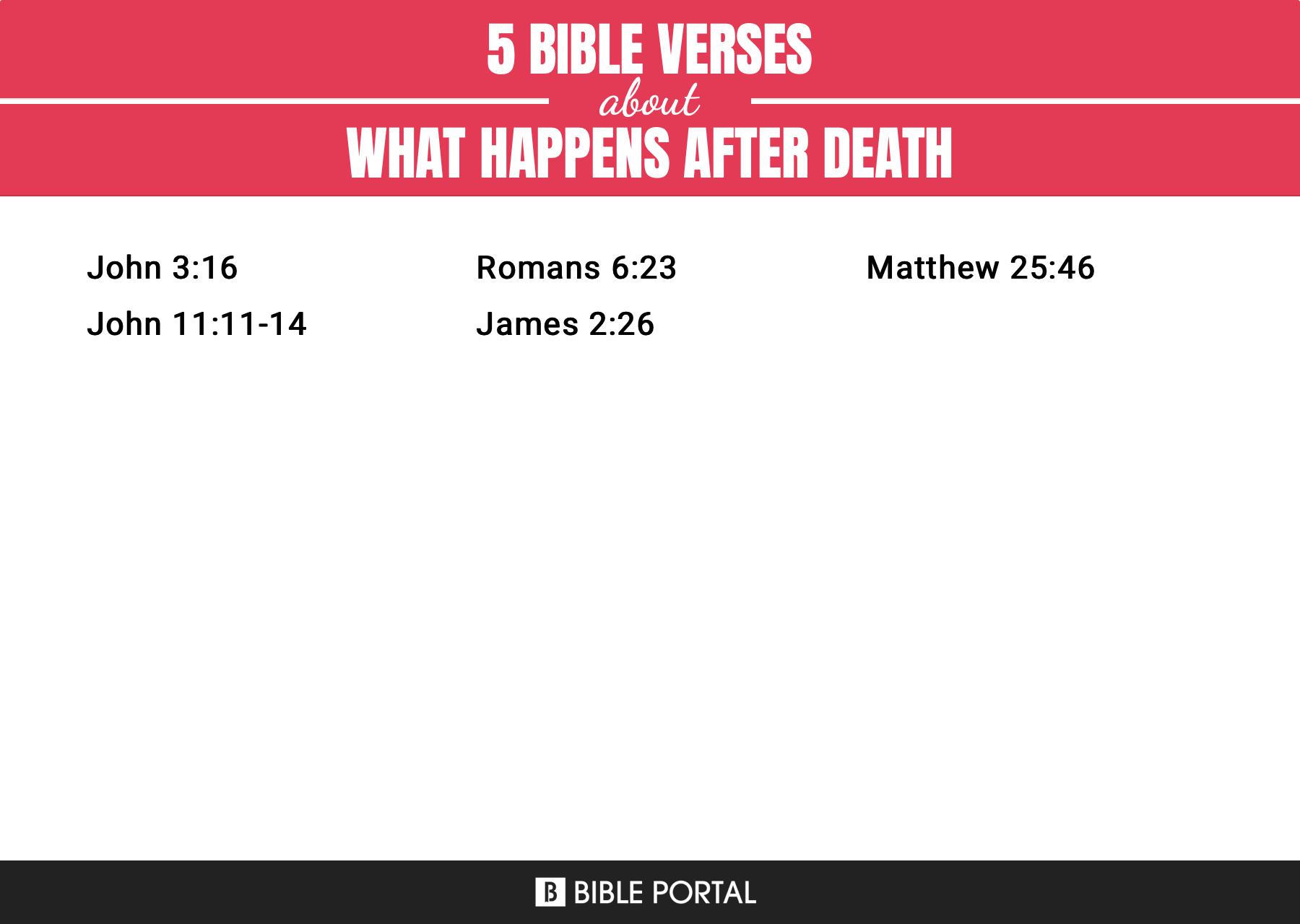
What happens after death? It’s a question that has lingered in the minds of humanity for centuries, intertwining the realms of theology, philosophy, and personal introspection. Let’s embark on a journey through biblical perspectives on this profound mystery, examining essential verses that offer guidance and solace.
To ponder the fate that awaits us post-mortem is to step into a space filled with both trepidation and curiosity. Imagine standing at the threshold of existence—what if the next chapter includes realms far more magnificent than we can fathom? This narrative invites us to explore key biblical insights regarding the afterlife, beckoning the question: Are you prepared to confront your own beliefs?
The Old Testament, steeped in rich tradition, provides an initial glimpse into concepts of the afterlife. Verses such as Ecclesiastes 12:7 suggest the cyclical nature of existence: “and the dust returns to the earth as it was, and the spirit returns to God who gave it.” Here, we see a bifurcation between the corporeal and incorporeal—our physical forms disintegrate, while our spirits ascend, embraced by the divine. Such imagery resonates with those who envision a continuation beyond earthly limitations.
Shifting focus to the New Testament, we unearth Jesus’ profound declarations regarding life after death. In John 3:16, it is said, “For God so loved the world that he gave his one and only Son, that whoever believes in him shall not perish but have eternal life.” These words not only offer promise but challenge individuals to forge a relationship with the divine—an invitation to transcend the ordinary, to aspire toward eternal significance.
Yet, the essence of life after death is not solely about reward; it also encompasses accountability. In Matthew 25:46, Jesus articulates a striking dichotomy: “Then they will go away to eternal punishment, but the righteous to eternal life.” Such assertions ought to stir contemplation. Do we genuinely understand the implications of our actions in the here and now? Are we living with intentions that align with spiritual truth?
This leads us to the weighty subject of resurrection, a cornerstone of Christian belief. In 1 Corinthians 15:52, Paul asserts, “For the trumpet will sound, the dead will be raised imperishable, and we will be changed.” The notion of transformation is tantalizing—imagining a reality where the frailty of existence is transcended, revealing a resurrected state that reflects divine glory. It’s a reminder that death is not the end, but rather a transition into an ineffable reality of eternal existence.
Moreover, Hebrews 9:27 sheds light on divine judgment: “Just as people are destined to die once, and after that to face judgment.” This verse invites introspection and evokes a sense of urgency. What legacies will we leave behind? Are we equipped to face the consequences of a life lived? The juxtaposition of mortal fleeting and divine permanence compels both reflection and action.
As we navigate the complexities of these biblical teachings, the challenge remains—do we dare to contemplate a reality that lies beyond our immediate understanding? Engaging with such profound concepts can incite discomfort, yet it is an essential endeavor. Inherent in our exploration is the potential for growth, understanding, and ultimately, a deeper relationship with the divine.
In conclusion, the afterlife presents an intricate tapestry woven with threads of hope, responsibility, and transformation. The biblical passages illuminate a path filled with promise, urging us to examine our beliefs and actions in light of eternity. As we step forward, let us do so with courage, ready to embrace the unknown with open hearts and minds.

