

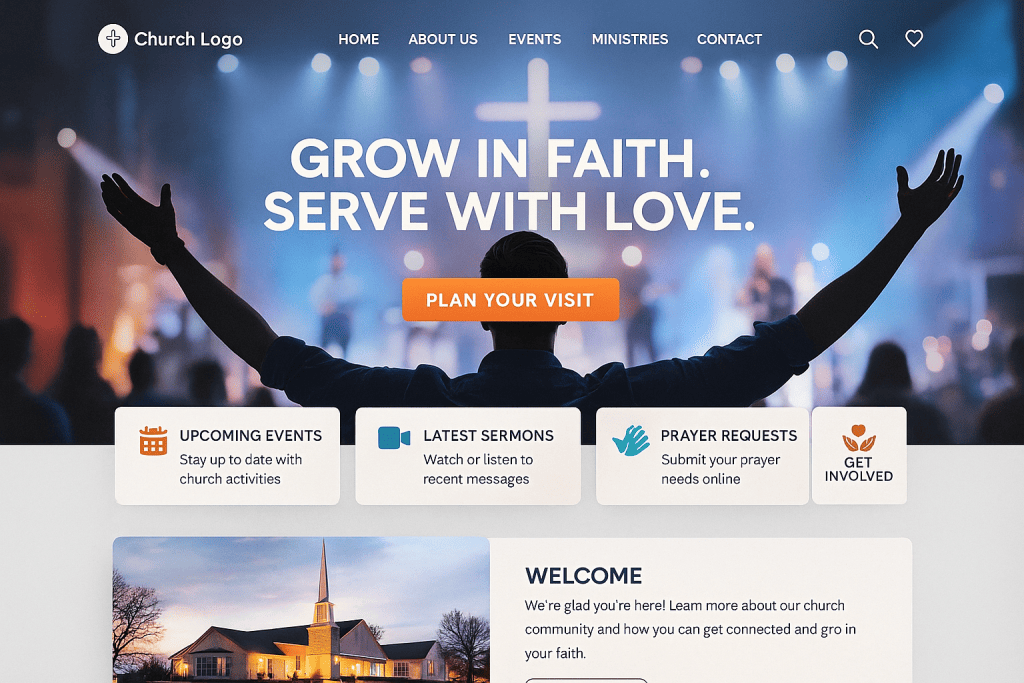
In an era when the first click often replaces the first step onto a church lawn, digital presence has become an altar of its own. A church website is no longer a static bulletin board but a living conduit that carries the heartbeat of the congregation into the world. It is where seekers become pilgrims, where scripture meets search queries, and where mission takes on a pixelated hue. Crafting such a portal demands more than aesthetic flair; it calls for a thoughtful convergence of purpose, audience, and the timeless rhythms of worship.
Purposeful Design: Aligning Digital Presence with Sacred Mission
Every element of a church website should echo the church’s core mission, translating theological intent into visual language. Begin by articulating a clear statement of intent: “We exist to make disciples of Jesus Christ.” From that anchor, every layout decision—whether a towering hero image or a humble footer—serves as a conduit for that declaration. Purposeful design eschews ornamentation that does not reinforce the message, instead opting for a paradigmatic simplicity that lets the gospel shine. When the site’s design mirrors the church’s ethos, visitors feel they have entered a digital sanctuary, not merely a web page.
Audience‑Centric Experience: Knowing the Flock and the Curious
Understanding who walks the virtual aisles is essential. A church may serve a multigenerational flock, ranging from tech‑savvy millennials to seniors who prefer larger type. Conduct persona mapping to identify pain points: accessibility concerns, desire for sermon archives, or the need for quick event registration. By weaving user‑centric pathways—prominent “Give” buttons for members, clear “Visit Us” sections for newcomers—designers create a welcoming vestibule. Inclusivity isn’t a checkbox; it is a sacramental act that honors the dignity of every visitor.
Visual Aesthetics and Symbolic Resonance: Color, Imagery, and Liturgical Nuance
Colors and images on a church site carry symbolic weight. Deep

