

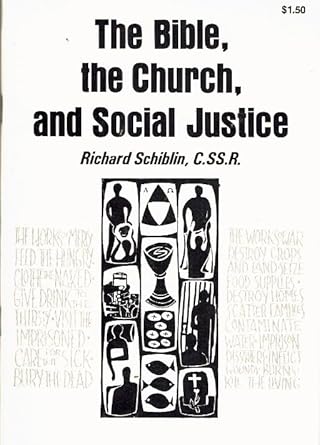
The intersection of faith and justice is not merely a theological debate—it is a call to action, a sacred duty whispered through the ages. For centuries, the church has stood at the crossroads of moral authority and societal transformation, its role oscillating between sanctuary and catalyst. Yet, in an era where systemic inequities scream for redress, the modern church must evolve beyond passive compassion into a force of radical advocacy. The books we choose to read can either reinforce the status quo or shatter it, offering fresh paradigms where justice is not an afterthought but the very heartbeat of faith. These pages are not just ink on paper; they are manifestos of hope, blueprints for a world remade in the image of equity.
The Bible as a Blueprint for Justice: Reclaiming Scripture’s Radical Roots
For too long, the Bible has been wielded as a tool of oppression, its verses cherry-picked to justify silence in the face of injustice. But what if we read it through a different lens—one where the Exodus narrative isn’t just a story of deliverance but a template for dismantling oppressive systems? The prophets of old were not mere fortune-tellers; they were firebrands, their words scorching the complacency of kings and priests alike. Amos thundered against those who “trample the head of the poor into the dust,” while Micah demanded that we “act justly, love mercy, and walk humbly with your God.” These aren’t suggestions. They are divine mandates. Modern scholarship is now revisiting these texts, revealing a Jesus who overturned tables in the temple not out of anger, but out of a holy rage against exploitation. The books that emerge from this re-examination do more than interpret scripture—they weaponize it, turning ancient wisdom into a tool for dismantling modern injustices.
From Pulpit to Protest: How Theology Must Translate into Action
Theology without praxis is like a ship without a rudder—drifting aimlessly in a sea of good intentions. Yet, the leap from sermon to street protest is often stymied by fear: fear of alienating congregants, fear of political backlash, fear of being labeled “too radical.” But what if the greatest act of discipleship is not in the pews, but in the picket lines? The most transformative faith communities are those that refuse to divorce worship from work, prayer from protest. Consider the Black church’s role in the Civil Rights Movement, where hymns became anthems of resistance and sanctuaries doubled as organizing hubs. Today, new voices are emerging, urging the church to shed its timidity. They argue that silence in the face of injustice is not neutrality—it is complicity. The books in this space don’t just challenge readers to think differently; they dare them to act differently, to see their faith as a verb, not a noun.
This is where the rubber meets the road. It’s not enough to lament poverty; we must agitate for systemic change. It’s not enough to pray for the oppressed; we must dismantle the structures that oppress them. The church’s legacy is not in its stained glass, but in its scars—scars earned in the fight for dignity. These texts serve as both mirror and megaphone, reflecting the church’s failures while amplifying its potential to be a vanguard of justice.
Theology of Resistance: When Faith Collides with Empire
Empire has always feared the church when it ceases to be a chaplain of the status quo and becomes its adversary. From the early Christians defying Roman persecution to the Latin American liberation theologians standing against military dictatorships, history is replete with examples of faith as a subversive force. Today, the empire wears many guises: corporate greed, mass incarceration, environmental degradation. The church’s response must be equally multifaceted. This is where the “theology of resistance” comes into play—a framework that sees faith not as an escape from the world, but as a weapon within it. These books don’t just critique power; they equip readers with the theological tools to dismantle it. They ask: What does it mean to follow a crucified Messiah in a world that crucifies the vulnerable daily? The answer is not passive endurance, but active defiance. The church’s role is not to bless the empire, but to expose its idolatries.
Global Voices, Local Struggles: How Diverse Perspectives Reshape Justice
Justice is not a monolith. What resonates in a megachurch in Texas may fall flat in a village in Kenya. The most potent books on church and social justice are those that center marginalized voices—women theologians from the Global South, Indigenous leaders fighting land theft, queer Christians reclaiming their space in sacred texts. These perspectives don’t just add diversity; they shatter the illusion that Western theology has a monopoly on truth. Consider the work of womanist theologians who weave together race, gender, and faith to expose the triple oppression faced by Black women. Or the Indigenous theologians who reframe land not as a resource to exploit, but as a sacred covenant. These books are not just academic exercises; they are acts of resistance against a church that has too often been complicit in erasure. They demand that we ask: Whose justice are we advocating for? And whose voices are we centering?
The Church’s Complicity and the Path to Redemption
To speak of the church and social justice is to confront an uncomfortable truth: the institution has often been an architect of oppression rather than a liberator. The Crusades, the transatlantic slave trade, the residential school systems—these are not aberrations but symptoms of a faith that lost its way. The books in this space don’t flinch from this history. They dissect it, mourn it, and then offer a path forward. They ask: How can the church atone? How can it repent not just in word, but in deed? The answers are not easy. They require confession, restitution, and a willingness to be uncomfortable. But redemption is possible. The same institution that once wielded crosses as weapons can wield them as shields—for the vulnerable, the displaced, the forgotten. The journey begins with truth. And these books are the first step.
Practical Tools for the Justice-Seeking Believer
Theory is vital, but it is not enough. The most impactful books on church and social justice don’t just inspire—they equip. They provide actionable steps: how to organize a congregation around a cause, how to engage in political advocacy without losing prophetic voice, how to support grassroots movements without co-opting them. They include case studies of churches that have successfully bridged the gap between faith and activism, as well as cautionary tales of those that failed. These texts are not just for pastors or theologians; they are for every believer who feels the weight of injustice and wants to do more than pray. They turn abstract ideals into tangible strategies, proving that faith without works is dead—and justice without action is a lie.
The Future of the Church: A Movement or a Monument?
The church stands at a precipice. It can choose to be a museum of the past, a relic of nostalgia, or it can be a movement of the future—a force that shakes the foundations of injustice. The books in this space are not just for readers; they are for revolutionaries. They challenge the church to shed its skin of complacency and emerge as a radical, unapologetic advocate for the marginalized. They ask: Will the church be a voice in the wilderness, or will it remain silent in the halls of power? The answer lies in the pages we choose to read, the truths we choose to embrace, and the actions we choose to take. The future of justice depends on it.

