

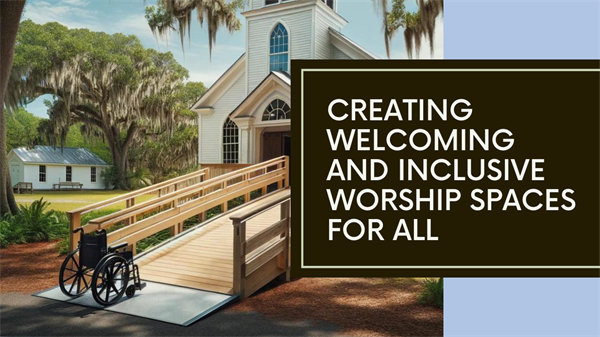
When a congregation gathers to worship, the sanctuary becomes a living tapestry where every thread—whether it be a whispered prayer, a gentle hand on a shoulder, or the hum of a hearing loop—contributes to a shared sense of belonging. Church and accessibility, therefore, are not peripheral concerns but rather the very heartbeat of a faith community that aspires to welcome everyone. By weaving together physical, sensory, cognitive, digital, linguistic, and social dimensions of inclusion, a church can transform its worship space into a sanctuary where the divine is perceptible to all, regardless of ability, background, or circumstance.
Architectural Inclusivity: Designing Spaces That Open Doors
Thoughtful design of church premises lays the groundwork for universal access. Wide aisles, ramped thresholds, and barrier‑free entryways ensure that individuals using wheelchairs, walkers, or mobility aids can navigate the building with autonomy. Accessible restrooms, designated parking spots, and lowered pews near the altar further diminish physical obstacles, allowing participants to focus on spiritual nourishment rather than logistical challenges. The synergy between architectural planning and community input—achieved through surveys, focus groups, and site walkthroughs—creates environments that not only meet regulatory standards but also reflect the congregation’s commitment to hospitality.
In practice, many churches have adopted adaptable seating arrangements that can be reconfigured for concerts, weddings, or small group meetings. Movable altar platforms and modular sound systems enable a pluripotent worship space that can morph to accommodate diverse liturgical needs. Such flexibility underscores the belief that the sacred geometry of a church should be inclusive, not restrictive.
Sensory Access: Auditory, Visual, and Tactile Accommodations
Ensuring that individuals who are deaf, hard‑of‑hearing, blind, or visually impaired can fully engage with worship services requires a multi‑modal approach. Installing hearing loops, also known as induction loops, delivers clear audio directly to telecoil‑enabled hearing aids, while sign language interpreters—positioned near the front—provide visual translation for deaf congregation members. Large‑print hymnals, Braille scripture excerpts, and tactile offering plates enable tactile engagement.
Furthermore, thoughtfully curated lighting can highlight key moments of the liturgy, guiding attention without overwhelming those with photosensitive epilepsy. The inclusion of vibro‑acoustic elements, such as low‑frequency speakers that translate鼓 (drum) rhythms into gentle vibrations, offers an extra sensory channel for those who may not hear the music but can feel its pulse.
Cognitive and Neurodiverse Inclusion: Quiet Zones and Simplified Communication
Neurodiverse individuals—whether on the autism spectrum, experiencing anxiety, or living with dementia—benefit from environments that honor their processing styles. Designating “quiet zones” within the sanctuary provides a low‑stimulus retreat where prayerful reflection can occur without the intensity of crowded worship. Visual schedules, using pictographic symbols, outline the order of service, reducing uncertainty and fostering predictability.
Simplified language in announcements and sermon summaries, paired with the option for recorded audio files, accommodates diverse literacy levels and auditory processing speeds. By employing clear, concise phrasing and avoiding jargon, the church extends its welcome to those who may otherwise feel alienated by complex theological discourse.
Digital Frontiers: Online Worship and Virtual Presence
The digital dimension of accessibility expands the church’s reach beyond physical walls. Live streaming platforms that support closed captions, high‑contrast interfaces, and screen‑reader compatibility ensure that virtual attendees experience the same sense of inclusion as those present in person. Social media posts, newsletters, and website content should adhere to Web Content Accessibility Guidelines (WCAG) 2.1 AA standards, incorporating alt text for images, readable fonts, and navigable menus.
Interactive apps that allow users to submit prayer requests, access devotionals, or join small group video calls further blur the line between pew and pixel, creating a seamless continuum of participation. In this era of hyper‑connected worship, digital accessibility becomes a sacred conduit for fellowship that transcends geographical constraints.
Linguistic and Cultural Diversity: Multilingual and Intercultural Ministry
A truly welcoming church recognizes that language is a gateway to spiritual meaning. Offering translation services—whether through headsets, printed handouts, or real‑time multilingual signage—empowers speakers of various tongues to engage with scripture and song. Cultural sensitivity training for volunteers equips the congregation to celebrate diverse traditions, from bilingual worship songs to celebratory feasts that reflect the community’s heterogeneous makeup.
Moreover, culturally relevant illustrations and metaphors within sermons can bridge theological concepts to lived experiences, ensuring that each congregant feels seen and heard. The inclusion of diverse liturgical symbols, such as varied crucifixes or prayer rugs, further affirms that the faith family is a mosaic of identities.
Community Engagement: Outreach, Volunteering, and Advocacy
Welcoming everyone extends beyond the sanctuary into the broader neighborhood. Outreach programs that provide accessible transportation, adaptive sports leagues, or sensory‑friendly community events demonstrate a tangible commitment to inclusion. Volunteer mobilization that recruits individuals with disabilities—serving as greeters, readers, or tech support—reinforces the belief that every member possesses unique gifts to contribute.
Advoc

