

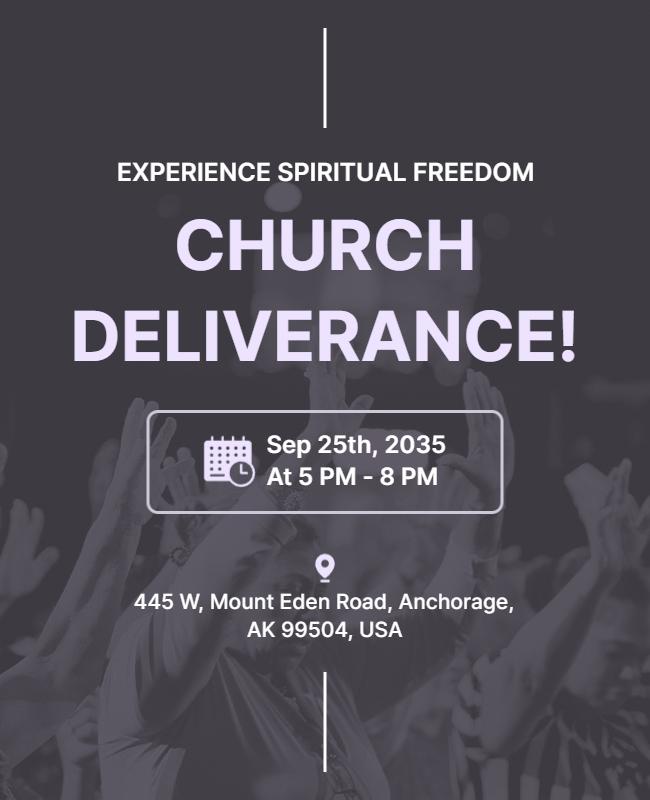
In the grand symphony of faith, where hymns rise like incense and prayers echo like sacred chimes, communication is the unseen conductor—orchestrating unity, clarity, and purpose. A church’s deliverance campaign is not merely an event; it is a spiritual crusade, a beacon of hope in a world often shrouded in darkness. Yet, without a well-crafted communication strategy, even the most profound message can dissipate like mist at dawn. How, then, do we ensure that every soul is not only informed but also inspired? How do we transform announcements into anthems and updates into invitations to grace? The answer lies in mastering the art of communication—a blend of strategy, storytelling, and soul-stirring persuasion.
The Sacred Art of Clarity: Crafting Messages That Resonate
Imagine standing in a vast cathedral, your voice echoing through the vaulted ceilings, yet no one hears the words—only the hollow resonance. Such is the fate of unclear communication. A deliverance campaign thrives on precision; every word must pierce the noise of the world and lodge itself in the hearts of the faithful. Begin with the core: the *why*. Why is this campaign happening? Is it a call to liberation, a rallying cry against spiritual oppression, or a celebration of divine breakthrough? Define the purpose in a single, potent sentence, and let it anchor every subsequent message.
Next, tailor the language to your audience. A seasoned believer may hunger for theological depth, while a seeker might need gentle, relatable metaphors. Use vivid imagery—describe deliverance as a “storm-tossed ship finally docking in calm waters” or a “prisoner stepping into the sunlight after decades in the dark.” Avoid jargon that obscures meaning; instead, let every phrase feel like a warm embrace or a clarion call. And remember: brevity is power. In an age of fleeting attention spans, a three-sentence announcement can outshine a rambling sermon.
Channels of Grace: Choosing the Right Platforms for Impact
Communication is not a monologue but a dialogue—a river flowing in multiple directions. The pulpit remains sacred ground, but the digital age has birthed new avenues for grace. Social media, once a distraction, can become a pulpit of pixels, where a single post can ignite a wildfire of interest. Platforms like Instagram thrive on visual storytelling; pair a striking image of a dove in flight with a caption like, “The Holy Spirit is on the move—are you ready to rise?” Meanwhile, WhatsApp groups and email newsletters offer intimacy, transforming updates into personal letters from the heart of the church.
Yet, do not overlook the tactile power of print. Flyers, like the one that inspired this reflection, are silent evangelists. Tucked into Bibles or handed on street corners, they carry the weight of permanence. A well-designed flyer is a visual sermon—bold typography, striking colors, and a call to action that lingers long after the paper is folded away. And let us not forget the human touch: word-of-mouth remains the most potent amplifier. Train your congregation to share the campaign’s vision with the same fervor they’d use to invite a friend to salvation.
The Rhythm of Reminders: Keeping the Flame Alive
A single announcement is a spark; consistent reminders are the bellows that fan it into a blaze. But how do you avoid the fatigue of repetition without losing momentum? The key is variation. Alternate between testimonials (“Last year, Sister Mary’s chains were broken—come see how God moves!”), countdowns (“Only 7 days until the breakthrough begins!”), and behind-the-scenes peeks (“Meet the team praying for your miracle”). Each reminder should feel like a new chapter in a gripping novel, not a broken record.
Timing is everything. Drop hints in advance—plant seeds of anticipation weeks before the campaign. Then, as the date nears, intensify the frequency. A well-timed “urgent prayer alert” can stir souls to action. And after the event? Keep the conversation alive. Share testimonies, post photos, and invite reflection. A campaign’s legacy is not measured in attendance alone but in the seeds it plants for future harvests.
Breaking Barriers: Inclusive Language for Every Soul
Deliverance is not a privilege reserved for the elite; it is a gift for the weary, the broken, and the searching. Yet, how often do we unknowingly erect walls with our words? Phrases like “those who are struggling” can subtly exclude those who don’t identify as “struggling.” Instead, use language that embraces all: “everyone is welcome,” “no one is too far gone,” or “your breakthrough is waiting.” Metaphors should reflect diverse experiences—compare deliverance to a “lighthouse guiding lost ships” or a “key turning in a rusted lock.”
Consider accessibility. For those with visual impairments, audio announcements or braille flyers ensure no one is left in the shadows. For non-native speakers, offer translations or simplified summaries. And for the digitally disconnected, lean on community bulletin boards, local radio, or even word-of-mouth in markets and bus stops. True inclusivity is not a checkbox; it is a posture of the heart.
The Power of Partnership: Mobilizing the Body of Christ
A campaign is not the work of one but the symphony of many. Pastors, ushers, musicians, and volunteers must each become ambassadors of the message. Train your team to embody the campaign’s vision—not just in words but in deeds. A greeter who smiles like the first light of dawn, a musician who plays with the fervor of a warrior, a usher who guides with the gentleness of a shepherd—these are the unsung heroes who turn information into transformation.
Collaborate with other churches or ministries. A joint prayer chain or shared social media blitz can amplify reach exponentially. Think of it as a spiritual flash mob—sudden, unexpected, and impossible to ignore. And don’t forget the power of prayer itself. Before any announcement goes out, gather intercessors to “bind the enemy’s interference” and “loose the spirit of revelation.” What begins in the spiritual realm will manifest in the natural.
Measuring the Harvest: Beyond Numbers to Souls
In a results-driven world, it’s tempting to measure success by attendance sheets or social media likes. But the true metric of a deliverance campaign is not in the data—it is in the changed lives. Did the single mother who came seeking peace find it? Did the teenager wrestling with addiction feel the Father’s embrace? Did the skeptic leave with a flicker of hope? These are the stories that matter.
Create space for feedback. After the campaign, host a debrief where attendees can share their experiences. Use surveys, but also listen for the unspoken—the quiet tears, the lingering questions, the seeds of faith that may take years to sprout. And celebrate the invisible victories: the prayer warrior who felt led to fast for 40 days, the child who drew a picture of their “healing,” the skeptic who simply showed up. These are the footprints of God’s presence.
The art of communicating a deliverance campaign is not just about spreading information—it is about sparking a movement. It is about turning announcements into anthems, updates into invitations, and reminders into revelations. When done with intentionality and passion, communication becomes a bridge between heaven and earth, a megaphone for the divine, and a lantern in the dark. So let your words be bold, your vision clear, and your heart open. For in the end, the most powerful message is not the one that is heard—but the one that is felt.

