

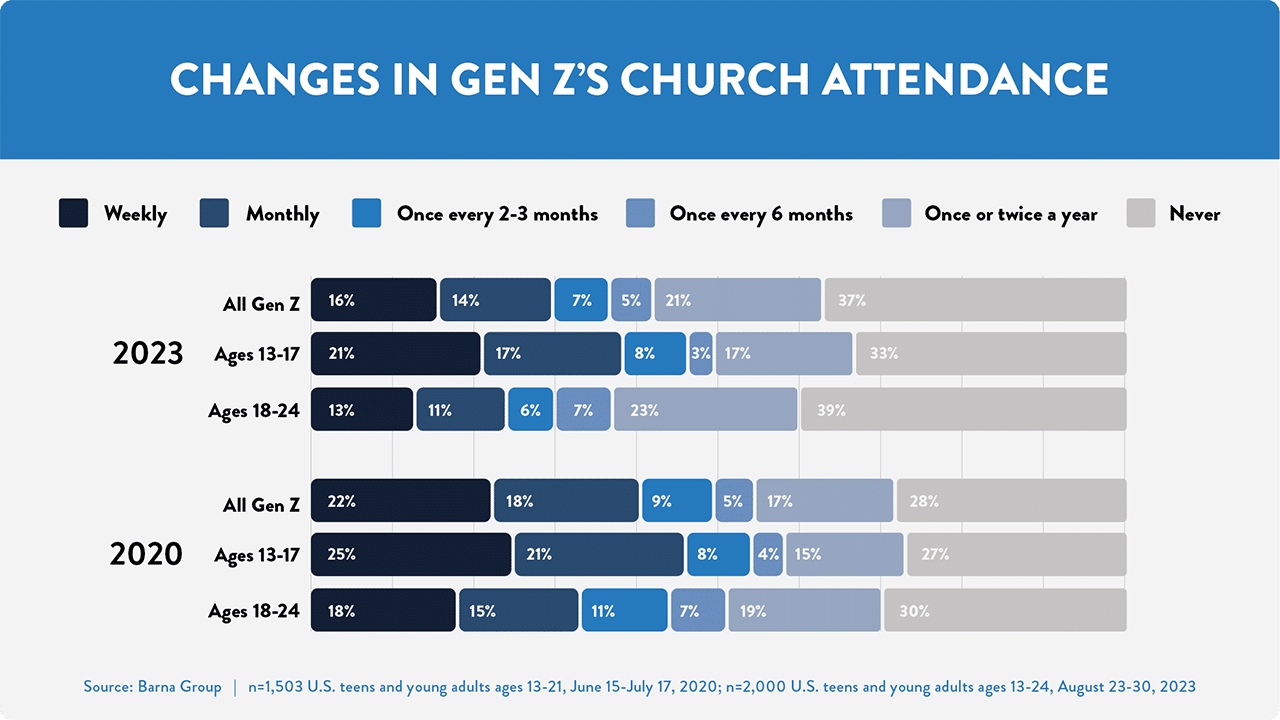
In the grand tapestry of modern spirituality, few threads are as vibrant—or as vexing—as the relationship between Gen Z and the church. This generation, born between the late 1990s and early 2010s, has been labeled everything from “digital natives” to “the loneliest generation.” Yet, when it comes to faith, they are rewriting the rules. The data doesn’t just whisper about their shifting allegiances; it shouts. And what it reveals is a paradox: Gen Z craves connection but rejects tradition, seeks meaning but distrusts institutions, and values authenticity above all else. To understand this dynamic, we must peel back the layers of their spiritual psyche, where curiosity collides with cynicism, and where the sacred is often found in the most unexpected places.
The Digital Sanctuary: Where Faith Meets Algorithm
For Gen Z, the church isn’t just a building—it’s a feed. Scrolling through TikTok or Instagram, they encounter spirituality in bite-sized doses: a 15-second prayer, a meme about grace, a viral sermon clip. This isn’t sacrilege; it’s evolution. The digital realm has become their sanctuary, a place where faith is both communal and curated. They don’t just consume content; they curate it, blending worship with wellness, theology with mental health, and doctrine with dopamine hits. The result? A faith that is as fluid as their attention spans, yet as deeply personal as their fingerprints. The church that fails to recognize this will find itself preaching to an empty room—or worse, an algorithm that doesn’t care.
But here’s the twist: this digital devotion isn’t shallow. It’s a new kind of depth. Gen Z doesn’t just want to *hear* about God; they want to *see* Him in action. They follow pastors who live-stream their struggles, influencers who wrestle with doubt, and artists who turn Scripture into spoken word. For them, faith isn’t a Sunday performance; it’s a 24/7 livestream. The churches that thrive will be those that meet them where they are—not with a PowerPoint, but with a pulse.
The Authenticity Litmus Test: When Hypocrisy Smells Like Old Perfume
Gen Z has a finely tuned BS detector. They can sniff out inauthenticity from a mile away, and they have zero patience for it. This generation doesn’t just *want* transparency; they *demand* it. They’ve watched their parents’ generation burn out on performative piety, and they’re not interested in repeating the cycle. For them, faith isn’t about wearing a Sunday best; it’s about wearing your scars. They want leaders who admit their doubts, churches that confess their failures, and communities that embrace the messy, unfiltered reality of life.
This is where the rubber meets the road. The data shows that Gen Z isn’t leaving the church because they’ve lost faith; they’re leaving because they’ve lost trust. They’re not rejecting Jesus; they’re rejecting the curated, airbrushed version of Christianity that’s been sold to them. The churches that will capture their hearts are the ones that trade in raw, unpolished truth. Think less “holier-than-thou” and more “let’s figure this out together.” Gen Z doesn’t want a sermon; they want a conversation. They don’t want a perfect pastor; they want a real one.
The Community Paradox: Alone Together in a Hyperconnected World
Paradoxically, Gen Z is both the most connected and the most isolated generation in history. They have thousands of “friends” online but struggle to find meaningful relationships offline. The church, with its built-in communities, should be the antidote to this loneliness. Yet, for many, it’s become part of the problem. The data reveals a generation that craves belonging but is often met with exclusion—whether it’s theological gatekeeping, cliquey youth groups, or a lack of spaces where they can wrestle with doubt without judgment.
What Gen Z longs for isn’t just a seat in the pew; it’s a seat at the table. They want to be seen, heard, and valued—not as projects to be fixed, but as people with something to contribute. The churches that will thrive are the ones that create spaces where questions are welcome, where doubt is discussed, and where everyone—regardless of background or belief—feels like they belong. This isn’t about lowering the bar; it’s about raising the ceiling. Gen Z doesn’t want a church that’s a museum of the past; they want a church that’s a laboratory for the future.
The Justice Imperative: Faith That Looks Like Love in Action
For Gen Z, faith isn’t just about what you believe; it’s about how you live. They’re not interested in a spirituality that’s confined to four walls or a two-hour service. They want a faith that spills into the streets, that fights for the marginalized, and that looks like Jesus in a hoodie. The data shows that Gen Z is deeply concerned about social justice, environmental stewardship, and systemic inequality. They see these issues not as political talking points, but as spiritual mandates.
This is where the church has a choice: will it be a relic of the past, or a movement of the present? Gen Z isn’t looking for a church that preaches justice; they’re looking for a church that *practices* it. They want to see their faith in action—feeding the hungry, sheltering the homeless, advocating for the oppressed. The churches that will resonate with them are the ones that trade in hollow platitudes for hands-on compassion. For Gen Z, faith isn’t a spectator sport; it’s a contact sport.
The Future of Faith: A Generation Rewriting the Rules
The relationship between Gen Z and the church is less a crisis and more a crucible—a place where old paradigms are being melted down and recast into something new. This generation isn’t rejecting faith; they’re redefining it. They’re not interested in a Christianity that’s stuck in the past; they want one that’s alive, relevant, and unafraid to ask hard questions. The data doesn’t just show a decline in attendance; it shows a seismic shift in what people are looking for in a spiritual home.
The churches that will thrive in this new landscape are the ones that are willing to let go of control, embrace uncertainty, and meet Gen Z where they are. This isn’t about watering down the gospel; it’s about presenting it in a way that resonates with a generation that’s hungry for truth, authenticity, and justice. The future of the church isn’t a museum piece; it’s a movement. And Gen Z is leading the charge.

