

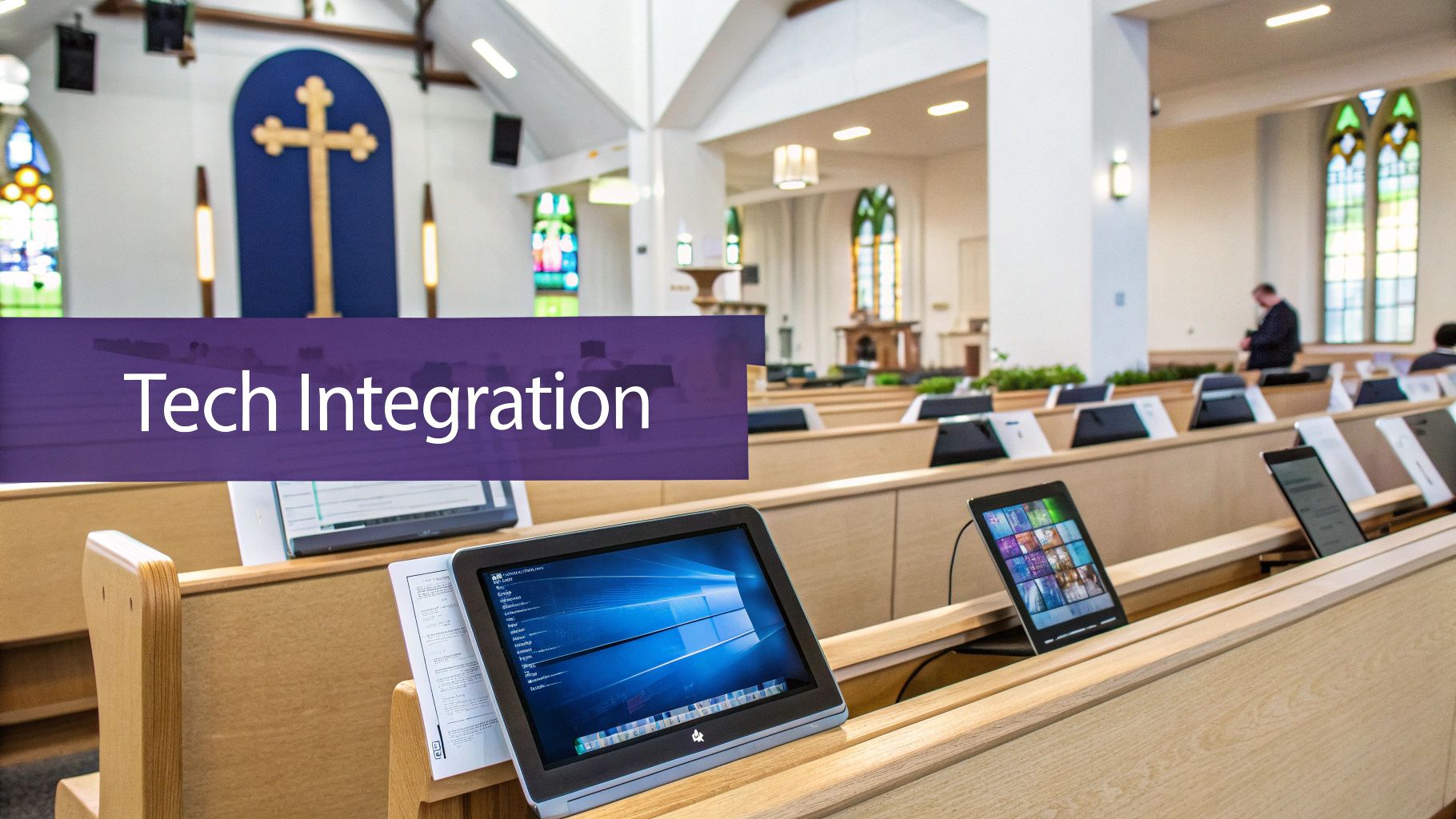
Have you ever stood in the pulpit, gazing out at a congregation where half the faces are illuminated by the soft glow of smartphone screens rather than the flickering candlelight of hymnals? The digital age has not merely crept into our sanctuaries—it has crashed through the stained-glass windows like a rogue Wi-Fi signal, demanding attention. Churches today are not just spiritual hubs; they are tech ecosystems, where the ancient hymns of faith now harmonize with the hum of servers and the click of livestreams. But how does a ministry navigate this brave new world without losing its soul—or worse, its signal?
Why Digital Ministry Isn’t Just a Trend—It’s a Calling
The digital realm is not a distraction from ministry; it’s a frontier. Consider the Sunday school teacher in rural Alaska who beams her lesson into living rooms across the state, or the pastor in Lagos who preaches to a global congregation via an app. Technology dismantles geographical barriers, turning local churches into global communities. Yet, with this power comes a paradox: the more connected we become, the more we risk losing the intimacy that defines spiritual growth. The challenge? Balancing the scalability of digital tools with the sacredness of human connection. How do you make a Zoom call feel like a campfire sing-along? The answer lies not in the tools themselves, but in how we wield them.
The Toolbox: Essential Resources for the Digital Pastor
Every craftsman knows that the right tool can turn a daunting task into a masterpiece. For the modern minister, the digital toolbox is vast, but a few stalwarts stand out. First, there’s the livestreaming platform—whether it’s YouTube’s unyielding reliability or Facebook’s built-in reach, the goal is to make the service accessible without sacrificing quality. Then, there’s church management software, the unsung hero that tracks attendance, tithes, and small group dynamics without requiring a degree in IT. And let’s not forget social media schedulers, the silent conductors that ensure your message isn’t lost in the algorithmic cacophony. But here’s the rub: these tools are only as effective as the strategy behind them. A livestream without engagement is a sermon without a congregation.
Content That Converts: Crafting Digital Sermons That Resonate
Delivering a sermon in person is one thing; translating it into a digital format is another beast entirely. The camera lens doesn’t lie—it magnifies every stumble, every awkward pause. So how do you keep your audience hooked when they’re just a swipe away from cat videos? Start with storytelling. A well-told parable or personal anecdote can bridge the gap between screen and soul. Next, interactivity is key. Polls, Q&A sessions, and even emoji reactions can transform a passive viewer into an active participant. And don’t underestimate the power of short-form content. A 60-second devotional on Instagram Reels might not replace a Sunday service, but it can plant a seed that blossoms into a deeper commitment. The challenge? Avoiding the temptation to water down theology for the sake of engagement. Authenticity, not algorithms, should dictate your content.
The Human Element: Building Community in a Virtual World
Technology can connect us across continents, but it can also isolate us within our own bubbles. The real test of a digital ministry isn’t how many views a livestream gets—it’s whether those viewers feel seen. Small groups, once confined to church basements, now thrive in Zoom breakout rooms and Discord servers. Prayer chains move at the speed of text messages. Yet, the risk of superficiality looms large. How do you foster genuine relationships when the only interaction is through a screen? The answer lies in intentionality. Assign prayer partners, host virtual coffee chats, and create spaces where vulnerability isn’t just allowed—it’s celebrated. The challenge? Ensuring that digital engagement doesn’t replace face-to-face fellowship but complements it.
Overcoming the Techno-Anxiety: When the Wi-Fi Fails and the Faith Doesn’t
Let’s be honest: technology is finicky. The projector dies mid-sermon. The livestream buffers during the altar call. The website crashes on Giving Tuesday. For pastors already juggling the weight of spiritual leadership, tech failures can feel like divine tests. But here’s the secret: even the most polished digital ministry will face glitches—and that’s okay. What matters is how you respond. A quick apology, a backup plan, and a reminder that the Holy Spirit isn’t bound by bandwidth. The challenge isn’t avoiding tech troubles; it’s building resilience. Train your team, invest in reliable equipment, and remember that the goal isn’t perfection—it’s presence.
Ethics in the Digital Sanctuary: Navigating the Moral Minefield
With great connectivity comes great responsibility. The digital church must grapple with questions that previous generations never imagined. How do you protect children in online Sunday school? What boundaries should govern social media interactions with congregants? How do you handle data privacy in an era where every click is tracked? The temptation to exploit technology for growth—whether through manipulative algorithms or invasive data collection—is real. Yet, the call to digital ministry is also a call to ethical stewardship. Transparency, consent, and safeguarding the vulnerable must be non-negotiable. The challenge? Staying ahead of the curve without compromising values. The solution? A robust digital ethics policy, reviewed and revised as technology evolves.
The Future of Faith: Where Do We Go From Here?
The digital revolution in ministry is still in its infancy. Virtual reality worship experiences, AI-driven pastoral care, and blockchain-based tithing systems are no longer science fiction—they’re on the horizon. But as we sprint toward the future, we must ask: What are we willing to sacrifice for progress? Will we trade depth for reach? Authenticity for algorithms? The churches that thrive in this new landscape will be those that remember one timeless truth: technology is a tool, not a replacement for the Holy Spirit. The challenge isn’t keeping up with the latest app—it’s ensuring that every innovation serves the mission of making disciples. The future of faith isn’t digital; it’s dynamic, adaptive, and unapologetically human.

