

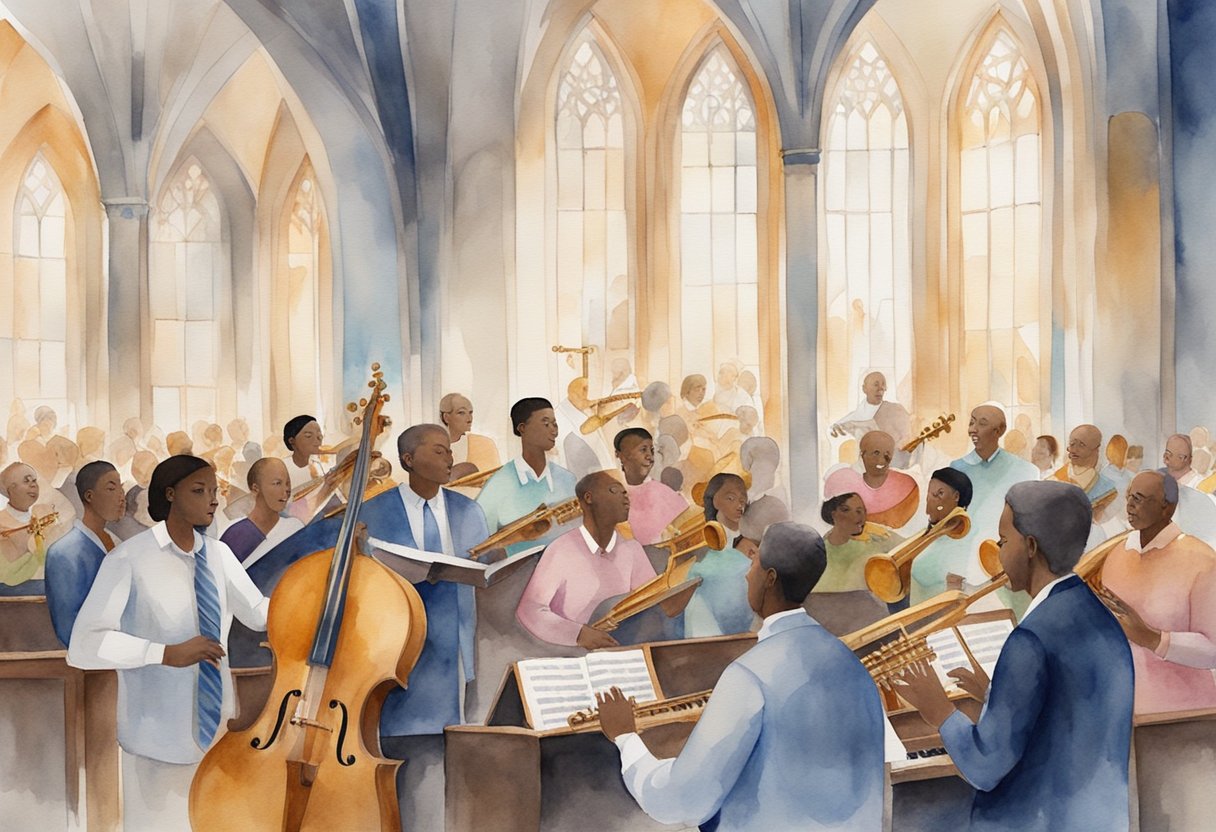
In the grand symphony of faith, few instruments resonate as deeply as music. It is the heartbeat of worship, the language of the soul, and the bridge between the divine and the human. Yet, in the labyrinth of liturgy, music often becomes a silent participant—present, yet not always purposeful. What if we reimagined its role? What if worship music wasn’t just a backdrop but a catalyst for transformation? This exploration isn’t about changing the hymns we sing or the instruments we play. It’s about rediscovering the *why* behind the melodies, the *how* that shapes our gatherings, and the *what* that stirs our spirits. Prepare to embark on a journey that challenges convention, ignites curiosity, and promises a fresh perspective on church and worship through the lens of music and liturgy.
The Sacred Rhythm: How Music Shapes the Soul of Worship
Music is not merely an adornment to worship; it is its lifeblood. The ancient psalms, those timeless anthems of faith, were never meant to be static verses on a page. They were meant to be sung—vibrant, communal, and alive. Yet, in many modern congregations, music has been reduced to a performance, a ritual, or worse, an afterthought. The shift begins when we recognize that music is a *sacred rhythm*, a pulse that synchronizes the collective heartbeat of believers. It is the medium through which awe is cultivated, repentance is expressed, and joy is magnified. When a congregation lifts its voice in unison, it is not just singing—it is participating in a divine dialogue. The melodies we choose, the harmonies we weave, and the silence we embrace between notes all contribute to the alchemy of worship. To redefine music’s role is to reclaim its power as a transformative force, one that doesn’t just fill the air but fills the soul.
From Hymnals to Heartbeats: The Evolution of Church Music
The history of church music is a tapestry woven with threads of tradition, innovation, and rebellion. From the monophonic chants of Gregorian plainsong to the soaring anthems of the Reformation, from the gospel hymns that fueled the civil rights movement to the contemporary worship songs that dominate modern stages, music has always been a mirror reflecting the church’s journey. Yet, evolution is not synonymous with abandonment. The challenge lies in honoring the past while embracing the present—a delicate balance between reverence and relevance. Consider the metrical psalters of the 16th century, which set ancient psalms to new tunes, or the Negro spirituals that turned suffering into songs of hope. These weren’t just musical innovations; they were theological statements. Today, the church stands at another crossroads. Will we cling to nostalgia, or will we ask: *What new melodies are waiting to be composed in the language of our time?* The answer may lie not in discarding tradition but in asking how it can speak to the hearts of a generation that craves authenticity over antiquity.
The Liturgical Canvas: Painting Worship with Words and Notes
Liturgy is the framework of worship, the skeleton upon which the flesh of music and prayer is draped. Yet, too often, it becomes a rigid script, a checklist of rituals that lose their meaning in repetition. What if liturgy were instead a *canvas*—a living, breathing space where music and word intertwine to create something transcendent? Imagine a service where the call to worship isn’t just a spoken invitation but a musical overture, where the confession of sin is underscored by a haunting melody, where the sermon’s climax swells into a crescendo of congregational song. This is not about spectacle; it’s about *sacramentality*—the belief that the ordinary can become extraordinary when infused with the divine. The liturgy’s structure doesn’t need to be abandoned; it needs to be *reimagined*. When music and liturgy dance together, they create a rhythm that guides the soul from awe to confession, from listening to responding, from individual reflection to communal unity. The result? A worship experience that feels less like a performance and more like a pilgrimage.
The Silence Between the Notes: The Power of the Unspoken
In a world that worships at the altar of noise, the most revolutionary act of worship may be silence. Between the verses of a hymn, the pauses in a prayer, the moments of stillness before a benediction, lies a sacred space often overlooked. This is not emptiness; it is *fullness*—the space where the Holy Spirit moves, where the heart listens, and where the soul is stripped bare before God. Consider the Taizé chants, with their repetitive, meditative refrains that invite contemplation. Or the Ta’anis tradition in Judaism, where silence is a form of fasting for the soul. In Christian worship, silence is the breath between the notes of a symphony, the pause that gives meaning to the crescendo. It is in these hushed interludes that we confront our deepest longings, our unspoken fears, and our quietest joys. To integrate silence into liturgy is to acknowledge that worship is not just about making noise—it’s about making *space* for the divine to speak.
Beyond the Choir Loft: Music as a Tool for Discipleship
Music is not confined to the choir loft or the worship band. It is a *discipleship tool*, a means by which the truths of Scripture are embedded in the hearts of believers. The early church didn’t have guitars or keyboards, but it had songs—simple, repetitive, and profound. The *Jesus People Movement* of the 1960s and 70s proved that music could be a vehicle for evangelism, a bridge to a generation skeptical of institutional religion. Today, the rise of Christian hip-hop, indie worship, and global sounds like K-Pop gospel and Afrobeats hymns demonstrates that the language of worship is evolving. But discipleship through music requires more than catchy melodies; it demands *intentionality*. Are the songs we sing shaping our theology? Are the lyrics we repeat forming our worldview? When a congregation sings, “Holy, holy, holy,” are they merely reciting words, or are they encountering the holiness of God? The challenge is to move beyond passive consumption and toward active participation—a worship that doesn’t just entertain but *forms*.
The Future of Worship: Where Tradition Meets Innovation
The future of church music and liturgy is not a choice between old and new, but a fusion of both. It is the hymn “Amazing Grace” reimagined as a jazz standard, the Lord’s Prayer set to a minimalist piano composition, the Eucharist celebrated with ambient electronic textures. Innovation doesn’t mean abandoning the past; it means *recontextualizing* it. The church that thrives in the coming decades will be the one that asks: *How can we make the ancient feel fresh?* This might involve incorporating visual art into liturgy, using technology to create immersive worship experiences, or even exploring the intersection of worship and virtual reality. But at its core, the future of worship music lies in its ability to *connect*—not just to God, but to each other. In a fragmented world, the church’s music can be a unifying force, a language that transcends culture, age, and background. The question is not whether we will innovate, but whether we will do so with wisdom, humility, and a deep reverence for the sacred.
As we stand on the threshold of this musical and liturgical renaissance, one thing is clear: the songs we sing and the rituals we observe are not mere traditions. They are *promises*—promises of encounter, of transformation, of a God who meets us in the melody and the silence alike. The shift in perspective begins when we stop asking, “What music should we play?” and start asking, “What story are we telling?” The journey ahead is not about perfection; it’s about participation. It’s about showing up, not just with our voices, but with our whole selves. And when we do, we may just discover that the music of worship was never meant to be background noise. It was meant to be the soundtrack of a life changed.

