

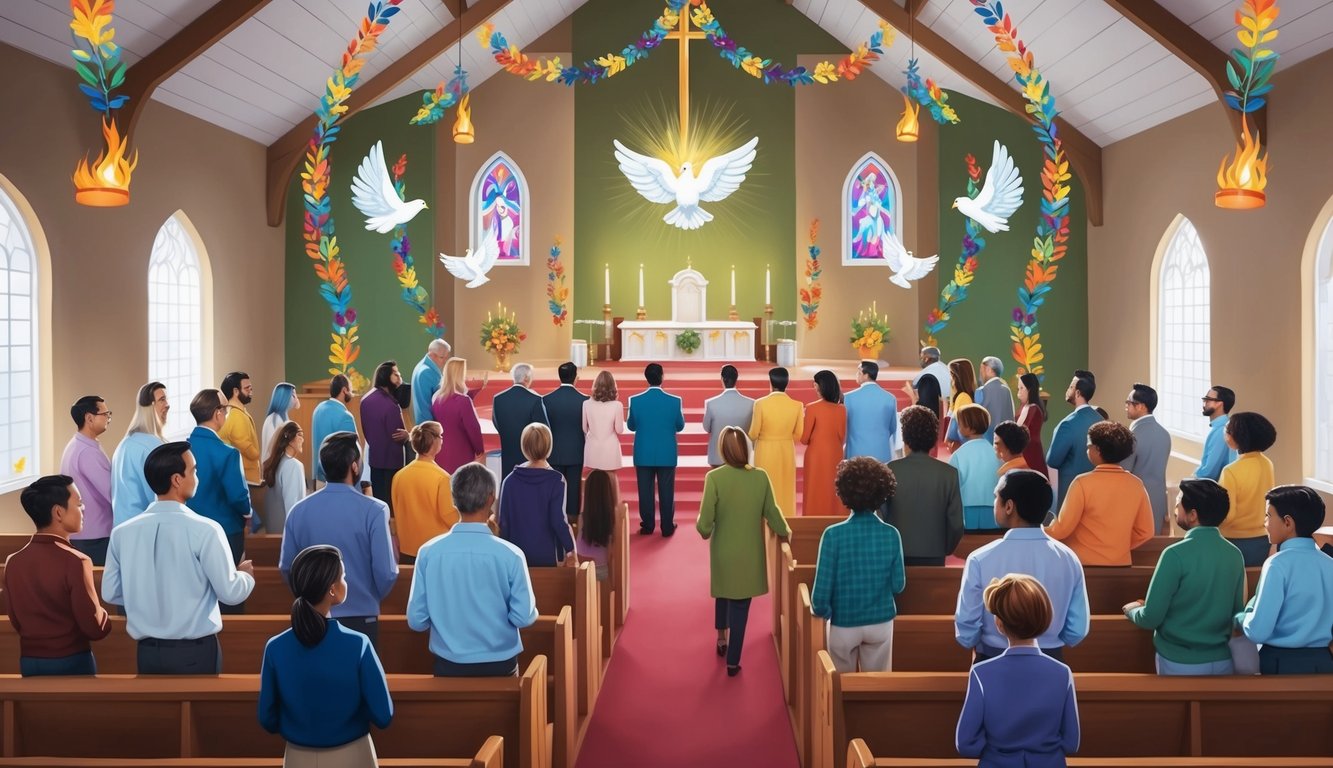
As the liturgical calendar awakens with the rustle of wind and the flicker of flame, the church gathers to commemorate the day the Holy Spirit descended upon the early believers. This moment, known as Pentecost, is not merely a historical reenactment; it is a vibrant invitation to experience the living breath of God within a modern faith community. Embedding a vivid visual reminder—such as the image of an illuminated Pentecost scene—can set the tone and stir hearts as the congregation steps into the sanctuary.
Understanding Pentecost: The Outpouring of the Spirit
Pentecost, rooted in the Jewish Feast of Weeks, marks the fulfillment of the promise that “in the last days I will pour out my Spirit on all flesh” (Joel 2:28). For the early church, the sound of a rushing wind and the appearance of tongues of fire signaled a radical democratization of divine presence, breaking barriers of language, culture, and status. In today’s church, this narrative invites us to recognize that the Spirit is not confined to a select few but is poured out universally, urging a sense of unity that transcends pew‑side boundaries. By meditatively recalling this outpouring, the congregation can feel the exhilarating possibility that every believer possesses an innate capacity for prophecy, service, and communal transformation.
Planning a Pentecostal Celebration: Liturgical Choreography
A successful Pentecost service resembles a carefully orchestrated dance, where each element steps in rhythm with the next. Begin by assembling a planning team that includes worship leaders, musicians, and visual‑arts coordinators. Draft a timeline that integrates the liturgical seasons—pre‑Pentecost prayer vigils, the reading of the Acts narrative, and a post‑service fellowship that continues the momentum. Consider a “procession of fire,” where ushers carry lanterns or handheld flames down the aisle, echoing the biblical tongues of fire. This choreography should blend reverence with exuberance, allowing the congregation to move from quiet contemplation to joyous celebration without jarring transitions.
Scripture and Song: Crafting a Pentecostal Narrative
The biblical story of Pentecost, found in Acts 2:1‑13, provides the scriptural backbone for the day’s preaching. Choose a preaching series that explores the themes of empowerment, diversity, and mission. Pair the spoken word with music that reflects the same pneumatic vigor—hymns such as “Come, Holy Spirit, Heavenly Dove” alongside contemporary choruses that invoke the wind’s gentle yet powerful breath. Include a responsive reading that mirrors the speaking in tongues, inviting multilingual participants to voice prayers orScripture verses in their native tongues. This audible tapestry not only celebrates linguistic diversity but also illustrates the Spirit’s ability to unite disparate voices into a harmonious chorus.
Symbolic Decor and Atmosphere: Visual Pneumatology
Environment speaks a language all its own. Transform the worship space with symbols that evoke fire, wind, and breath. Drape red and orange fabrics across the altar, or suspend paper lanterns that sway as though caught in a gentle gale. Use projected imagery of swirling clouds or flame‑like patterns on screens to create a dynamic backdrop. Incorporate a central banner featuring the visual reminder of Pentecost, reinforcing the visual narrative for congregants as they gather. When lighting candles, allow their flames to flicker in unison, symbolizing the communal nature of the Spirit’s ignition within each heart.
Engaging the Congregation: Interactive Fellowship and Testimony
Pentecost is not a spectator event; it invites active participation. Arrange small‑group breakout sessions where members share personal testimonies of moments when they felt “filled” by the Spirit. Use interactive prayer stations—each station featuring a different element such as water, breath (blowing through a straw), or a flame—to tactile experience the symbols. Offer a “prayer wall” where individuals write aspirations on paper tongues that can be attached to a movable “fire” installation. By integrating kinesthetic elements, the congregation moves beyond passive listening, encountering the Spirit through embodied experiences that resonate long after the service concludes.
Extending the Celebration: Beyond the Sunday Service
The outpouring of the Spirit does

