

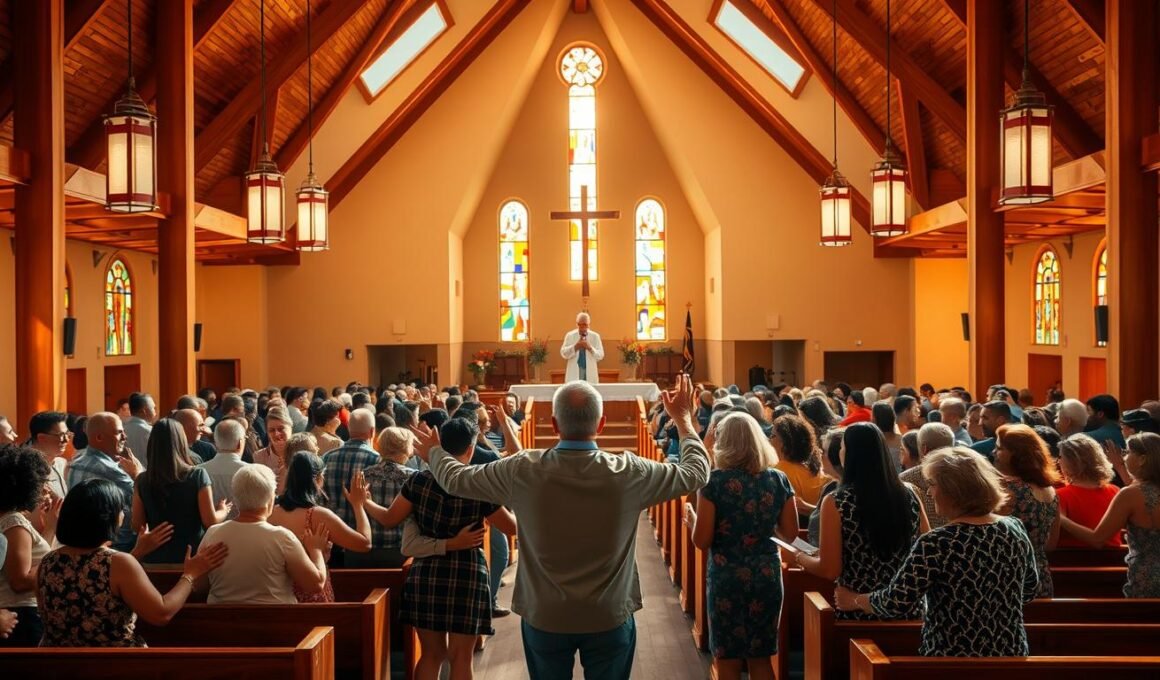
In the grand symphony of faith, unity is not merely a note—it is the very harmony that elevates the melody to celestial heights. A church unity campaign is not just a call to action; it is an invitation to weave the threads of individual hearts into a tapestry of collective purpose, where every strand shimmers with shared devotion. But how do we transform this lofty ideal into a living, breathing reality within the congregation? The answer lies not in top-down decrees, but in the alchemy of communal participation, where each member becomes both artist and canvas in the masterpiece of unity.
The Foundation: Laying the Cornerstone of Shared Vision
Before the first brick is laid, the architect must sketch the blueprint with precision. Similarly, a unity campaign begins with a shared vision—a radiant North Star that guides every step. This vision must be more than a slogan; it must pulse with life, resonating in the hearts of the congregation like a heartbeat. Begin with storytelling: invite members to share their personal encounters with unity—moments when division dissolved into harmony, or when collective prayer felt like a single breath. These narratives are the mortar that binds the vision to reality. Host a “Vision Night,” where the campaign’s purpose is unveiled not as a directive, but as a shared dream, painted in vivid hues of hope and purpose.
The Bridge: Connecting Diverse Threads into a Unified Fabric
Unity is not the erasure of differences, but the celebration of them—like the vibrant threads in a kente cloth, each unique yet contributing to a greater whole. To involve the congregation, create platforms where diversity is not just acknowledged but woven into the campaign’s fabric. Form “Unity Circles,” small groups that reflect the congregation’s mosaic of ages, backgrounds, and spiritual gifts. These circles become laboratories of connection, where members explore how their individual strengths can fortify the collective. Assign each circle a metaphorical role—some as “Bridge Builders” to mend generational gaps, others as “Storytellers” to amplify marginalized voices. The goal? To transform the campaign from a monologue into a chorus, where every voice is not just heard but essential.
The Catalyst: Sparking Momentum with Irresistible Initiatives
A unity campaign must be more than a sermon—it must be an experience that lingers like the aftertaste of a shared meal. Introduce initiatives that are as engaging as they are meaningful. Launch a “Unity Chain,” where members pass a symbolic object—a polished stone, a candle, a handwritten note—each adding a layer of intention before passing it on. The chain grows heavier with each addition, a tangible reminder of how individual commitments compound into collective strength. Alternatively, host a “Unity Feast,” where potluck dishes are labeled with the stories behind them—comfort foods from childhood, recipes passed down through generations. As members savor the flavors, they savor the shared heritage that unites them.
The Scaffold: Building Structures That Sustain the Momentum
Even the most inspired campaigns can falter without scaffolding—structures that hold the vision aloft until it becomes self-sustaining. Establish “Unity Ambassadors,” volunteers who act as liaisons between leadership and the congregation. Their role is not to dictate, but to listen, to identify barriers to unity, and to co-create solutions with their peers. Pair this with a “Unity Journal,” a communal notebook where members record acts of kindness, moments of reconciliation, or prayers offered for one another. Over time, the journal becomes a living testament to the campaign’s impact, a scroll of shared grace that members can revisit to reignite their commitment.
The Mirror: Reflecting Progress Through Visible Milestones
Humans are visual creatures, and progress must be seen to be believed. Create a “Unity Wall,” a physical or digital space where milestones are celebrated in real time. Post photos of Unity Circle gatherings, quotes from members about their experiences, and before-and-after snapshots of the congregation’s growing sense of togetherness. For a more tactile approach, plant a “Unity Garden” in the church courtyard, where each member contributes a stone or a plant inscribed with a prayer or hope for the community. As the garden flourishes, so too does the spirit of unity, a living metaphor for what the campaign seeks to achieve.
The Flame: Igniting a Culture of Unity Beyond the Campaign
A campaign’s true success is not measured in its duration, but in its legacy. To ensure unity becomes the congregation’s heartbeat, embed it into the church’s DNA. Revise the mission statement to include a commitment to unity as a core value. Introduce a “Unity Sunday” each quarter, where the pulpit is handed to members—not just leaders—to share how they’ve witnessed or practiced unity in their lives. Create a “Unity Pledge” that members can recite during worship, a vow to seek reconciliation, celebrate diversity, and prioritize the collective good. Most importantly, model unity from the pulpit down: when leaders admit their own struggles with division and demonstrate vulnerability, the congregation follows suit.
The Harvest: Reaping the Fruits of a United Congregation
The ultimate measure of a unity campaign’s success is not in the number of events held, but in the transformation of the congregation itself. A united church becomes a beacon—a place where newcomers feel the warmth of belonging, where conflicts are resolved with grace, and where the community’s impact radiates outward like ripples in a pond. The fruits of unity are seen in the single mother who finds childcare support, the grieving widow who is embraced by the congregation, the teenager who discovers a mentor in an unexpected place. These are not just anecdotes; they are the living proof that the campaign was not a fleeting effort, but a sacred awakening.
To involve the congregation in a church unity campaign is to embark on a pilgrimage—not to a distant land, but to the shared heart of the community. It is a journey where every step is taken together, where every voice adds depth to the melody, and where the destination is not a place, but a people, bound not by uniformity, but by the unshakable belief that together, they are stronger. The campaign is not the end, but the beginning of a legacy written in the language of love, where unity is not a campaign, but a way of life.

