

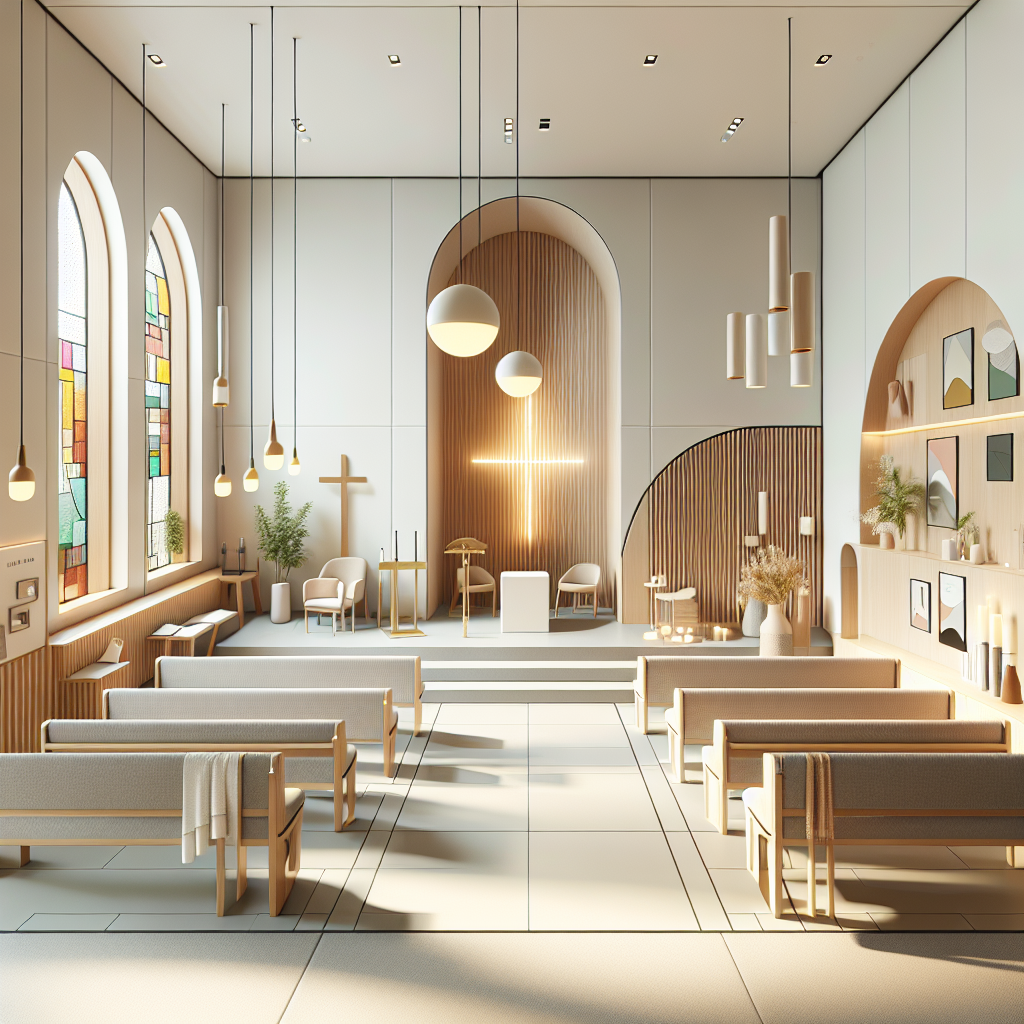
When a congregation’s vision meets the reality of a modest footprint, the challenge becomes an invitation to reimagine sacred architecture.有限的土地并不意味着受限的灵感;相反,它激发了对空间每一寸的深度敬畏与创新运用。本文将通过一系列前瞻性的构思,揭示在狭小场地上建造小型教堂的可行路径,帮助读者从传统思维的桎梏中跃出,领略到紧凑环境里蕴含的宏伟精神。
Elevating the Horizon: The Vertical Dimension
Verticality is the quiet virtuoso of confined sites. By climbing upward, a sanctuary can inherit the sky’s canopy without expanding its ground imprint. Lofted galleries, suspended mezzanines, and soaring steeple towers serve not merely as structural feats but as symbolic ladders toward the divine. Incorporating narrow, glazed shafts floods the interior with diffused daylight, while a multi‑tiered balcony allows intimate seating clusters that still preserve communal resonance.
Flexibility as Liturgy: Modular Seating and Portable Altars
In a small chapel, immobility is a luxury; adaptability becomes the cornerstone of worship. Lightweight, foldable benches and stackable chairs permit rapid reconfiguration for prayer, music, or fellowship, turning the nave into a chameleon of collective experience. Portable altar tables and modular lecterns enable choreographed transitions between sacred rites, preserving reverence while maximizing usable square footage.
Luminescence without Compromise: Natural Light Strategies
Sunbeams, when artfully channeled, can transmute modest dimensions into radiant sanctuaries. Clerestory windows, roof lanterns, and reflective light wells draw daylight deep into the interior, eliminating the gloom that often haunts cramped spaces. Strategic placement of mirrored panels can create the illusion of infinite depth, offering congregants a sense of expansiveness without expanding walls.
Polyvalence in Plan: Multi‑Purpose Zones
A small church need not be a single‑function box; it can be a symphony of overlapping uses. By delineating zones with sliding partitions, movable screens, or retractable dividers, a sanctuary can simultaneously host worship services, community meals, and educational workshops. This polyvalence reduces the need for expansive square footage, allowing the building to breathe with the varied rhythms of parish life.
Material Innovation: Sustainable and Space‑Efficient Choices
The selection of materials can either inflate or condense spatial perception. Reclaimed timber, cross‑laminated bamboo, and prefabricated steel panels deliver structural integrity while leaving a smaller carbon imprint. Their slender profiles enable slender walls, maximizing interior volume. Moreover, exposed structural elements become aesthetic features, imbuing the space with an organic, handcrafted warmth.
Acoustic Alchemy in Limited Volumes
Sound behaves differently in a tight enclosure; it can become either a muffled murmur or a crystalline hymn. Implementing acoustic panels with micro‑perforations, diffusive ceiling baffles, and strategically placed reflective surfaces can sculpt the auditory landscape. These interventions ensure that spoken word and music travel with clarity, preserving the spiritual intimacy that defines a small‑scale gathering.
Integrating the Outdoors: Courtyards and Sylvan Atriums
When interior space is scarce, the surrounding landscape becomes an extension of the sanctuary. An open‑air courtyard, a shaded garden cloister, or a compact rooftop terrace can host outdoor masses, processional pathways, or quiet meditation stations. Natural elements such as stone pathways, water features, and native plantings blur the boundary between inside and outside, offering congregants a sylvan refuge within the urban fabric.
Technological Symbiosis: Compact AV and Digital Connectivity
Technology can bridge distances without expanding footprints. High‑definition, low‑profile projectors, concealed speaker arrays, and wireless streaming platforms enable remote participation while preserving the sanctuary’s visual serenity. Digital signage can dynamically display hymns, scripture, and announcements, eliminating the need for bulky bulletin boards and preserving floor space.
Community‑Centric Design: Involving the Parishioners
Designing a small church is inherently a communal act. Engaging congregation members in design charettes, participatory workshops, and local artisan collaborations ensures that the built form reflects the lived faith of its occupants. Custom‑crafted stained glass, hand‑carved wooden motifs, and locally sourced stone can embed cultural narratives into the very bones of the building, fostering a sense of ownership and pride.
Fiscal Foresight: Budget‑Conscious Construction
A limited budget demands ingenuity, not sacrifice. Phased construction, volunteer labor, and bulk purchasing of sustainable materials can dramatically reduce costs. Leveraging tax incentives for green building, seeking grants for historic preservation, and organizing fundraising campaigns that harness collective enthusiasm can transform financial constraints into creative catalysts.
Spiritual Atmosphere: The Intangible Geometry
Beyond measurable dimensions, a chapel’s soul is shaped by intangible geometry—proportion, rhythm, and light. Symmetrical arches, subtly angled ceilings, and a carefully placed focal point can guide the eye and spirit toward transcendence. The interplay of shadow and glow, the whisper of air moving through narrow vents, and the scent of cedar-infused wood can evoke a sacred ambience that belies the building’s modest size.

