

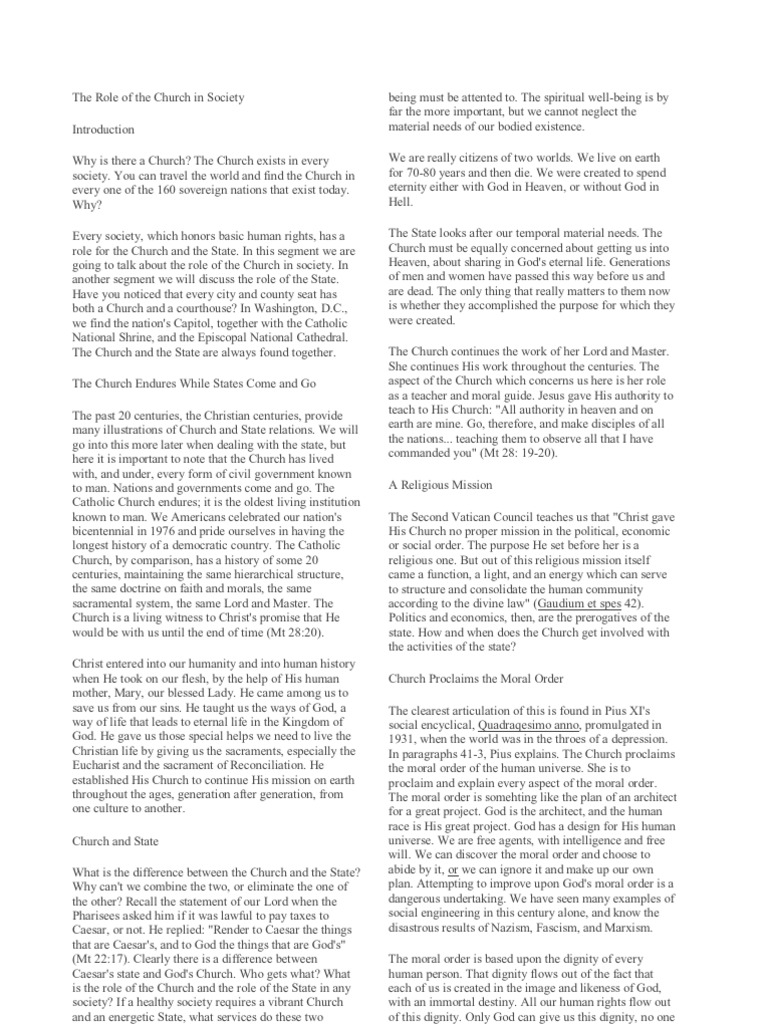
When the cathedral bells toll across a bustling city, they do more than mark the hour—they echo a centuries‑old invitation to rethink the place of faith in the public square. In contemporary discourse, the Church often finds itself at a crossroads: a guardian of tradition yet a catalyst for transformation. This narrative explores the evolving tapestry of ecclesiastical influence, revealing how sacred stewardship can reshape civic imagination, moral discourse, and communal welfare.
The Bedrock of Tradition: Historical Foundations of Public Presence
From the earliest basilicas to medieval monasteries, the Church has long served as an architect of societal structures. Its councils forged legal codes, its charitable networks alleviated famine, and its scholastic traditions preserved knowledge amid chaotic upheaval. These precedents embed a resilient framework within modern consciousness, reminding congregants that spiritual authority can coexist with temporal responsibility. The echo of past triumphs and tribulations informs today’s believers, encouraging them to view the Church not as an antiquated relic but as an enduring pillar of communal identity.
Liturgical Stewardship: Where Sacred Rites Intersect Civic Life
Liturgy, in its sacramental choreography, is a performance of transcendence that often spills beyond nave walls. Processions, vespers, and feast day celebrations become public spectacles, inviting passersby to glimpse the numinous. By intertwining ritual with community outreach—food drives during Lent, or blessing of newly built homes—the Church sutures the sacred to everyday existence. This liturgical stewardship demonstrates that worship is not a hermetic retreat but a dynamic exchange between the divine and the human, fostering a collective sense of purpose and belonging.
Moral Compass: Ethical Guidance Amidst Pluralism
In a pluralistic arena where competing ethical claims vie for attention, the Church offers a distinctive moral compass rooted in a coherent theological anthropology. Its pronouncements on human dignity, the preferential option for the poor, and the sanctity of creation provide a lens through which believers—and sometimes the broader public—interpret pressing issues like immigration, bioethics, and environmental stewardship. This prophetic voice, though sometimes controversial, serves as a catalyst for dialogue, urging society to confront systemic injustices with an ethical urgency that transcends partisan politics.
Caritative Institutions: The Hands of Compassion in Action
Beyond preaching, the Church operates a sprawling network of hospitals, shelters, and food banks. These institutions embody the theological concept of “caritas”—love made visible. Their reach extends across continents, delivering essential services regardless of creed. In doing so, they operationalize faith, turning abstract devotion into tangible social impact. The presence of these charities also models a decentralized, lay‑driven approach to welfare, highlighting how communal resources can supplement state efforts without supplanting them.
Educational Apostolate: Forming Minds and Hearts
Schools and universities bearing ecclesiastical patronage have long been crucibles for intellectual and moral formation. By integrating humanist inquiry with theological reflection, these academies cultivate graduates equipped to navigate complex ethical terrain. The tradition of “scholasticus” persists, encouraging critical thinking while grounding students in a transcendent worldview. In this capacity, the Church acts as an incubator for future leaders who can mediate between faith‑based convictions and secular expertise.
Interfaith Dialogue: Building Bridges Across Traditions
Modern society is a mosaic of faiths and philosophies. The Church, recognizing this heterogeneous tapestry, increasingly engages in interfaith dialogue, participating in joint charitable ventures, peacebuilding workshops, and ethical symposia. Such collaboration demonstrates a willingness to listen, learn, and co‑create solutions to shared challenges. This openness does not dilute ecclesiastical identity but enriches it, fostering mutual respect and collective responsibility.
Political Engagement: Navigating Church‑State Dynamics
The relationship between ecclesiastical authority and political structures has never been static. From medieval monarchic alliances to contemporary advocacy for religious freedom, the Church calibrates its interventions to preserve both spiritual integrity and civic harmony. Through lobbying, public statements, and grassroots mobilization, it shapes legislation on matters like family policy, asylum seekers, and climate action. The delicate art of “political stewardship” requires wisdom, ensuring that faith does not become a pawn in partisan games yet remains a voice that can orient public conscience.
Cultural Catalyst: Art, Media, and the Public Imagination
From Gothic cathedrals to contemporary sacred art installations, the Church has historically wielded aesthetic influence. Today, digital platforms enable parishes to broadcast homilies, host virtual prayer groups, and curate social media campaigns that engage the zeitgeist. By harnessing multimedia storytelling, ecclesiastical communicators re‑frame theological narratives for contemporary audiences, inviting好奇 (curiosity) and contemplation. This cultural agility ensures that sacred symbols remain resonant, shaping public imagination beyond ceremonial contexts.
Resilience in Modernity: Confronting Secular Pressures
Secularization, technological disruption, and changing sexual ethics pose formidable challenges. Yet the Church’s capacity for renewal is evident in its adaptive liturgical reforms, lay leadership initiatives, and inclusive ecumenical councils. By embracing transparency, accountability, and a commitment to social justice, ecclesiastical institutions can transform perceived threats into opportunities for deepening relevance. The narrative of resilience underscores an ongoing metamorphosis—faithful to tradition yet responsive to the present moment.
Future Horizons: Emerging Opportunities for Church Engagement
Looking ahead, the Church stands at a crossroads of possibilities. Initiatives in environmental advocacy, digital ministry, and mental‑health chaplaincy are poised to expand its societal footprint. As global migration reshapes demographics, parishes can become hubs of intercultural integration. By prioritizing accompaniment—walking alongside migrants, refugees, and marginalized communities—the Church can embody a prophetic hospitality that redefines its role in the modern public sphere. The horizon is not a distant dream but a beckoning pathway illuminated by centuries of faithful witness.
In sum, the Church in modern society is not a monolith waiting passively for relevance; it is a living organism, pulsating with liturgical fervor, caritative zeal, and prophetic insight. By intertwining sacred tradition with contemporary praxis, it offers a distinctive lens through which humanity can navigate complexity, foster communal solidarity, and glimpse transcendent meaning amid the flux of everyday life.

