

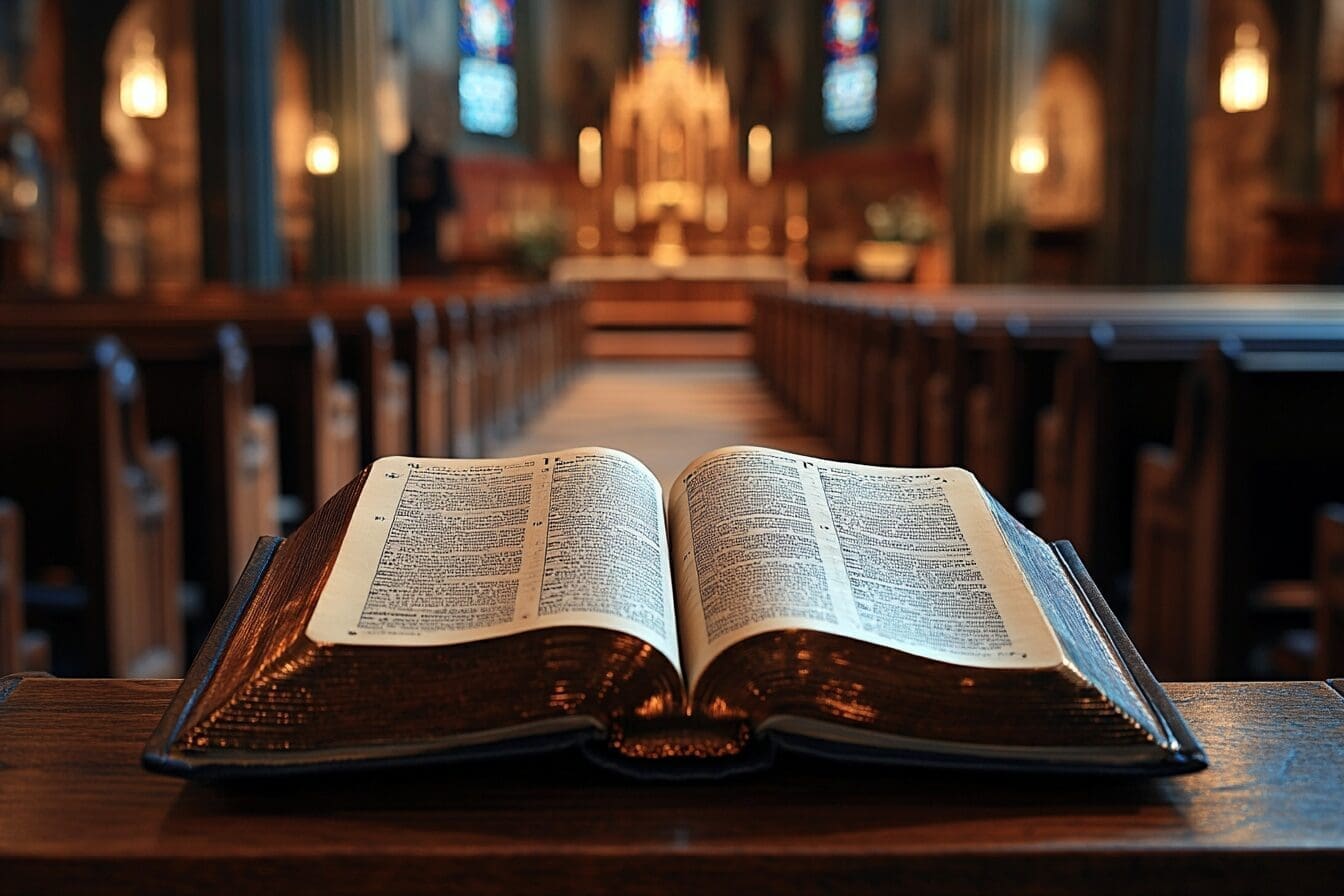
Have you ever pondered the profound words of scripture while sitting in a serene pew? Within the walls of an Episcopal church, the very essence of worship and community intertwines with ancient texts. This prompts an inquiry: What Bible do Episcopalians use? The answer is multifaceted and deeply interwoven with tradition, theology, and the evolution of religious practices.
To understand the text cherished by Episcopalians, one must first appreciate the doctrines underpinning the denomination. The Episcopal Church is part of the worldwide Anglican Communion. This connection brings with it a rich heritage that has informed not only a unique liturgical customs but also the sacred texts utilized during worship. Historically, Anglicans prioritize a balance of scripture, tradition, and reason, which shapes their approach to biblical interpretation and worship.
At the core of Episcopal worship lies the New Revised Standard Version (NRSV). Known for its inclusive language and commitment to accuracy, the NRSV is widely accepted as the ecclesiastical standard. It is a translation that seeks fidelity to the original languages while remaining comprehensible to modern readers. The NRSV is often regarded as the most reliable translation for academic and liturgical purposes, reflecting the Episcopal Church’s dedication to intellectual engagement with scripture.
However, the NRSV is not the sole translation used within the Episcopal Church. Variation exists based on individual parishes and personal preferences. Many Episcopalians turn to the New International Version (NIV) for its contemporary readability or the Common English Bible (CEB), which focuses on clarity and accessibility. Interestingly, individuals may dabble between translations, engaging with different versions for study, devotion, and reverence, thus enriching their spiritual journey.
One might wonder if the distinctions among these translations create a challenge for congregational harmony. How does one sermon resonate when parishioners flip through different copies of the Word? This question underscores the essence of community and dialogue within worship settings. The Episcopal Church thrives on the notion of inclusivity, allowing for a burgeoning tapestry of theological discourse present within sermons and personal reflections.
To deepen the understanding of scripture, many Episcopalians join study groups or Bible classes, both of which offer platforms for discussing various translations. Such gatherings exemplify the church’s ethos of engaging intellect alongside faith. Participants often grapple with interpretations, seeking consensus or simply enjoying the rich diversity of thought that arises from differing translations. This nurtures a sense of fellowship that transcends simple adherence to a single version of the Bible.
Moreover, when considering the question of which Bible to use, one cannot ignore the liturgical context. The Book of Common Prayer (BCP), a cornerstone of Episcopal worship, integrates scripture into its rituals. The readings for Sunday services are meticulously chosen and outlined in the church calendar. This structure contributes to a cohesive understanding of faith, as congregants explore the same passages throughout the liturgical year, fostering a shared journey through the scriptures.
The lectionary system plays an essential role in this communal journey, guiding which scripture passages are read at various services. The choices reflect a balance of Old and New Testament readings as well as selections from the Psalms, all carefully curated to amplify theological themes relevant to the worship experience. Each chosen passage, regardless of the translation, invites the faithful to delve deeper into the divine narrative that has shaped their beliefs for centuries.
That said, the NRSV remains predominant during Episcopal services because it aligns with the tradition of the church’s worship and education. The translation’s emphasis on gender inclusivity and scholarly fidelity resonates well within the Episcopal community’s commitment to justice and equality. This commitment is essential not just in the pews but extends to addressing societal challenges, fostering an environment where the Word is alive and can genuinely inform advocacy for the marginalized.
Furthermore, amidst diverse theological perspectives, the pervasive nature of the Episcopal Church fosters an atmosphere where questioning and inquiry are not only welcomed but encouraged. This focus on exploring faith can reshape the conventional approach to scripture. Scholars, clergy, and laypersons alike often engage in discussions centered around interpretation, context, and application; conversations that are bound to enrich one’s understanding of the Biblical text.
In the context of these discussions, we might ask: how does personal scripture choice reflect one’s spiritual journey? For some, a preference for the style of language or thematic focus of a particular translation can speak volumes about their relationship with the divine. Thus, Episcopalians are encouraged to choose Bibles that resonate with their experience, whether it’s the poetic elegance of the King James Version or the simplicity of a modern dynamic equivalent translation.
In conclusion, the question of what Bible Episcopalians use unveils a rich tapestry of history, community, and personal faith. While the NRSV stands as the prevalent version within the church, the plethora of available translations allows for a deeper exploration of scripture that is both personal and communal. The dialogue generated by diverse textual interpretations brings forth a vibrant faith that reflects the authenticity, compassion, and commitment of the Episcopal Church. As congregants gather, engaged in worship and exploration, they embrace the challenge of reconciling their unique journeys with collective belief, fostering a dynamic faith community inspired by the Word.

