

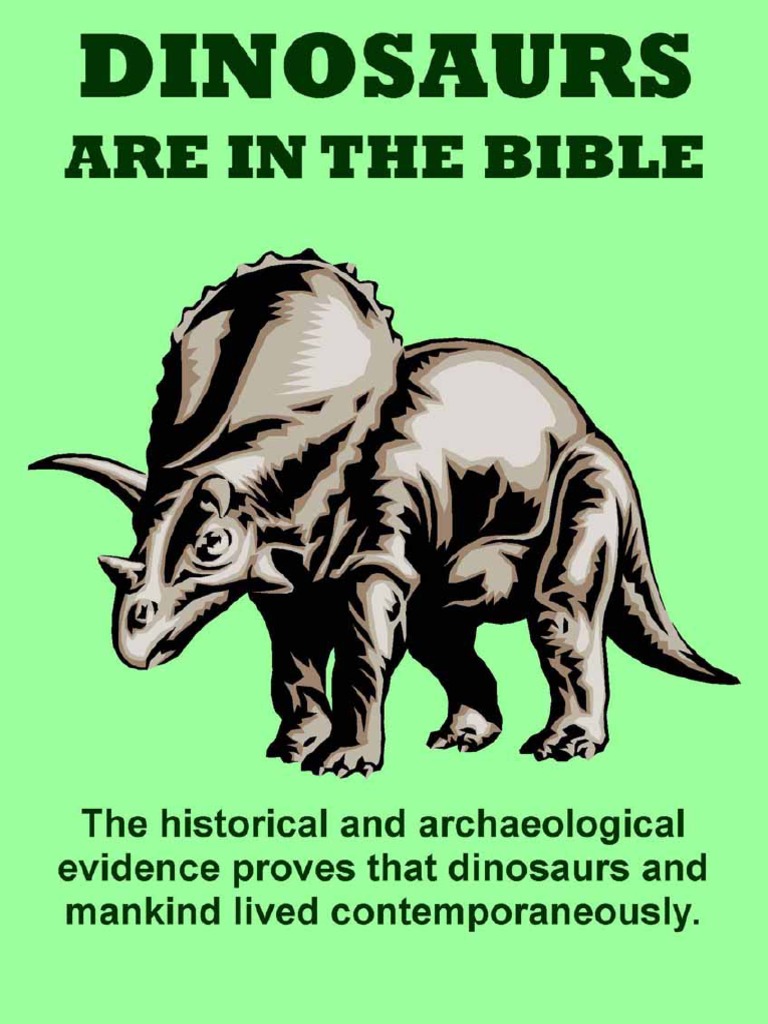
The mention of dinosaurs in biblical texts invites a fascinating exploration through a rich tapestry of history, myth, and interpretive challenges. For many, dinosaurs represent an era far removed from the narratives found within ancient scripture. Yet, entwined in the pages of the Bible are references that have intrigued theologians, paleontologists, and the curious alike. This article seeks to unravel the connections, implications, and complexities surrounding the notion of dinosaurs within the biblical context.
First, it is critical to establish what the Bible conveys about creatures that may resemble or embody the essence of what we now recognize as dinosaurs. The term “dinosaur” itself is a modern construction, originating in the 19th century, derived from Greek words meaning “terrible lizard.” However, the Bible alludes to giant creatures that some conjecture could parallel these ancient reptiles. The most notable mention arises from the Book of Job, particularly in Chapter 40, where one encounters a mysterious entity referred to as “Behemoth.” This creature is described with attributes that evoke an image of a colossal, formidable beast.
Job 40:15-24 portrays Behemoth as a creation of God, a creature that grazes on grass like an ox, embodying immense strength, a massive tail likened to a cedar tree, and bones forged like iron. The vivid imagery paints a picture that tantalizes the imagination—many speculate that it may resemble the sauropod dinosaurs known to have roamed the Earth millions of years ago. Behemoth’s characteristics compel one to ponder the coexistence of mankind and these magnificent creatures within a shared divine narrative.
Another noteworthy creature featured in scripture is “Leviathan,” described in Job 41 and referenced in several psalms and prophetic texts. The Leviathan is depicted as a formidable sea monster, adorned with scales and instilling fear in those who encounter it. The vivid description of Leviathan, with its impenetrable skin and fearsome demeanor, evokes the image of large marine reptiles, perhaps akin to the ichthyosaurs or pliosaurs that once ruled the oceans. By examining such monstrous beings, one begins to speculate on the metaphorical significance that these creatures may impart to the human experience.
While some enthusiasts fervently argue that these Biblical descriptions point directly to dinosaurs, a more nuanced perspective reveals the layers of interpretation that scripture invites. The descriptions of Behemoth and Leviathan may not solely intend to convey zoological accuracy. Instead, they emerge as powerful symbols of God’s omnipotence and the unfathomable wonders of creation. In this light, these creatures serve as reminders of the awe-inspiring aspects of nature and the divine will behind it.
The essence of these mighty beasts further underscores humanity’s perception of both divine creation and a turbulent world. By embodying chaos, might, and the raw power of nature, the Behemoth and Leviathan exemplify challenges that mankind faces in the pursuit of understanding existence. These symbols compel the living to recognize their position within a vast creation that, while daunting, is ultimately governed by a higher power.
Another compelling element to consider is the notion of early interpretations and manuscripts that emerged as humanity sought to reconcile empirical discoveries with faith. The early Church’s encounter with natural history often posed theological dilemmas. Notably, the dating of the Earth and the existence of dinosaurs were not fully understood until relatively recently. This historical gap creates an intersection between faith and science, generating fertile ground for dialogue, exploration, and, at times, discord.
The scientific narrative of evolutionary biology often presents a stark contrast to the biblical creation narrative. Yet reconciling these two perspectives doesn’t have to be an adversarial endeavor. Some theologians suggest that the days of creation described in Genesis might not be inflexible timeframes but rather epochs in a grander scheme of divine design—a framework in which dinosaurs could arise, flourish, and ultimately become extinct long before the advent of humanity.
As we delve deeper into these matters, one must interrogate what the existence of such creatures signifies in the broader context of faith, scientific inquiry, and ecological stewardship. The extinction of the dinosaurs heralded monumental shifts in Earth’s biosphere, paving the way for mammals and ultimately humankind to dominate the landscape. The intricate dance of creation and extinction invites reflection on humanity’s responsibility to preserve the biodiversity that continues to emerge before us.
In contemporary society, the echoes of these magnificent creatures resonate beyond the realms of theoretical musings. The narrative of extinction permeates discussions on environmental conservation, instilling a duty to safeguard the delicate balance of our ecosystems. As one learns about the historical coexistence of massive creatures and the evolution of life, the importance of preserving what remains becomes ever more urgent.
Embracing these reflections on dinosaurs and their potential biblical connections inspires a sense of wonder and responsibility. As the feeling of curiosity together with reverence grows, individuals may find themselves compelled to engage in the preservation and stewardship of the planet. Ultimately, the lens through which one perceives the ancients of the Earth—whether through myth, faith, or science—may shape the aspirations we hold for the world we inhabit today. And as storytelling intertwines with our environmental narrative, perhaps the lessons gleaned from Behemoth and Leviathan will guide us toward a more harmonious existence with the planet and all its inhabitants.

