

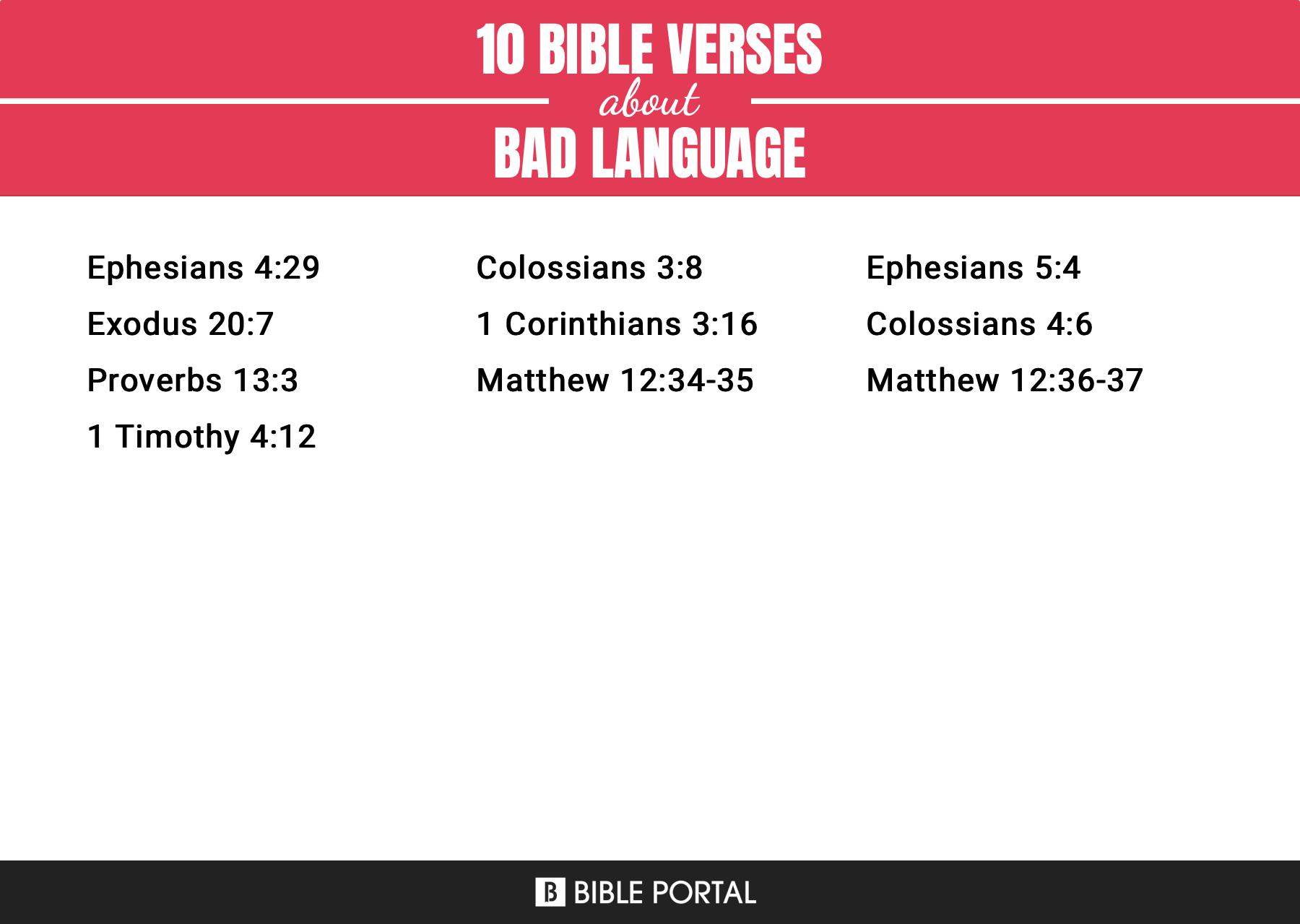
Language is a powerful tool, capable of shaping thoughts, influencing actions, and defining character. Within the pages of the Bible, the profound implications of language—including bad or foul language—are contemplated with an air of reverence. The scripture immerses us in the realm of words, urging us to reflect on their potential for both harm and healing. This exploration of what the Bible articulates regarding bad language unveils a rich tapestry of wisdom applicable to modern society.
At its core, the Bible confronts the issue of language with clarity. In the Book of Proverbs, one encounters a plethora of admonitions against the pitfalls of reckless speech. Proverbs 18:21 states, “Death and life are in the power of the tongue, and those who love it will eat its fruit.” This verse encapsulates the essence of how words can wield life-sustaining or damaging power. It serves as a reminder that the words we choose not only reveal our character but also have consequences that can extend beyond ourselves.
Furthermore, the New Testament adds layers to this conversation. In the Epistle of Ephesians, specifically Ephesians 4:29, there is a poignant exhortation: “Let no corrupting talk come out of your mouths, but only such as is good for building up, as fits the occasion, that it may give grace to those who

