

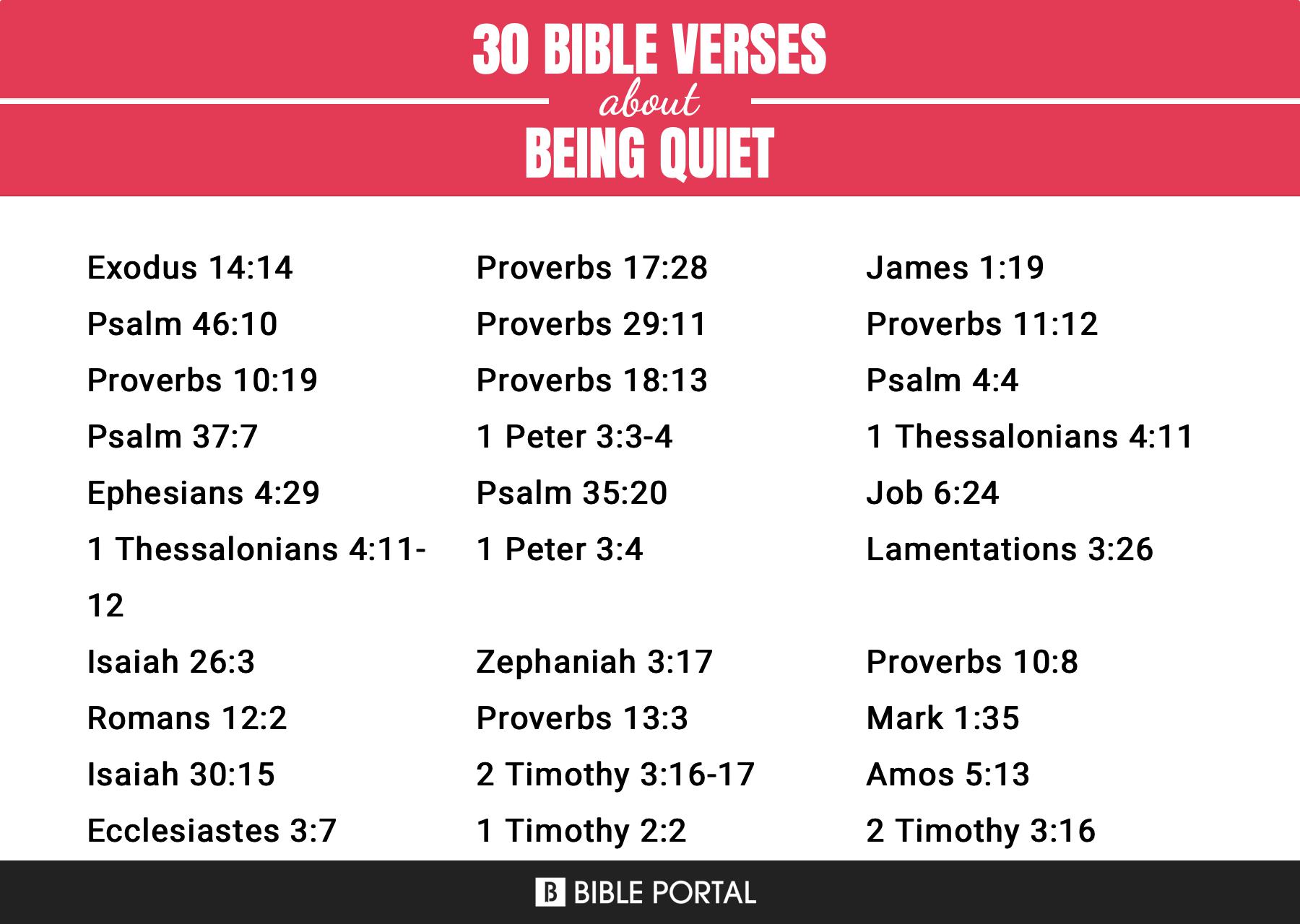
In a world overflowing with noise, incessant chatter, and the unrelenting clamor of modern life, the concept of being quiet holds profound significance. The Bible, a timeless compendium of spiritual wisdom, illuminates this notion by highlighting the multifaceted benefits of quietness. Throughout its pages, scripture offers insights that urge reflection, meditation, and a deeper understanding of one’s inner self.
One of the most poignant observations from biblical teachings is the call to pause amidst the frenetic pace of existence. In Proverbs 17:28, we find that “even a fool who keeps silent is considered wise; when he closes his lips, he is deemed intelligent.” This verse subtly yet effectively conveys that silence is an intrinsic form of wisdom. It suggests that sometimes, the act of restraining our words can prevent conflict, enhance understanding, and promote an aura of respect. The weight of our thoughts often carries more significance when expressed through stillness rather than volubility.
Moreover, being quiet enables a deeper communion with the divine. Psalm 46:10 beckons us to “be still and know that I am God.” This exhortation emphasizes the importance of solitude in the journey of faith. It is within the quiet moments—those instances carved out for introspection and contemplation—where individuals can cultivate a genuine relationship with their spirituality. These tranquil interludes allow space for God’s voice to resonate, for clarity amidst chaos, and for revelation in times of uncertainty.
The act of being quiet also serves a dual purpose: it fosters both internal peace and external harmony. In Ecclesiastes 3:7, there is a time to “keep silence and a time to speak.” This duality illustrates life’s ebb and flow, advocating for mindfulness regarding when to voice opinions and when to embrace reticence. It reinforces the idea that silence can be a powerful tool, capable of defusing tension and creating a conducive environment for constructive dialogue. The ambient quiet becomes a fertile ground for reflection, allowing individuals to approach conversations with renewed wisdom and understanding.
Furthermore, the Book of James offers a critical perspective on the impact of words. James 1:19 admonishes, “let every person be quick to hear, slow to speak, slow to anger.” This scripture profoundly advocates for the virtue of listening over speaking, presenting being quiet not merely as an absence of sound but as an active engagement in understanding others. By choosing to listen first, we approach interactions with empathy, cultivating meaningful connections that often transcend mere verbal exchanges.
The significance of being quiet also extends to personal growth. In moments of quietude, individuals can evaluate their emotions, desires, and life paths. Psalm 62:1 states, “For God alone my soul waits in silence; from him comes my salvation.” In this waiting, one discovers strength and renewal; in seeking silence, the soul is empowered to confront its vulnerabilities. The stillness becomes a sanctuary for personal transformation where one can reconcile past traumas, embrace forgiveness, and set intentions for the future.
In conclusion, the biblical insights on being quiet encapsulate a profound understanding that transcends mere physical silence. The interplay between silence and wisdom, spiritual communion, personal growth, and communal harmony creates a rich tapestry of meaning that invites individuals to embrace the power of quietude. As society becomes increasingly volatile and chaotic, these ancient teachings remind us that perhaps, it is in the quiet moments that we find our truest selves. Seeking silence is not simply about speaking less; it is a deeper call to listen more—to ourselves, to others, and to the divine.

