

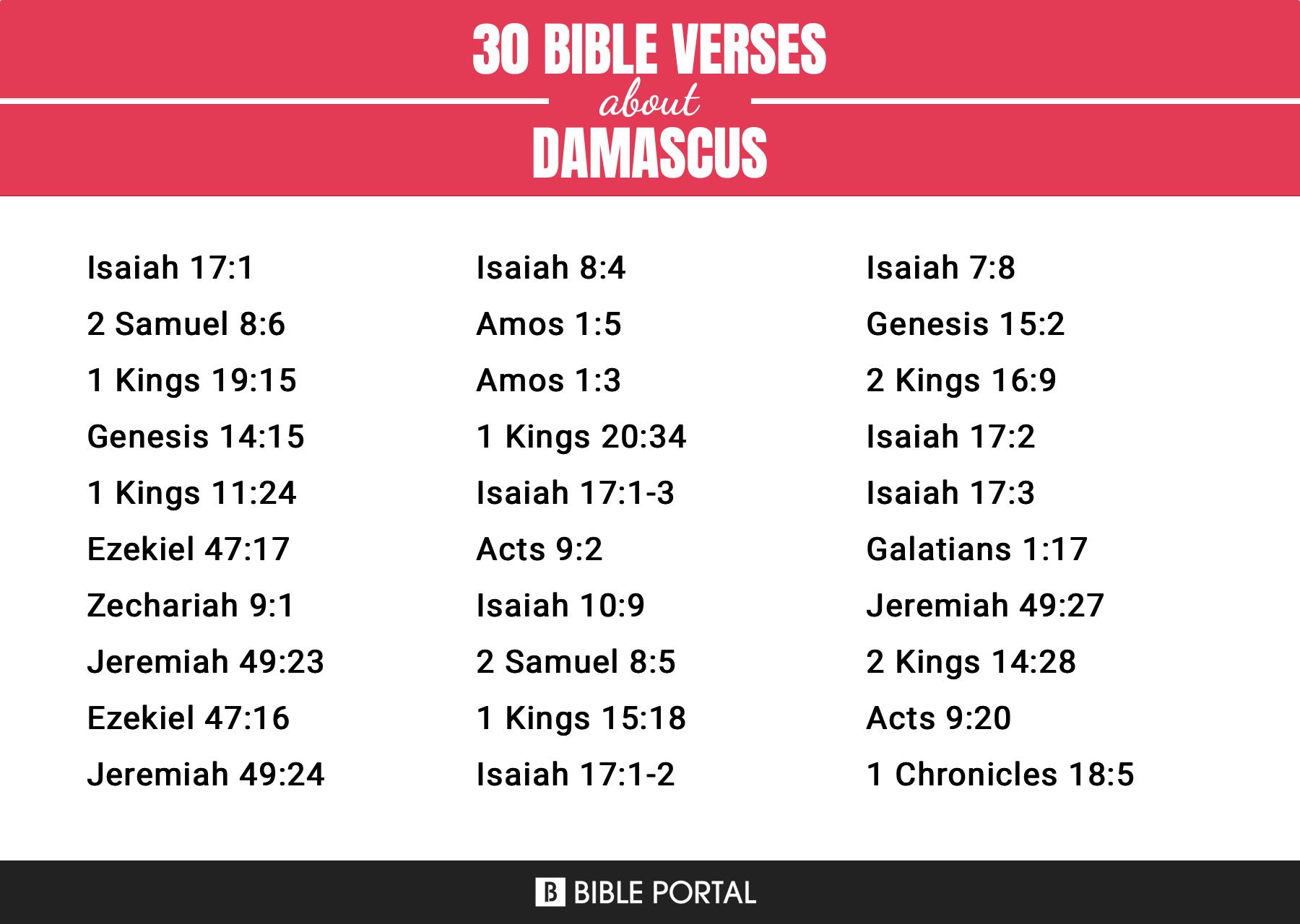
In the tapestry of Biblical narratives, Damascus emerges not merely as a geographical entity but as a symbol of transformation and resilience. Ramparts that have withstood the erosion of time, this ancient city serves as a poignant metaphor for spiritual metamorphosis—a dwelling place of profound events that reverberate through the annals of history and sacred texts. Thus, to understand Damascus is to unravel layers of theological significance, humanitarian plight, and enduring hope.
The earliest mentions of Damascus in the Bible occur in the context of its establishment as a pivotal trading hub, steeped in a rich history dating back to the days of the patriarchs. It is in Genesis 14:15 that we first catch a glimpse of this venerable city when the narrative recounts the pursuit of Lot, a harbinger of human connection spread across the dust-laden roads of ancient lands. The name “Damascus” etymologically suggestive of “a well-watered place,” paints a picture not only of physical sustenance but also of spiritual quenching, an oasis in a desert of uncertainty.
As the narrative progresses through the scriptures, we encounter Damascus again within the prophetic works of Isaiah, who poignantly speaks of its impending devastation. In Isaiah 17:1, the prophet forebodes, “The burden of Damascus. Behold, Damascus is taken away from being a city, and it shall be a ruinous heap.” Here, metaphorically, Damascus transitions from a pinnacle of civilization to a symbol of transience, inviting readers to ponder the ephemeral nature of human endeavor. The stark juxtaposition between its past glories and prophetic warnings elicits a profound reflection on humanity’s fleeting achievements and the inevitable nature of divine judgment.
Yet, within the Biblical narrative, Damascus also embodies the arc of redemption. The most notable moment occurs in Acts 9, where the city plays a critical role in the transformative journey of Saul of Tarsus, later known as Paul the Apostle. Encountering the blinding light of divine intervention on the road to Damascus signifies a turning point; it is an allegory for the awakening of consciousness—a metaphorical death leading to a rebirth of purpose. This transition underscores the message that even in the shadows of our past, the potential for renewal abounds. Damascus, therefore, becomes an emblem of grace, mirroring the complexities of life itself where darkness often paves the way for illumination.
The very mention of Damascus conjures visions of a vibrant community, rich in cultural heritage and diverse narratives. Its historical tapestry is woven with threads of myriad civilizations—Arameans, Romans, Byzantines, and later, Arabs—each leaving indelible marks on its identity. This rich intermingling serves not only to highlight the city’s historical significance but also to remind us of the commonality and shared humanity that transcends our differences. It teaches us that cities, like individuals, carry stories of both pain and triumph, and that these dualities, when embraced, lead to a fuller understanding of ourselves and each other.
In contemporary times, the plight of Damascus resonates strongly amid conversations surrounding conflict and human suffering. As it stands ravaged by the chaos of war, the paradox becomes starkly apparent—this city that once thrived as a cradle of civilization now symbolizes division, loss, and a desperate yearning for peace. It is a universal reminder of the consequences of human strife. Yet, within this despair, it also beckons forth a spirit of resilience. The Biblical narrative of redemption echoes in the heart of the displaced; the enduring spirit of hope, much like the persistent chase of the sun rising over the ruins.
Moreover, the lessons of compassion and charity resonate throughout the Scriptures’ treatment of Damascus. The exhortation to extend empathy toward one’s neighbors becomes particularly poignant in light of hardships faced by the inhabitants of this once-thriving hub. The theological call to build bridges instead of walls is echoed in the narratives surrounding this city. In a world that often leans toward division, the story of Damascus serves as an exhortation to foster dialogue and understanding across cultural boundaries. It challenges us to not merely observe suffering but to engage actively in acts of kindness and restoration.
As we contemplate the implications of what Damascus symbolizes within the Biblical framework, we recognize its multifaceted legacy. It stands as a reminder of the fragility of human achievements, the profound capacity for personal transformation, and the enduring quest for hope amid adversity. The tales woven into the very stones of Damascus urge us to embrace the complexities of life, much like the intricate designs of a Persian rug, where each thread tells its own story yet contributes to an exquisite whole.
Ultimately, the story of Damascus invites us to embark on our own pilgrimage of faith, urging us to seek authenticity in our struggles and resilience amidst tribulations. Thus, the question hovers over us, beckoning initiation into a deeper exploration of our own spiritual journeys: “In what ways do we allow the lessons of Damascus to influence our paths toward enlightenment and impact in the world?”
The winds of Damascus carry echoes of the divine—of challenges overcome and spirits renewed. They remind us that, despite the storms that may besiege our own lives, there exists a perennial promise of redemption, carving out spaces for peace and understanding in an often fragmented world.

