

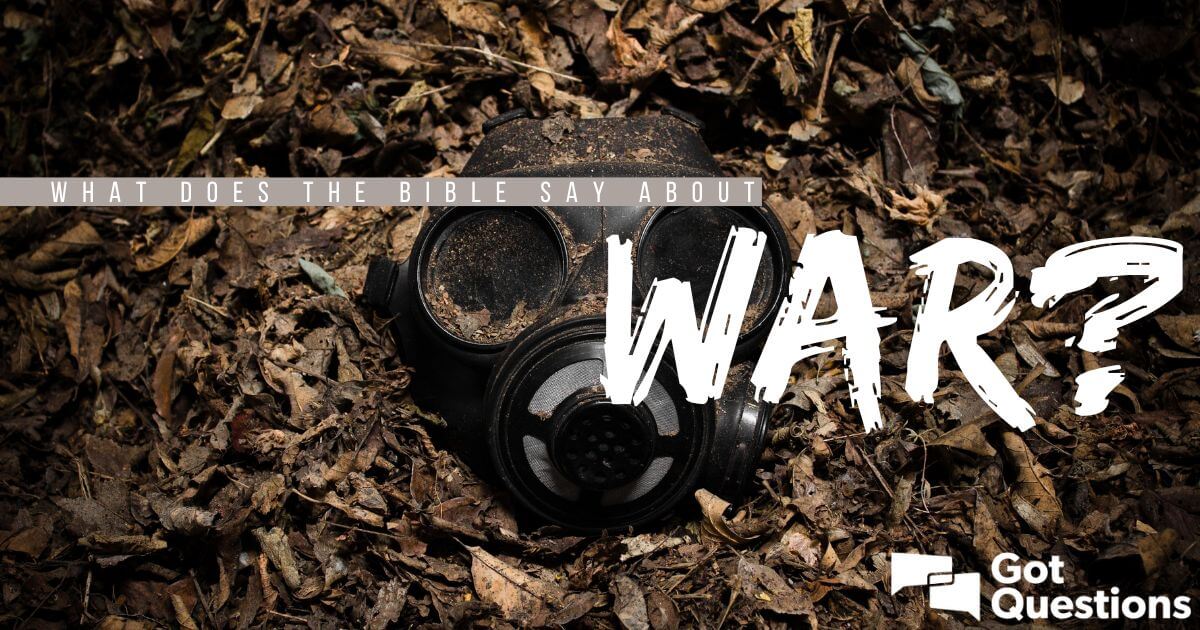
Inquisitively wandering the vast landscapes of scripture, one is often beckoned to pause at the intersection of morality and survival—where the quandary of killing in war emerges like a tempestuous cloud on the horizon, casting shadows over faith and humanity. The Bible, an ancient tome of wisdom, evokes a paradoxical narrative that wrestles with the specter of war, exploring themes of justice, righteousness, and the divine will. This discourse seeks to unravel the intricate tapestry of biblical verses regarding war, illuminating the ethical considerations of violence and the implications it bears on the believer’s conscience.
At the very outset, an examination of the biblical narrative reveals that the text does not shy away from the subject of war. From the Old Testament accounts of the Israelites engaging in battles to the New Testament’s emphasis on peace, the juxtaposition of these themes prompts a profound contemplation on the morality of killing during warfare. Indeed, war is depicted not merely as a backdrop for human conflict but as an arena where divine providence and human agency entwine in a complex dance.
In the annals of the Old Testament, one encounters numerous accounts of wars fought, each steeped in cultural and theological significance. The Book of Joshua, for instance, recounts the conquest of Canaan—a series of battles ordained by God with the explicit purpose of fulfilling divine promises. Herein lies a contentious point: the edicts commanding the annihilation of certain peoples are often perceived through a modern lens, raising ethical questions about divine morality. Is it justifiable to invoke God’s name to justify the taking of life? This disquieting query echoes through the corridors of history.
One might argue that the killings sanctioned in these battles were a fulfillment of divine justice—a means to eradicate unspeakable evils that plagued particular nations. The prevalent notion that God acts as a divine warrior—as seen in passages like Exodus 15:3, where God is referred to as “a man of war”—emboldens the biblical military ethos. Soldiers, positioned not merely as combatants but as instruments of divine enactment, confront enemies not just with swords but with the weight of sacred authority.
Yet, despair and reflection rise like a swell of ocean waves when confronting the idea of such brutal mandates. The provocative metaphor of God as a warrior confronts the competing narrative of the God of peace, embodied beautifully in the teachings of Christ. Jesus’ proclamation in Matthew 5:9, “Blessed are the peacemakers,” establishes a poignant counterpoint, revealing a transformative call to reject violence and embrace reconciliation. The dichotomous nature of these divine representations reflects humanity’s struggle to balance the instinct for survival with the pursuit of peace.
Transitioning into the New Testament, the ethical landscape regarding killing in war becomes more complex. Christ’s teachings extend an olive branch to a world steeped in turmoil. The nonviolent resistance exemplified in His life serves as a radical departure from the bloodied tapestries of Old Testament warfare. Here lay the heart of Christian ethics: the call to love one’s enemies serves as a counter-narrative to the historical call for holy wars. This notion transforms the perspective from one of retribution to one of mercy—a metamorphosis fraught with spiritual weight.
Additionally, it is imperative to note the sentiments echoed in biblical exhortations against personal violence. In Romans 12:19, believers are reminded to leave vengeance to God and instead respond with kindness to adversaries. This call directs individuals away from the valiant facade of the warrior and towards a path of humility and selflessness. The insistent refrain of peace reverberates throughout the epistles, prompting believers to cultivate unity over discord. Hence, while war may encroach upon the horizon, the core tenet of the faith persistently beckons towards the quiet sanctum of nonviolence.
Nevertheless, just as dark clouds obscure the sun, the complexities of human conflict remain ever-present. The conception of a ‘just war’ emerges within theological discourse as a critical framework for understanding the moral fabric of warfare. The principle asserts that war, while regrettable, may at times be necessary to combat evil and restore order. Such a perspective necessitates rigorous scrutiny, for it challenges adherents not just to consider the justifications for engaging in war, but also the ways in which one can harness the power of faith to humanize both friend and foe on the battlefield.
Amidst the ebb and flow of these biblical narratives, a profound revelation unveils itself: the potential for redemption even in the heart of war. Engaging with the realities of war through a biblical lens encourages a steadfast pursuit of justice, rooted not merely in retaliation but in compassion—a striving towards a vision wherein reconciliation triumphs over violence. The metaphor of the warrior transforms from a bearer of weapons to a humble servant, extending grace amid suffering.
Ultimately, the discourse surrounding the Bible’s guidance on killing in war invites us through a labyrinth of ethical considerations. Regardless of the path one chooses, it is evident that the scriptures challenge believers to grapple with the duality of divine warfare and Christ’s call to peace. Whether as warriors or peacemakers, the faithful are called to navigate these turbulent waters with the compass of conscience, forever mindful of the profound responsibility borne from their beliefs.
As we emerge from this exploration, it is essential to weave the lessons of scripture into the broader narrative of our human experience. War, with its far-reaching consequences, calls us to a higher standard, compelling us to ponder not merely the act of killing but the sanctity of life itself. The echoes of ancient wisdom resonate in our hearts, urging us toward love, unity, and ultimately, the hope for a peace that surpasses all understanding.

