

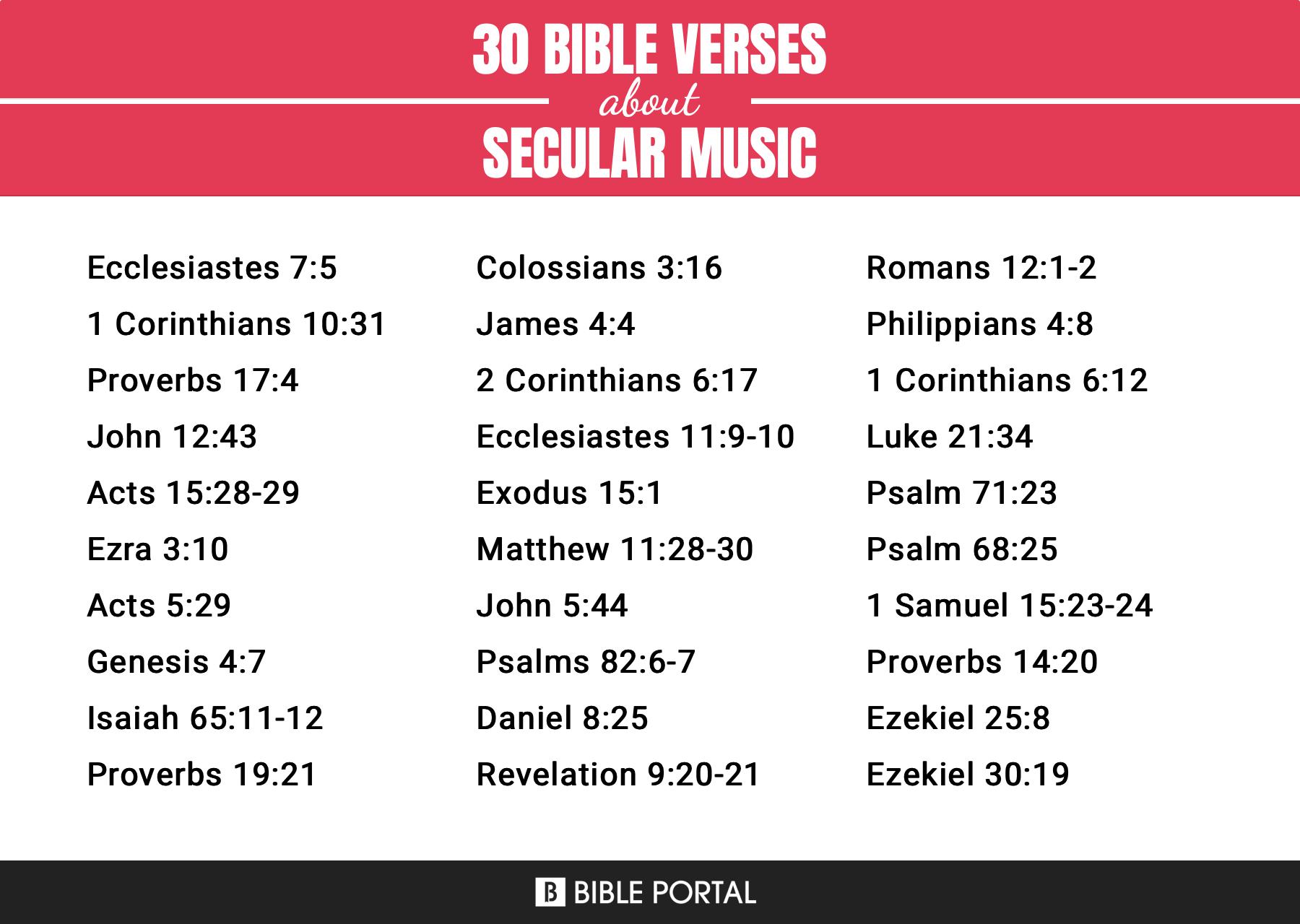
The discourse surrounding secular music is invariably a poignant and intricate tapestry, woven from diverse threads of faith, culture, and personal experience. As we embark on this exploration of what the Bible articulates about secular music, we traverse an evocative landscape fraught with both spiritual considerations and artistic expression. This journey is not only an examination of scripture but also a contemplation on the nature of music itself—its capacity to enlighten, inspire, and sometimes, confound.
Before delving into biblical verses, it is essential to understand the essence of music in itself. Music transcends time and culture; it acts as a universal language binding societies and individuals together. Whether it serves as a vessel for worship, a mode of storytelling, or a mere distraction from the mundane, the allure of music resonates deeply in the human soul. In this light, one can regard secular music as a mirror reflecting the myriad emotions and narratives of humanity, capturing the essence of life in its highest and lowest forms.
Yet, the Bible provides a profound lens through which this art form can be scrutinized. At its core, scripture remains a compendium of wisdom, guiding adherents not just on theological matters but also regarding daily living. While the Bible does not offer explicit directives about secular music per se, myriad verses illuminate the broader principles that inform a believer’s engagement with music. One of the salient passages that encapsulate the relationship between music and spiritual life is found in Psalms, where it exhorts individuals to praise God with their musical talents: “Sing to the LORD a new song; sing to the LORD, all the earth” (Psalm 96:1).
This verse underscores a fundamental principle: music is an expression of the heart, a way to manifest one’s innermost feelings. Hence, the question arises: can secular music, which oftentimes does not overtly glorify God, still be reconciled with this biblical nugget of wisdom? In navigating this query, one must recognize the intricate dynamics at play. The emotive power of music—be it sacred or secular—can evoke profound reactions, stirring the soul and provoking thought. It serves as a channel through which struggles, joys, and existential reflections can be expressed.
Further contemplation leads us to the discernment of lyrical content. The Proverbs extol wisdom, urging followers to “Guard your heart above all else, for it determines the course of your life” (Proverbs 4:23). Herein lies a critical tenet for believers engaging with secular music. Lyrics that promote values incongruent with one’s faith can dilute spiritual fortitude. Thus, the discernment in music selection becomes paramount. Engaging with secular music requires a careful assessment of its thematic essence and underlying messages, evaluating whether they illuminate or obscure one’s spiritual walk.
Moreover, secular music can serve as a conduit for cultivating empathy and understanding. The narratives encapsulated in countless secular songs often embody the struggles and triumphs of individuals across varied experiences. “The LORD is near to the brokenhearted and saves the crushed in spirit” (Psalm 34:18). Here, scripture acknowledges the reality of human suffering, mirroring themes explored in many secular genres. By appreciating the vulnerabilities expressed through these artistic works, one can foster a deeper connection to the human condition, promoting compassion and understanding in an often-divisive world.
The apostle Paul further contemplates this notion of cultural engagement when he writes, “To the Jews I became like a Jew, to win the Jews… To those not having the law I became like one not having the law… so as to win those not having the law” (1 Corinthians 9:20-21). This adaptable spirit exemplifies the call to engage with the culture around one, not merely to observe but to experience and understand it. Therefore, the ability of secular music to resonate with listeners on myriad levels can be seen as an invitation to engage with broader societal narratives. It calls for believers to not isolate themselves but rather immerse themselves in the cultural milieu while carefully maintaining their spiritual convictions.
However, this engagement must be approached with caution. The paradox of music lies in its power to uplift and to ensnare. An artist’s intention might not always align with a listener’s spiritual well-being. While some secular songs inspire personal reflection and growth, others may perpetuate harmful ideologies or foster negativity. One must cultivate a heightened awareness, akin to the Shrewd Serpent mentioned in scripture, balancing cultural appreciation with spiritual integrity. The art of navigating this landscape requires astute discernment.
In conclusion, the intersection of faith and secular music presents a complex yet enriching dialogue. The exploration of biblical wisdom engenders a deeper understanding of music’s role in the spiritual journey. With an awareness of lyrical content, an embrace of empathy, and a spirit of discernment, believers can find solace in the melodies that both challenge and inspire. Music, in its multifaceted nature, becomes more than mere entertainment; it transforms into a reflection of the human experience, an echo of God’s grace, and sometimes, a pathway to divine enlightenment. Indeed, music, both secular and sacred, holds the power to resonate deeply within the fabric of faith and life.

