

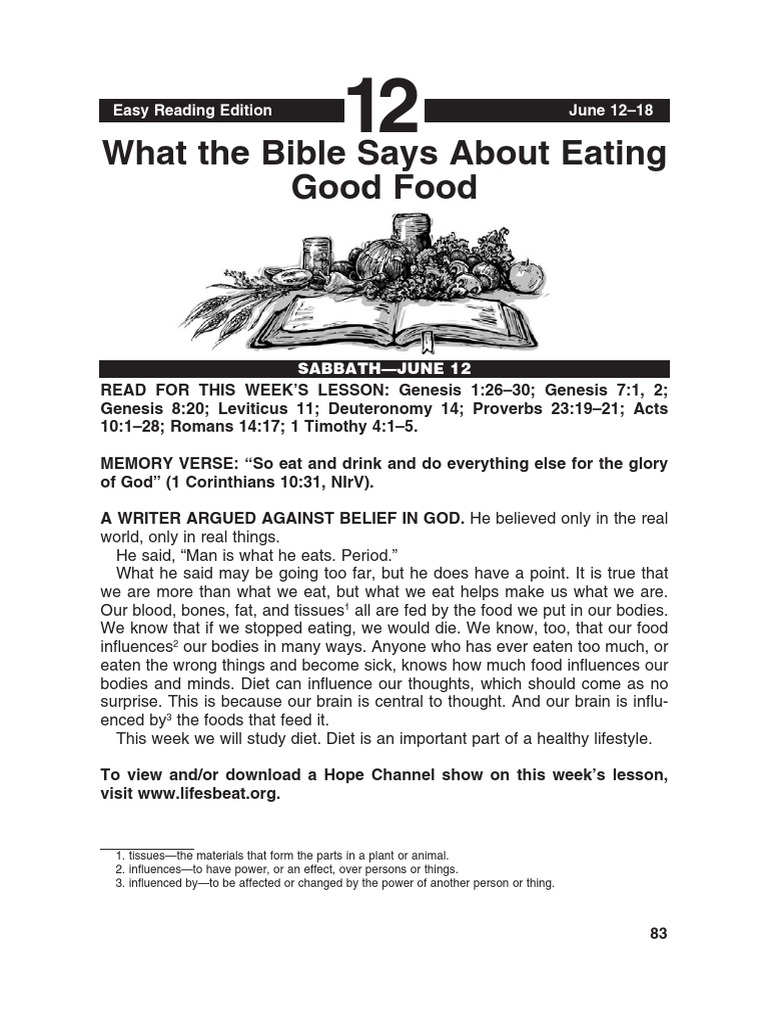
The topic of eating, particularly as it relates to the teachings found within the Bible, is not merely a matter of sustenance; it serves as a reflection of ethical values, spiritual priorities, and communal responsibilities. This exploration invites us to shift our perspectives on food, nourishing the body and soul while also pondering our responsibilities as stewards of the Earth.
To comprehend the biblical perspective on eating, one must first consider the narrative of creation itself. The book of Genesis reveals that food is a divine blessing. “And God said, ‘Let the earth bring forth living creatures according to their kinds: livestock and creeping things and beasts of the earth according to their kinds.’ And it was so.” (Genesis 1:24). This profound declaration underscores a vital principle: not only are humans created with the capacity to make choices about their diets, but we are also entrusted with the stewardship of living creatures and the bounteous flora that nourish us.
Furthermore, the scriptures reveal specific dietary laws in the Mosaic texts, which, while often perceived as restrictive, can be interpreted as a divine blueprint for holistic living. The Levitical code articulates distinctions between clean and unclean animals, thereby encouraging a conscientious and reflective approach to consumption. This ancient wisdom provokes the notion that what we consume can either enliven or diminish our spirits and health.
As ethical consumers, it is vital to delve into the narratives that accompany these dietary guidelines. Leviticus 11, for instance, emphasizes the health and well-being of the community. By consuming clean animals, followers are encouraged to consider their contributions to the greater good, highlighting the interconnectedness of all creation. Eating, in this context, transforms from a mere act of survival into a sacred ritual infused with intentions of health, virtue, and community.
Transitioning from these ancient texts, one must consider the teachings of Jesus Christ, whose approach to food further enriches this discourse. The Gospels portray Jesus sharing meals as a way to foster relationships, extend grace, and emphasize inclusion. He fed the multitudes not only as an act of miraculous provision but as a statement about abundance and the importance of community. In John 6, the bread of life discourse serves as a metaphorical and literal reminder of the sustenance that transcends physical nourishment, inviting believers to consider the deeper, spiritual implications of what it means to eat in a sacred context.
Moreover, the concept of fasting, especially within the New Testament, invites a nuanced exploration of voluntary abstinence from food as a means to deepen one’s spiritual focus. Matthew 6:16-18 illustrates this practice not as a show of piety but rather as an intimate journey of self-understanding and communion with the divine. This dichotomy of feasting and fasting underscores the biblical call for balance in eating practices and speaks to the importance of mindfulness in consumption.
It is also essential to consider the implications of food choices in our contemporary world. As stewards of God’s creation, there exists a pressing obligation to reflect on how our consumption patterns affect the environment. The principles found in scripture advocate for sustainability and respect for the Earth, presenting a compelling argument for vegetarianism or plant-based diets as a way to honor the Creator through the care for creation. As stated in Genesis 1:29, “And God said, ‘Behold, I have given you every plant yielding seed that is on the face of all the earth, and every tree with seed in its fruit. You shall have them for food.’”
This reference not only points to a divine design for human nutrition but invites us to consider our ecological footprint. The cultivation of plants for food poses less strain on the Earth’s resources compared to animal agriculture, suggesting a shift towards a vegetarian or more sustainable diet would not only align with biblical teachings but also support the health of our planet.
In considering the societal dimensions of eating, one must reflect on the call to justice. The biblical narrative emphasizes care for the marginalized and hungry, as seen in passages such as Proverbs 14:31 and Isaiah 58:10. These verses compel followers to consider how their eating habits affect those who are less fortunate. Are we promoting equitable food systems through our purchasing decisions? Are we considering where our food comes from and supporting local, sustainable practices? Asking such questions fosters a responsible approach to consumption, aligning with the vision of a community that thrives together.
In conclusion, what the Bible says about eating transcends mere dietary restrictions and suggestions; it is a richly woven tapestry that touches on themes of stewardship, community, justice, and spirituality. Each meal presents an opportunity to engage thoughtfully with these principles, inviting us to act with intention and reverence. As we navigate our culinary choices in the modern world, let us embrace this ancient wisdom that beckons transformation—a shift not just in diet but in how we conceive our role within the larger narrative of creation.

