

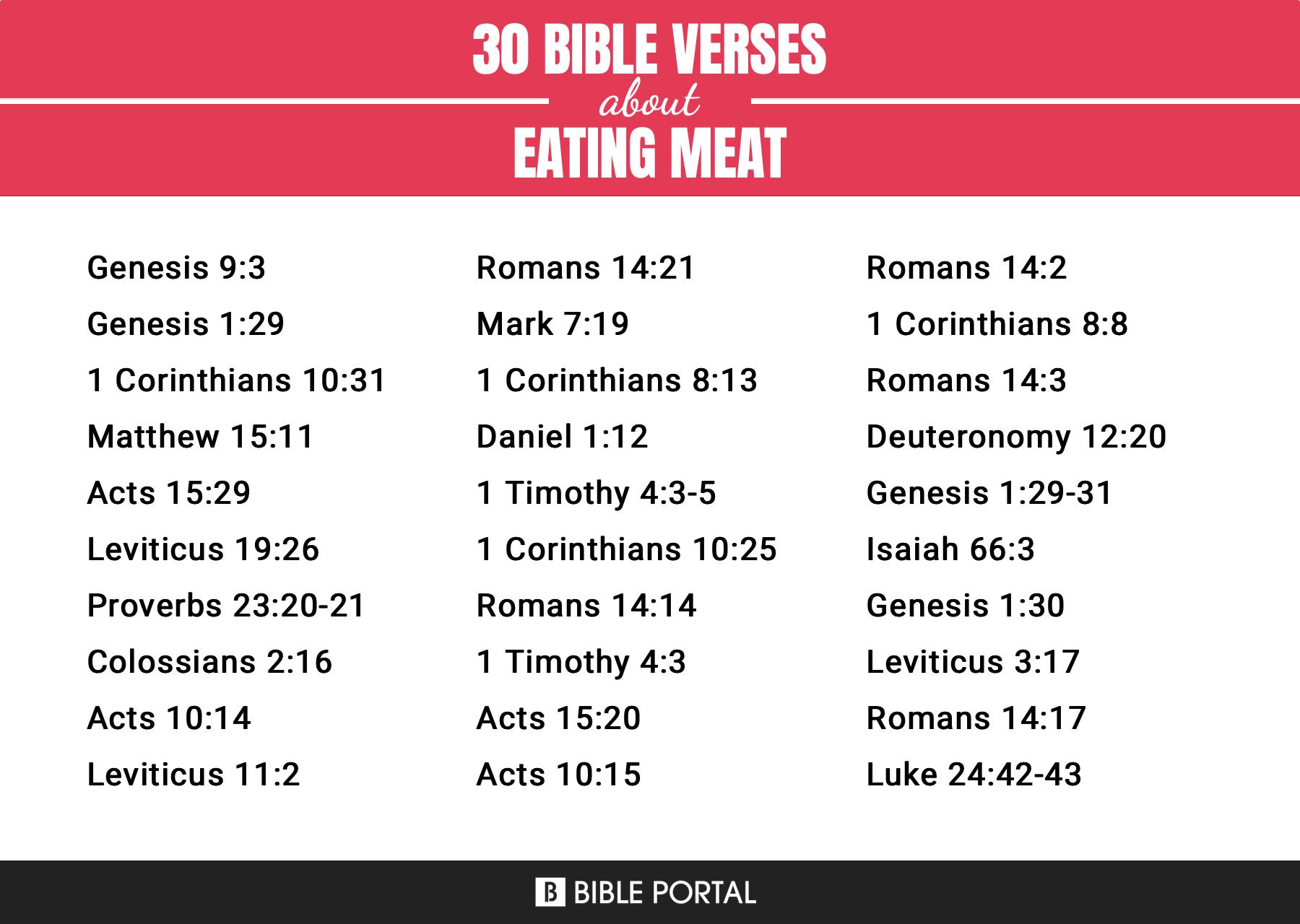
Throughout history, dietary practices have been embroiled in theological discourse. The Bible, a compendium of sacred texts, often serves as a cornerstone for discussions about morality, ethics, and lifestyle. Within its verses, one finds a wealth of information concerning the consumption of meat, shedding light on various perspectives that can influence contemporary dietary choices. This exploration delves into the complexities of scriptural references, cultural contexts, and ethical considerations surrounding the act of eating meat.
1. The Genesis Narrative: A Divine Ordination
The discourse begins in the Book of Genesis, where the initial dietary law is established. In Genesis 1:29, God proclaims, “I have given you every herb bearing seed, and every tree, in which is the fruit of a tree yielding seed; to you it shall be for meat.” This verse denotes a vegetarian diet ordained for humanity at the dawn of creation. It is significant, as it suggests that God’s original intention was for humans to consume plant-based foods, fostering a profound interconnectedness with the earth. Yet, as the narrative unfolds, dietary regulations evolve.
2. The Introduction of Meat: Contextual Evolution
In contrast to the Edenic ideal, Genesis 9:3 introduces a pivotal shift. After the cataclysm of the flood, God grants Noah and his descendants permission to consume meat: “Every moving thing that liveth shall be meat for you; even as the green herb have I given you all things.” This passage reflects a significant alteration in the divine mandate, suggesting a pragmatic response to a post-diluvian world where survival necessitated adaptation. This permissive stance emanates not merely from an evolving dietary preference but also from the practical needs of humanity facing new realities.
3. The Mosaic Law: Dietary Restrictions and Ethos
Moving forward to the time of Moses, the dietary laws articulated in the Book of Leviticus encapsulate the complexity of faith-inflected eating. Leviticus 11 delineates clean and unclean animals, establishing a framework that transcends mere culinary choice into the realm of holiness: “These are the beasts which ye shall eat among all the beasts that are on the earth.” The restrictions emphasize a divine concern for purity and morality. Furthermore, this codification promotes a sense of community and identity among the Israelites, wherein these dietary prohibitions distinguish them from surrounding nations.
4. The New Testament Perspective: A Transformative Shift
The advent of the New Testament heralds another metamorphosis regarding dietary laws. In Acts 10, the apostle Peter experiences a vision that redefines dietary constraints. The voice of God implores, “What God hath cleansed, that call not thou common.” This pivotal moment not only conveys a message of inclusivity toward Gentiles but also signifies a liberation from previous dietary restrictions. Paul echoes this sentiment in 1 Corinthians 10:23, addressing the notion of freedom in Christ, whereby believers are encouraged to make conscientious choices regarding meat consumption without being bound by the law.
5. Ethical Implications: Stewardship and Compassion
As the biblical narrative intertwines with contemporary ethical considerations, the questions surrounding meat consumption deepen. Are we, as stewards of creation, responsible for the welfare of the animals we consume? Genesis 1:26 states, “Let us make man in our image, after our likeness: and let them have dominion.” The interpretation of dominion has been the crux of theological debates. It invites introspection on responsibilities towards the environment and the creatures inhabiting it. A conscientious consumption of meat thus emerges as a reflection of respect and compassion, encapsulating the divine ethos of stewardship.
6. Cultural Contexts and Variations
The consumption of meat varies significantly across cultures, often aligned with religious practices and local customs. In many agrarian societies, meat is not merely sustenance; it represents communal identity and cultural heritage. For instance, in biblical times, sacrificial rites involving animals were prevalent, serving as both a form of worship and sustenance. Hence, the approach to eating meat in biblical times can be viewed through multifaceted lenses, encompassing ritualistic significance and socio-cultural implications.
7. Contemporary Relevance: Reflection and Action
In modern times, the question of whether to eat meat is increasingly scrutinized through ecological, ethical, and health lenses. Proponents of vegetarianism and veganism often cite the environmental burdens associated with livestock farming, urging a return to a more plant-centric diet akin to the Edenic vision. Conversely, those who advocate for meat consumption argue for sustainable practices, emphasizing conscientious sourcing that respects animal welfare and environmental integrity. The discourse is evolving, yet the biblical underpinnings regarding eating meat remain a profound source of contemplation.
8. Conclusion: Navigating the Moral Landscape
In conclusion, the biblical perspectives on eating meat illuminate a rich tapestry of thought, interwoven with ethical considerations, cultural practices, and theological insights. While the scriptures articulate various dietary paradigms, the overarching themes of stewardship, compassion, and moral reflection resonate throughout. As individuals navigate their dietary choices today, it is incumbent upon them to consider not only the nutrition derived from their food but also the ethical and environmental implications of those choices. The sacred text, with its multifaceted insights, remains a crucial compass in this complex moral landscape.

