

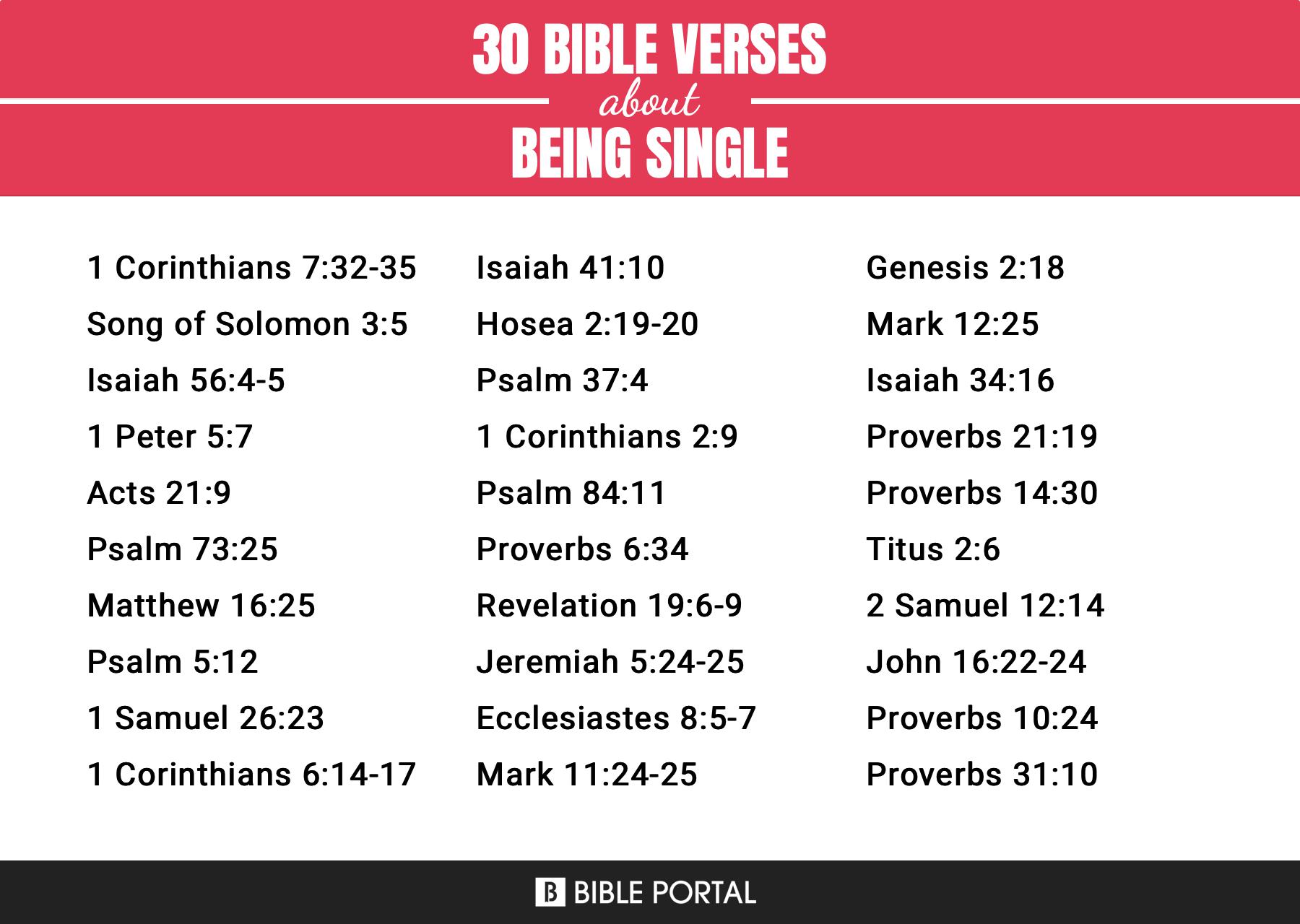
Being single can often feel like a paradox—an emotional battleground between solitude and a wealth of opportunities. While society may impose a narrative promoting coupled relationships as the epitome of fulfillment, the Bible offers a contrarian perspective that encourages introspection and self-discovery. By illuminating the theological tapestry surrounding singleness, one can glean profound insights that not only validate their current state but also illuminate the myriad possibilities it holds.
At the onset of exploring what the Bible articulates about being single, it is essential to recognize that the Scriptures do not denounce singleness. In fact, the Apostle Paul extols its virtues in 1 Corinthians 7:7-8, where he articulates that singleness is a gift. This profound assertion invites us to reconsider our view of this life stage. Rather than perceiving it as a deficiency or a waiting room for romance, singleness can be seen as an avenue for spiritual freedom, unimpeded by the complexities of marital life.
Moreover, the Bible provides various narratives that celebrate single individuals, such as Anna the prophetess and Paul himself. Anna spent decades in devotion at the temple, embodying a life wholly dedicated to prayer and worship, reminiscencing the idea that time spent in solitude can yield immense spiritual depth. Paul, who penned many of the New Testament letters, leveraged his single status to travel extensively and evangelize, illustrating how the lack of matrimonial ties can facilitate a life of service and purpose.
The implications of embracing singleness extend beyond personal growth; they encapsulate a broader shift in relational paradigms. Those navigating the single life may often find themselves craving companionship or societal affirmation. However, Biblical texts urge individuals to find their identity and purpose in God rather than in romantic relationships. By fostering intimacy with the Divine, individuals can experience a profound sense of belonging and acceptance that transcends earthly companionships.
Furthermore, this period can provide fertile ground for self-exploration and holistic development. Without the commitments that come with partnership or family life, individuals have the luxury of focusing on personal goals, spiritual growth, and the deepening of friendships. Proverbs 18:24 reminds us that “there is a friend who sticks closer than a brother,” unveiling the importance of deep, platonic connections that can offer rich emotional sustenance and support.
Transitioning from solitude to a vibrant engagement with church and community also enriches the single experience. The Bible exhorts believers to assemble regularly, underscoring the essence of communal worship and fellowship. These connections not only foster a supportive environment but also stimulate personal growth, as one learns from diverse perspectives within a community of faith.
Finally, one of the most alluring promises found within the Scriptures for those who are single can be traced in Matthew 6:33, which encourages believers to “seek first the kingdom of God and his righteousness.” This sacred pursuit provides assurance that everything else—including companionship—will follow according to His will. Such a promise inspires individuals to recalibrate their expectations and desires, relinquishing societal timelines for a more divine perspective on fulfillment.
In conclusion, the Bible redefines singleness as a chapter rich with potential rather than a hurdle to overcome. By offering insights that affirm personal worth without external validation, the Scriptures encourage individuals to redefine their relationship with solitude. Embracing this season of life with openness and anticipation can lead to profound personal transformation, fulfilling relationships, and a deeper connection with God, undoubtedly enriching the journey of being single.

