

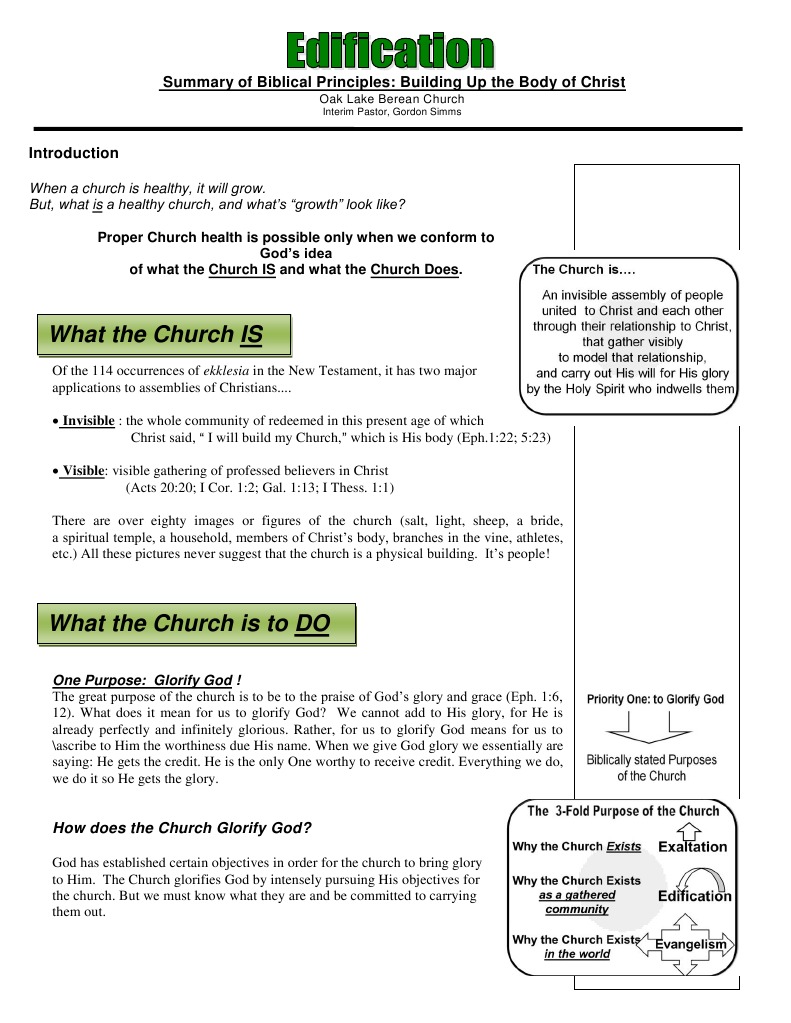
Edification is a term that resonates profoundly throughout the Bible, representing a multifaceted concept that transcends mere knowledge or instruction. It embodies the process of moral, spiritual, and intellectual growth through communal support and divine guidance. In the biblical context, edification serves as a cornerstone for nurturing faith, cultivating relationships, and fostering a deep understanding of God’s purpose in individual lives.
The Bible introduces edification primarily in the New Testament, where the Apostle Paul, in his epistles, emphasizes the importance of building one another up in faith. Romans 14:19 succinctly encapsulates this notion: “So then let us pursue what makes for peace and for mutual upbuilding.” This verse highlights that edification is not solely an individual pursuit, but a communal ethos that flourishes in fellowship and love.
One of the most notable types of edification found in the biblical narrative is spiritual edification. Spiritual edification encompasses the growth of one’s faith through various means, such as prayer, scripture study, and worship. The act of engaging with the word of God is paramount; it acts as a mirror, reflecting the inner workings of the heart and prompting believers to strive for greater intimacy with the Divine. This practice cultivates a profound understanding that faith is not static but an evolving journey enriched by knowledge and experience.
Another significant aspect of edification is doctrinal edification, which focuses on sound teaching and the understanding of theological principles. The Apostle Paul admonishes believers to remain steadfast in doctrine to avoid being swayed by false teachings. In 2 Timothy 3:16-17, Paul asserts that “All Scripture is breathed out by God and profitable for teaching, for reproof, for correction, and for training in righteousness.” Here, the emphasis is on the transformative power of Scripture, enabling individuals to discern truth and remain anchored in their beliefs.
Moreover, relational edification plays a crucial role in the communal aspect of the Christian faith. Believers are called to stimulate one another toward love and good deeds, as emphasized in Hebrews 10:24-25. The dynamic of mutual encouragement fosters a deeper connection among members of the faith community, reinforcing a sense of belonging. This relational aspect of edification is pivotal in overcoming life’s adversities, as shared experiences and collective wisdom serve to uplift and sustain individuals in their spiritual journeys.
In the context of church communities, edification also manifests through service and ministry. Acts of kindness, volunteering, and ministry involvement are tangible expressions of loving one’s neighbor. Such acts not only contribute to the communal growth but also serve as a reflection of Christ’s love in action. The synergy created through these endeavors amplifies the overall health of the church body, reinforcing the notion that edification is not merely a theoretical construct but a practical application of faith in everyday life.
In conclusion, the concept of edification in the Bible is a comprehensive tapestry that weaves together spiritual, doctrinal, and relational dimensions. It emphasizes the importance of growth in knowledge and faith, nurtures a supportive community, and calls believers to actively engage in building each other up. Ultimately, edification challenges individuals to pursue a deeper relationship with God and a commitment to serving others, creating a robust framework for a thriving spiritual life. Such an understanding of edification enriches the believer’s journey, guiding them toward a higher purpose and a more profound connection with the Divine.

