

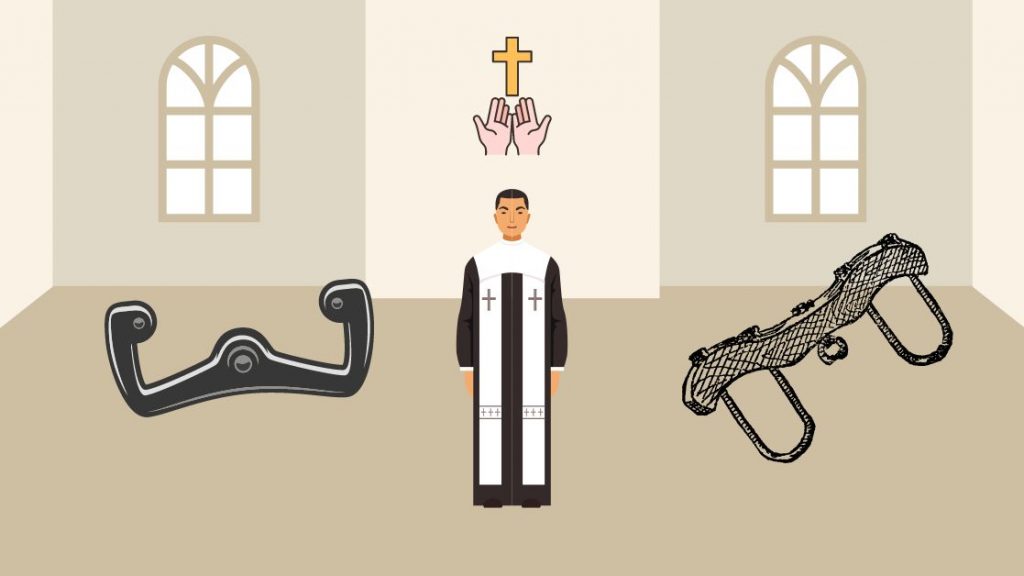
The concept of a ‘yoke’ in biblical literature provides a rich tapestry woven with various meanings and implications. At first glance, it may seem a mere agricultural term—an implement used to harness oxen for plowing. However, this rudimentary understanding barely scratches the surface of its multifaceted significance in spiritual and social contexts.
Throughout the scriptures, the yoke serves as a powerful symbol of connection, burden, and submission. It epitomizes the dual nature of obedience and freedom. To understand the weight of this symbol, one must explore its roots, beginning with its agricultural origins. In ancient times, farmers would employ a wooden yoke to join two oxen, enabling them to work in tandem. This yielded effective labor and promoted cooperation among the paired animals. Such agricultural practices reveal an underlying principle: burdens are lighter when shared. In this context, the yoke suggests a divine partnership, whereby humanity is invited to join forces with the Creator for a greater purpose.
Transitioning from the literal to the metaphorical, the yoke emerges in the passages of Matthew 11:28-30, where Jesus extends an invitation to the weary: “Take my yoke upon you, and learn from me.” Here, the yoke signifies discipleship—a deliberate alignment with the teachings and character of Christ. It embodies a gentle and humble mentorship, allowing believers to share in the burdens of existence while being guided towards spiritual enlightenment. The imagery evokes a sense of comfort, portraying the Lord as a supportive shepherd rather than a distant ruler, inviting followers into a life of grace and compassion rather than rigid adherence to the law.
Furthermore, the yoke also alludes to the struggles of life and the weight of sin. It signifies an oppressive load that humanity often carries—a burden that can feel insurmountable. In the Old Testament, the prophets frequently spoke of yokes as instruments of oppression used by foreign empires, symbolizing subjugation and loss of autonomy. This duality reflects a profound theological nuance: while the yoke can entail divine partnership, it can also signify worldly oppression. The biblical narrative challenges believers to discern the nature of the yokes they carry, prompting reflection on which burdens are divinely ordained and which are detrimental.
Even more fascinating is the notion of ‘unequal yoking,’ derived from 2 Corinthians 6:14, which warns against partnerships that may lead to spiritual discord. This concept urges careful consideration of alliances—be they personal, professional, or spiritual. In the context of the Christian walk, it becomes a call to maintain integrity and purity in one’s associations and aspirations. The idea here is to adhere to a heavenly calling, recognizing that not all burdens are meant to be shared if they lead to disunity or conflict with one’s faith.
In the broader narrative of redemption, the yoke invites a transformational perspective. It symbolizes an exchange: laying down burdens of sin and receiving the lightness of grace. This exchange reflects a counterintuitive truth—by submitting to Christ’s lordship (the ultimate yoke), believers find authentic freedom, as paradoxical as it may seem. Such a relationship empowers and uplifts, leading to a life of purpose and fulfillment.
Thus, the yoke in the Bible transcends its basic definition, embodying deeper theological and relational themes. It invites exploration into the dynamics of burdens, partnerships, and divine companionship. As one delves into this biblical symbol, it becomes clear that to understand the yoke is to grasp the very essence of what it means to live a life intertwined with sacred purpose and divine grace.

