

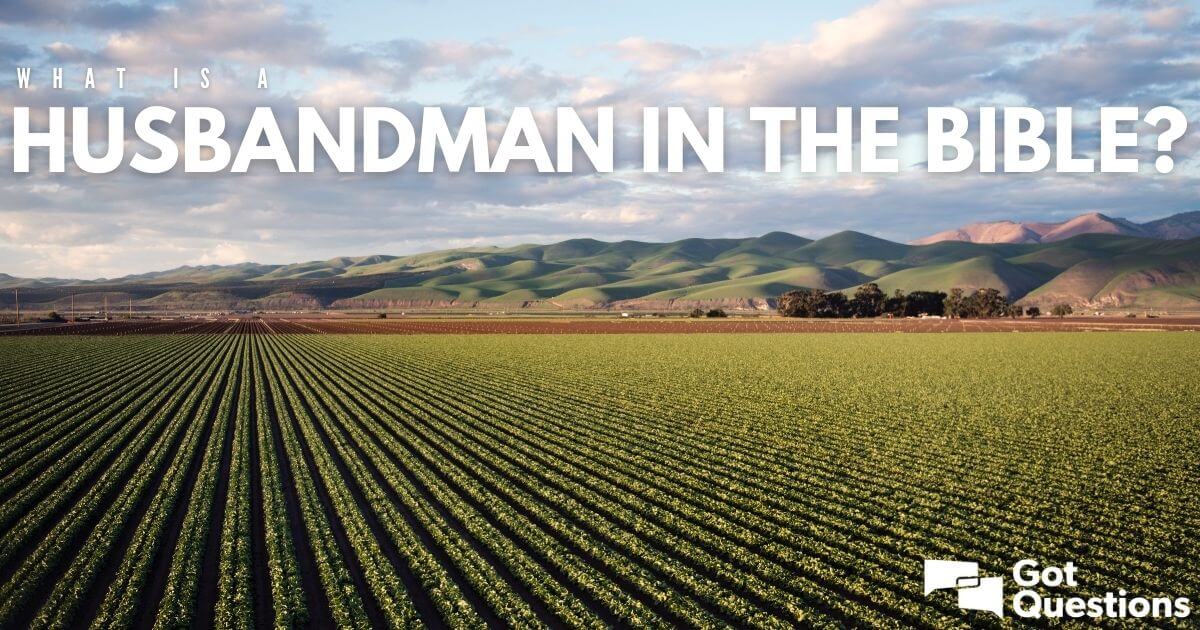
Throughout the annals of the Bible, the figure of the husbandman emerges as a compelling metaphor, rich in agricultural symbolism and profound in its implications. The term “husbandman” traditionally refers to a farmer, one who tends to the earth, cultivating crops and nurturing the land. However, its biblical context delves deeper, painting a picture of stewardship, responsibility, and divine connection.
At its core, the husbandman illustrates a dual relationship with creation—one of cultivation and guardianship. The husbandman is not merely a laborer wielding a plow; rather, he embodies the essence of cooperation with nature, fashioning an intricate dance between human endeavor and the earth’s offerings. Each seed sown in the soil represents hope, a promise of renewal and vitality that awaits fruition.
In the parables of the New Testament, the husbandman is often portrayed as a metaphor for God Himself. This portrayal elevates the role from mere manual labor to that of a divine caretaker. For instance, in the Parable of the Vineyard, the husbandman’s actions reflect the profound relationship between the vine and the vine dresser, where the vineyard symbolizes the world, and the husbandman is a testament to God’s nurturing presence amid human existence. The careful tending of the vines epitomizes divine patience and the grace of cultivation that leads to spiritual growth.
The husbandman’s vocation encapsulates an ethos of diligence and perseverance. The process of farming is fraught with uncertainty; harsh weather, pests, and increasing market pressures loom like specters over the husbandman’s toil. Yet, in scripture, the husbandman is depicted as steadfast. This resilience can be likened to faith—a trust in the unseen and a commitment to sow, regardless of the immediate results. The act of planting becomes an expression of hope, a tangible manifestation of divine promise and human effort converging in the soil of existence.
Moreover, the biblical husbandman is also a harbinger of nourishment, not just for himself but for the community at large. Analogous to the way a husbandman reaps the harvest, individuals are called to tend their spiritual lives and extend the fruits of their labor to others. Sharing the bounty of one’s cultivation stresses a community-focused ideology, emphasizing the interconnectedness of human relationships and the moral obligation to uplift one another.
The notion of cultivation extends beyond mere agriculture; it serves as a powerful allegory for personal growth and transformation. Just as the husbandman skillfully prunes branches to foster a fruitful vine, individuals must routinely assess and refine their lives. The discipline of self-examination can lead to a flourishing spirit, allowing individuals to yield bountiful results in their personal, spiritual, and communal endeavors.
In examining the husbandman, one finds not just a character of scripture but a symbol of life’s cyclical nature. Death and rebirth echo in the changing seasons—the fallow winter, the budding spring, the bountiful summer, and the harvest autumn—each stage reflecting the human journey through despair, hope, fruition, and gratitude. This cyclical rhythm calls for a recognition of the sacredness of life, urging a contemplative approach to existence that values both successes and failures.
In conclusion, the husbandman in the Bible resonates with depth beyond mere agricultural duties. He serves as a paradigm for stewardship, resilience, and communal care, urging a reflective approach to life reminiscent of the agricultural cycles that govern our world. Enveloping all these threads is the understanding that through tending to ourselves and others, we can cultivate not just the land but also our souls, achieving a flourishing existence intertwined with the divine. Such is the unique appeal of the husbandman—a timeless symbol of hope, dedication, and nurturing love in the tapestry of spirituality.

