

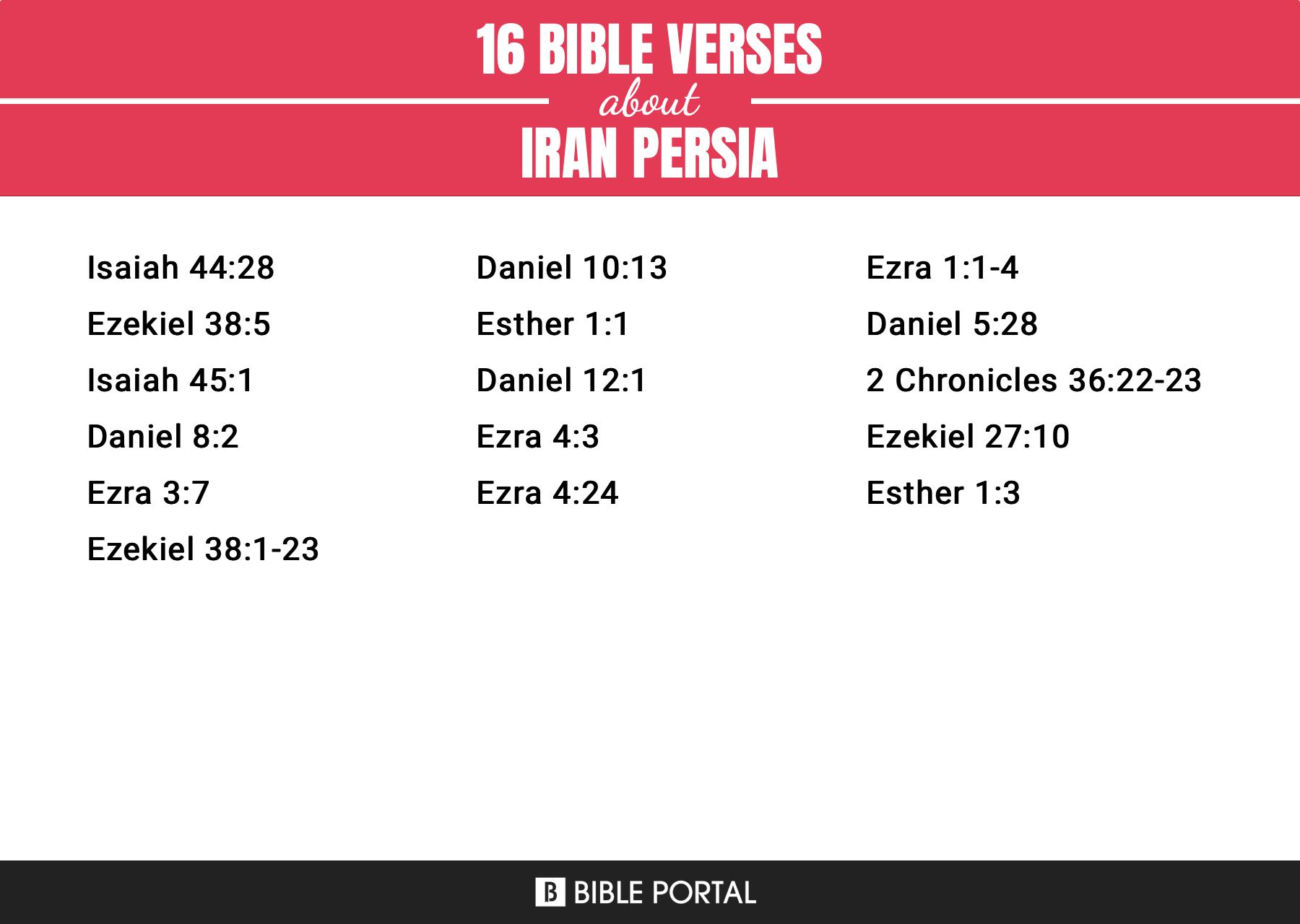
Iran, known in ancient times as Persia, holds a significant and multifaceted presence within the biblical narrative. From its influential role in prophesies to its depiction in historical accounts, this region provides a rich tapestry of spiritual and cultural significance that resonates through scripture.
The earliest mentions of Persia in the Bible can be traced back to the books of the Old Testament. Persia emerged as a formidable empire during the reign of Cyrus the Great, who is notably referenced in various prophetic texts. Isaiah speaks of Cyrus in a prophetic context, declaring him as a “shepherd” of God’s people. This portrayal not only emphasizes Cyrus’s role in the restoration of Jerusalem but also signifies a divine plan that incorporates nations outside of Israel. Such narratives illustrate the broader themes of redemption and divine sovereignty over the kingdoms of the earth.
As the biblical story progresses, the Book of Esther introduces the reader to life within the Persian Empire. Here, the narrative unfurls in the royal court of King Xerxes. Esther, a Jewish woman, rises to the position of queen and plays a pivotal role in saving her people from impending doom. This account provides an enriching perspective of the Jewish diaspora’s experience under Persian rule and highlights themes of courage, identity, and divine providence in times of peril. The significance of Esther’s story is further underscored by the celebration of Purim, which commemorates the deliverance of the Jewish people from oppression.
The Book of Daniel, another crucial text, illustrates the complexities of Jewish existence within a foreign land. Daniel itself serves as an exemplary figure, embodying the tensions between maintaining one’s faith while navigating the demands of a transcendent political landscape. The narrative of Daniel in the lions’ den and the famous Babylonian Exile illustrates the conditions faced by the Jewish people and the underlying assurance of divine support amidst adversity.
In the prophetic literature, Persia’s ultimate downfall is foreshadowed through various oracles. The prophets, notably Isaiah and Jeremiah, draw a stark picture of the eventual conquest of this empire. The writings depict a transition from the glory of Persia to the rise of Greece, marking a significant shift in the power dynamics of the ancient world. These prophetic utterances not only encompass historical predictions but resonate deeply with themes of transience and moral accountability among nations.
Moreover, the New Testament offers glimpses of Iran through the broader lens of ancient civilizations. Though direct references to Persia are absent, the geopolitical context of the time provides a backdrop for the spread of the early church. The Persian Empire was renowned for its vast reach, facilitating trade and cultural exchange. The apostolic journeys of Paul, for instance, occurred against this backdrop, suggesting the early Christian movement was influenced by these intricate cultural and political interactions.
Contemporary implications of Iran’s biblical identity are also significant. A nation steeped in historical impact, contemporary Iran is a stark contrast to its ancient counterparts. The teachings and narratives associated with Persia evoke a sense of reflection on themes of faith, redemption, and the complexities of inter-cultural dialogue in modernity. Through exploring Iran’s biblical references, one not only engages with its ancient past but also contemplates its present reality in a highly polarized world.
In summary, the exploration of Iran in the Bible is a multifaceted endeavor, encompassing historical narratives, prophetic pronouncements, and cultural insights. Each text illuminates the profound interplay between faith and politics, identity and culture, serving as a reminder of the enduring legacy of this ancient empire in the fabric of biblical history.

