

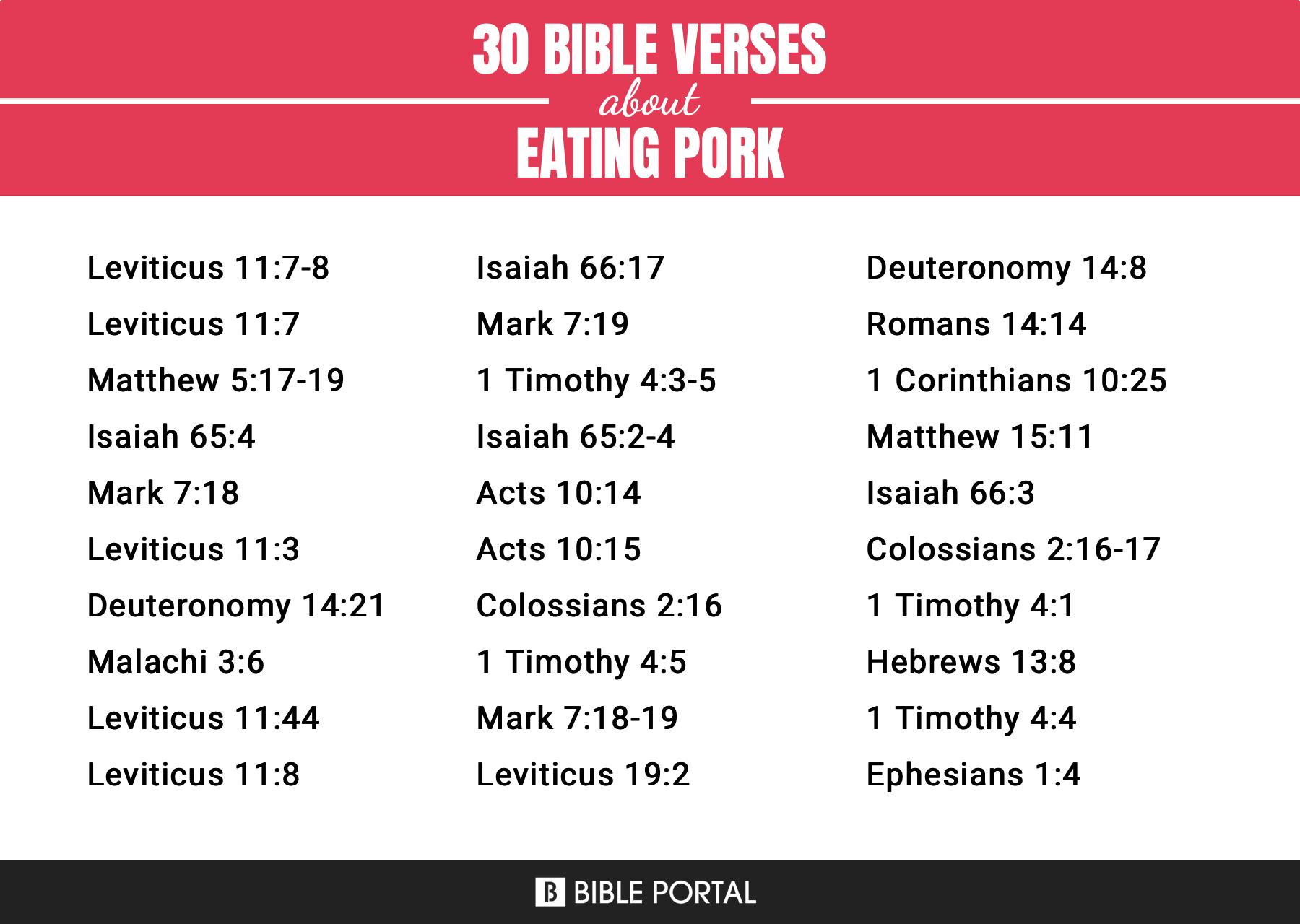
Throughout the annals of history, the consumption of pork has instigated fervent discussions, particularly with reference to its depiction in religious texts. Among Judeo-Christian scriptures, the Bible presents a nuanced exploration of dietary laws, particularly concerning pork. This inquiry delves into what the Bible articulates about the consumption of this controversial meat, promising to shift your perspective and kindle your curiosity.
The primary biblical basis for the prohibition of pork can be found in the Levitical laws. In the Old Testament, specifically in Leviticus 11:7-8, the scripture delineates that pigs, despite having cloven hooves, do not chew their cud and thus are rendered unclean: “And the pig, because it has a divided hoof but does not chew the cud, is unclean for you. You shall not eat of their flesh nor touch their carcass; they are unclean for you.” This explicit decree epitomizes the ancient Israelites’ dietary restrictions, establishing a framework for their culinary practices.
Beyond mere dietary guidelines, these prohibitions serve a deeper theological and cultural significance. They were not merely about health but symbolized the separation between the chosen people and the nations surrounding them. Eating pork became a matter of identity—observing these laws was a way to maintain a covenantal relationship with God. To step beyond these boundaries was to risk spiritual contamination.
As we traverse further along the timeline of biblical narratives, the themes surrounding dietary laws evolve considerably. The New Testament ushers in a shift with a profound message articulated in Acts 10:14-15. Here, Peter encounters a vision where he is instructed to eat unclean animals. The heavenly voice challenges him with the pronouncement, “What God has made clean, do not call common.” This pivotal moment labeled a transformative reinterpretation of the dietary laws, advancing the notion that purity transcends the physicality of the food consumed.
With this new revelation, the early Christian community began to reevaluate the implications of their dietary practices. Paul’s epistles further echoed this sentiment, stressing that food itself does not determine one’s standing before God. In Romans 14:14, he contemplates the moral implications of dietary choices, indicating that, for those with faith, all foods are clean, yet he emphasizes the importance of the intent behind consumption. This embodies a shift towards internal virtues over external prescriptions.
The varying interpretations prompted by these scriptures invite believers to probe their understanding. For some, the historical prohibitions remain relevant, serving as a reminder of the theological foundations of their faith. Others view the New Testament messages as liberating, a shift towards inclusivity and a more profound understanding of God’s grace.
Furthermore, contemporary culture presents an array of perspectives on pork consumption, often invoking health and ethical considerations. Some health advocates argue against the consumption of pork due to concerns over its fat content and the methods of industrial farming. Meanwhile, proponents of ethical eating question the morality of consuming certain animals, urging a thoughtful approach to all dietary choices.
In conclusion, the discourse surrounding pork consumption is multifaceted, intricately woven into the fabric of religious texts, cultural identity, and modern ethics. As you reflect on these diverse perspectives, consider the broader implications of your dietary choices. The biblical narrative challenges us not merely to adhere to laws but to explore the motivations behind our actions. This exploration invites a deeper understanding of both scripture and self, urging an ongoing dialogue about faith, identity, and what it means to live a life in alignment with one’s beliefs.

