

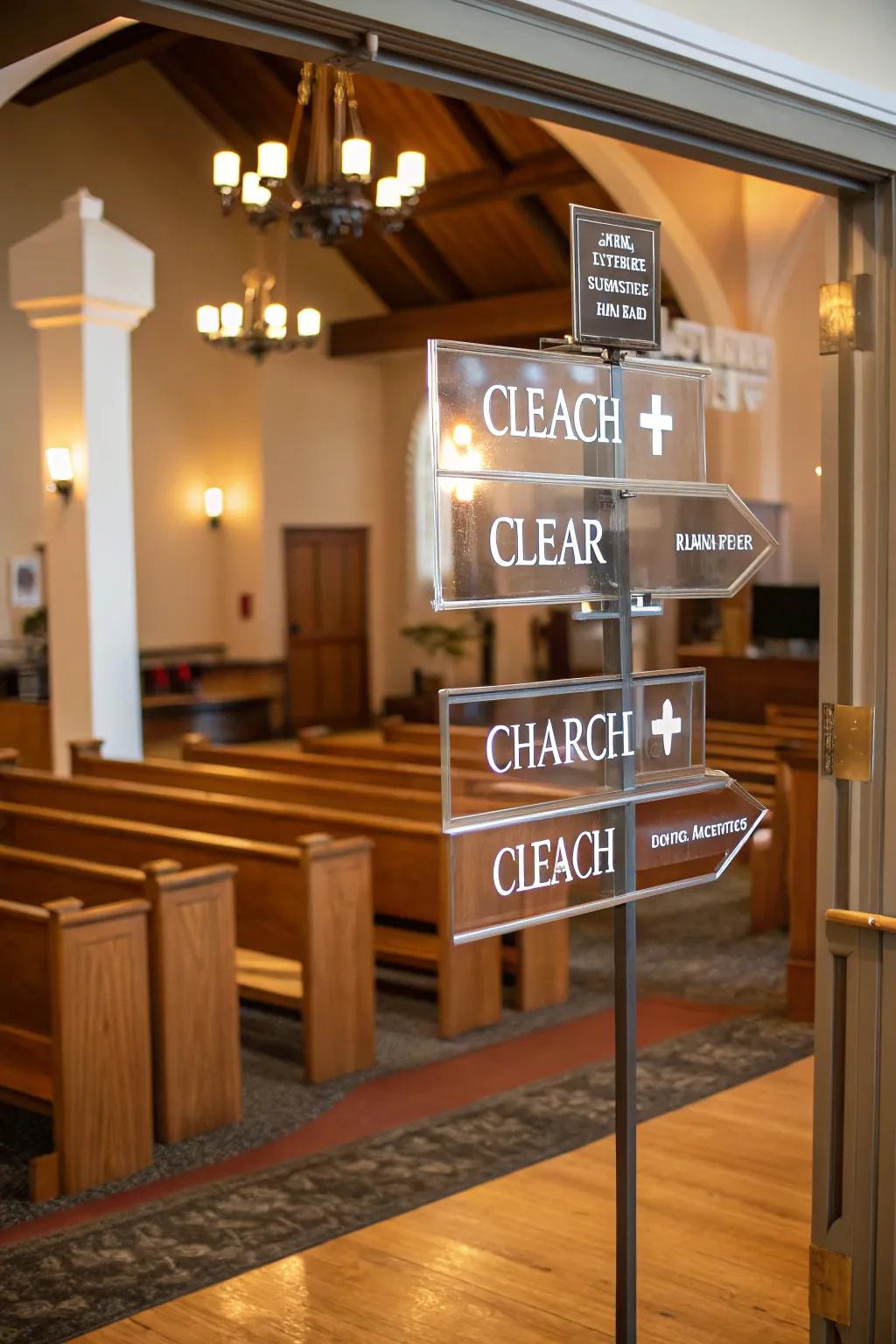
The moment a visitor steps onto a church campus, an invisible dialogue begins—a silent conversation between architecture, intention, and the human heart. Thoughtful signage, when crafted with purpose, can transform that fleeting glance into a moment of affirmation, a promise that the space ahead is both welcoming and navigable. In exploring church signage ideas that marry clarity with a warm embrace, we uncover a layered tapestry of design principles, each contributing to a sanctuary that speaks before a word is uttered.
Defining the Message: Clarity Meets Purpose
Every sign must articulate its core function without equivocation. Whether directing newcomers to the main hall or announcing the schedule for a Sunday gathering, the language should be succinct yet resonant. Using plain‑spoken phrases such as “Welcome Center” or “Next Service – 10 a.m.” eliminates ambiguity, while a subtle nod to the church’s mission—e.g., “Where Faith Meets Community”—infuses purpose. A well‑defined message serves as a compass, steering the flock toward a cathartic experience while honoring the spiritual ethos of the congregation.
Typography as a Visual Hymn
Typography is the melodious undertone of signage; the choice of typeface can either uplift or overwhelm. Serif fonts, with their dignified serifs, evoke tradition and reverence, whereas clean sans‑serif forms suggest modernity and openness. Hand‑lettered scripts, reminiscent of illuminated manuscripts, add an artisanal flair that feels personal and intimate. Pairing a bold header with a lighter body text creates visual rhythm, allowing the eye to glide from title to detail in a graceful crescendo.
Color Palettes that Evoke Reverence
Colors speak in frequencies that bypass rational thought. A palette of soft ivory, muted sage, and deep burgundy can conjure a sense of sacred calm, while accents of gold or burnished copper hint at divine luminescence. The interplay of muted tones with a single vibrant hue—like a sunrise orange on a subdued slate—creates a focal point that draws attention without clamor. When the surrounding landscaping shares these hues, the signage becomes an organic extension of the environment.
Wayfinding Architecture: Guiding the Flock
Beyond flat panels, wayfinding can be architectural. Pergolas draped with climbing vines, stone pillars topped with brass‑etched arrows, and low‑profile wooden arches create pathways that feel like a pilgrimage rather than a mere transit. By aligning these elements with the natural topography, designers embed directional cues within the landscape itself, allowing visitors to follow a visual narrative that unfolds organically.
Materials and Texture: Tactile Invitations
The feel of a sign can be as persuasive as its text. Weathered wood, smooth marble, brushed steel, and reclaimed barn boards each impart a distinct character. When a sign’s surface bears a faint grain or subtle embossing, it invites a fingertip’s brush, forging a sensory connection. A textured finish also signals durability, promising that the welcome endures through seasons of rain, sun, and snow.
Lighting as a Silent Herald
Illumination turns signage into a beacon after dusk. Soft, warm LED spotlights produce a luminiferous halo that softens harsh shadows, while backlit panels render text luminous against twilight. Thoughtful lighting design can also accentuate architectural details, making the signage a centerpiece rather than a peripheral note. The interplay of light and shadow adds drama, guiding the eye and reinforcing the message as a living, breathing entity.
Multilingual & Inclusive Signage
A truly welcoming environment embraces diversity. Providing translations in Spanish, Mandarin, Korean, or Swahili—not merely as afterthoughts but as integrated layers—demonstrates genuine hospitality. Inclusive design also accounts for individuals with visual impairments, incorporating Braille overlays and tactile lettering. Such gestures signal a community that values every seeker, fostering a sense of belonging that transcends language barriers.
Digital Signage: Dynamic and Timely
Electronic displays offer a fluid canvas, capable of rotating announcements, upcoming events, and inspirational verses in real time. By integrating a content management system, church staff can update messages on the fly, ensuring visitors receive the most current information. The contrast between static, enduring signs and dynamic digital counterparts creates a rhythm, a cadence that respects tradition while embracing contemporary convenience.
Seasonal and Event‑Driven Displays
Church life pulses with the calendar—Advent, Lent, Easter, community fundraisers, and youth gatherings. Seasonal signage can echo these rhythms through thematic colors, motifs, and quotations. For instance, a winter sign might feature frosted glass and the phrase “Light in the Darkness,” while a summer outreach board could display bright sunbursts and the invitation “Grow Together.” Adapting signage to the liturgical year reinforces continuity and relevance.
Maintenance and Evolution: Keeping the Welcome Alive
Signage is not a set‑and‑forget element; it requires vigilant care. Regular cleaning, re‑painting, and checks for damage ensure legibility and safety. As congregations grow and ministries shift, signs should evolve—perhaps by adding a new hallway marker or refreshing a digital screen. A living signage strategy reflects a living faith, one that continuously extends a hand of welcome to each new arrival.

