

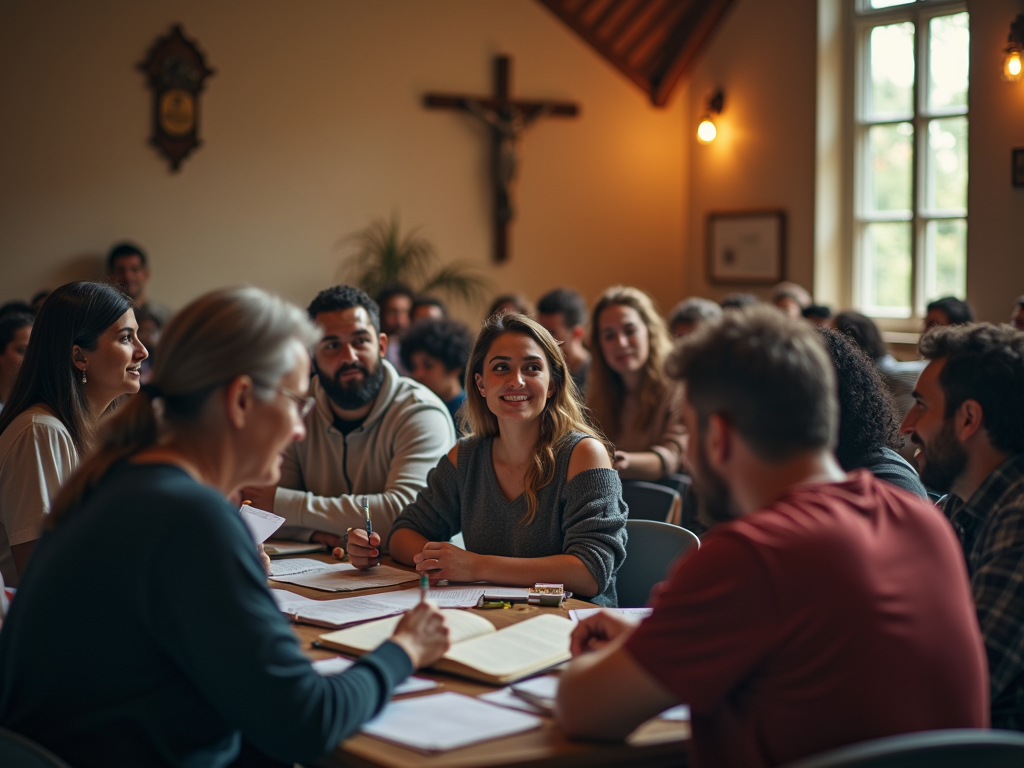
Imagine a garden where each seed is a potential leader, waiting for the right conditions to sprout, bloom, and eventually scatter its offspring across the landscape of faith. Training church leaders in discipleship is not simply a program; it is the cultivation of a living, breathing ecosystem where Spiritual growth is both art and science. This narrative unfolds as a journey from seed to orchard, offering church planters a compass that points toward deep, enduring transformation.
Cultivating a Vision of Discipleship
Before any curriculum can take root, there must be a vivid, shared vision that fuels the entire endeavor. A vision acts like a compass, orienting every mentor, apprentice, and resource toward a common horizon. Leaders who understand that discipleship is a lifelong apprenticeship—rather than a series of fleeting lessons—become the architects of a culture where faith is not merely taught but caught. In the fertile soil of vision, leaders learn to see each follower as a potential catalyst, turning ordinary believers into empowered servants who can multiply the gospel’s reach.
Rooted in Scripture: The Theurgical Blueprint
The most resilient leaders are those whose formation is anchored in the sacred texts that give the church its identity. In the language of theology, this foundation can be described as a theurgical blueprint—a divine pattern that shapes every aspect of formation. Through exegetical immersion, aspiring leaders encounter the narrative arc of Scripture, discovering the rhythm of covenant, redemption, andSpiritus (the Holy Spirit). This deep engagement transforms doctrinal knowledge into lived pneumatology, where the Holy Spirit becomes the primary guide for personal and communal transformation.
Mentor-Core Relationships: The Orchestral Mentorship Model
Discipleship thrives when it is relational, not transactional. Think of the mentorship process as an orchestral arrangement: each instrument (mentor and disciple) brings its unique timbre, yet together they produce a symphonic sound greater than the sum of its parts. In this model, mentors are not merely teachers but conductors who tune hearts, align gifts, and direct the tempo of spiritual growth. The mentor’s role is to listen for the subtle resonances of call, conviction, and charism, then to provide moments of intentional practice, allowing the apprentice to experiment within a supportive chorus.
Curriculum Architecture: Crafting a Learning Journey
Designing a curriculum for discipleship is akin to charting a map for an odyssey. Each module becomes a waypoint, guiding participants from foundational beliefs to advanced competencies. The architecture should be spiral, revisiting core themes with increasing complexity—biblical narrative first, then theological reflection, followed by practical skill acquisition, and finally strategic leadership. By weaving together theological exposition, experiential labs, and reflective exercises, the curriculum catalyzes both cognitive insight and affective transformation.
Experiential Praxis: Learning by Doing
The most profound learning occurs when theory meets lived experience. In the praxis model, leaders are invited into real‑world ministries where they can exercise gifts, confront challenges, and receive immediate feedback. This hands‑on immersion is not a filler but the crucible where abstract concepts are forged into concrete habits. Whether leading a small group, organizing a service project, or facilitating a retreat, each act becomes a laboratory for spiritual discipline, enabling apprentices to internalize the rhythms of prayer, worship, and servant‑leadership.
Assessment and Reflection: The Mirror of Growth
Growth without reflection is like a river without banks—it disperses aimlessly. Periodic assessment acts as a mirror, revealing both progress and blind spots. Effective assessment tools include pastoral journals, peer review circles, and rubric‑based evaluations that measure character, competence, and catalytic impact. By encouraging disciples to regularly examine their motives, methods, and mission, the process nurtures a habit of catharsis—clearing away stagnation and renewing commitment.
Multiplication and Succession: From One to Many
The ultimate goal of discipleship is not merely the formation of a single leader but the creation of a multiplication lattice where each trained individual becomes a reproducing node. Succession planning involves identifying emerging leaders, delegating responsibilities, and creating pathways for them to replicate the mentorship cycle. This model draws on the biblical principle of “the harvest being plentiful,” where the disciple’s growth serves as a seedbed for future disciples.
Prayer and Spiritual Formation: The Heartbeat of Leadership
No leadership training can sustain itself without a robust prayer life. Prayer functions as the pneumatic cadence that synchronizes the leader’s heartbeat with God’s timing. Embedding prayer practices—such as lectio divina, contemplative silence, and communal intercession—into the training regimen ensures that spiritual formation remains central. When prayer is woven into daily routines, leaders cultivate a posture of humility, receptivity, and resilience.

