

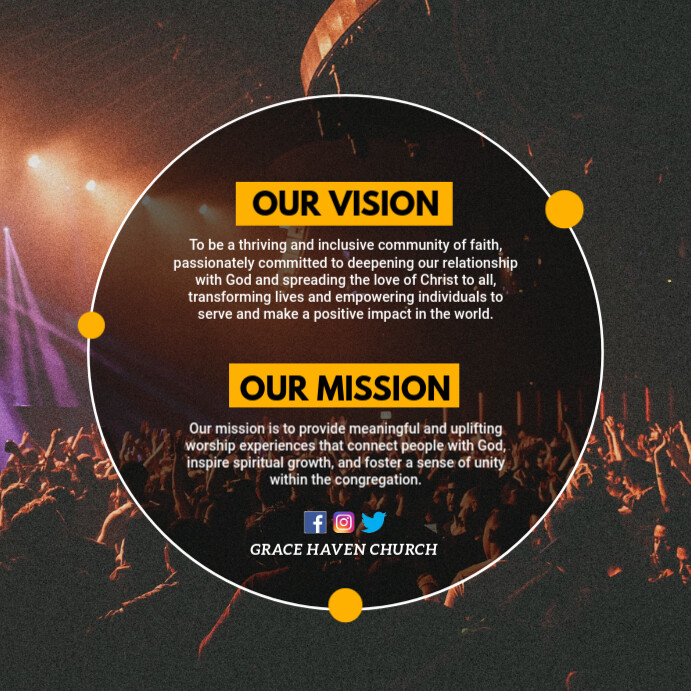
In the grand tapestry of faith, where threads of hope weave through the fabric of time, a church’s mission and vision are not mere declarations—they are the compass that guides its journey, the lighthouse that pierces the fog of uncertainty. These are not static words etched in stone but living, breathing mantras that pulse with the heartbeat of a congregation. A well-crafted mission campaign is more than a strategy; it is a symphony of purpose, a clarion call that rallies the faithful and beckons the curious. It is the art of painting tomorrow’s horizon in vivid hues today, ensuring that every step taken is not just a march but a dance with destiny.
The Lighthouse Principle: Illuminating the Path Forward
Imagine a lighthouse standing sentinel on a jagged coastline, its beam cutting through the storm’s fury to guide ships safely to shore. A church’s mission campaign operates on the same principle—it is the beacon that dispels the darkness of doubt, the steady glow that reassures even the most tentative soul. This is not about mere visibility; it is about resonance. The mission must echo in the hearts of the congregation like a hymn sung in unison, its melody so compelling that it transcends the walls of the sanctuary and infiltrates the streets, the homes, the very pulse of the community.
To achieve this, the campaign must be more than a slogan. It must be a story—one that unfolds in stages, each act revealing a new layer of purpose. The vision is the destination, but the mission is the journey. Together, they form a duality as inseparable as the cross and the crown. The lighthouse does not just shine; it calls. It does not just stand; it moves hearts. And so must the church’s mission campaign: a dynamic force that draws people not by force, but by the sheer magnetism of a shared dream.
The Mosaic of Mission: Piecing Together a Unified Purpose
A mission campaign is not a monolith; it is a mosaic, each tile representing a facet of the church’s calling. Some tiles are bold and unapologetic, like the call to serve the marginalized. Others are subtle, like the quiet encouragement to nurture spiritual growth within families. The challenge lies in assembling these pieces into a cohesive whole—a tapestry so intricate that no thread is left dangling, no purpose unfulfilled.
Consider the parable of the mustard seed. From something small and seemingly insignificant grows a tree so vast that birds nest in its branches. A mission campaign must start small—perhaps with a single act of kindness, a whispered prayer, a shared meal. But from these humble beginnings, it must swell into a movement that transforms lives. The key is to identify the “mustard seeds” within the congregation’s DNA and nurture them until they burst forth in full bloom. This requires discernment, for not every idea will take root. The campaign must be selective, planting only those seeds that align with the church’s core values and resonate with its people.
Yet, even the most meticulously crafted mosaic can fracture if the adhesive of unity is weak. The campaign must foster a sense of belonging, a shared ownership that makes every member feel like a vital piece of the puzzle. This is where storytelling becomes a powerful tool. By sharing testimonies of transformation—how a single act of service changed a life, how a moment of prayer altered a family’s trajectory—the campaign breathes life into the mission, making it tangible, relatable, and irresistibly compelling.
The Visionary Spark: Igniting the Imagination of Tomorrow
Vision is the spark that ignites the fire of mission. Without it, the campaign is a ship without a rudder, adrift in a sea of good intentions. But vision is not a distant dream; it is a vivid, almost tangible reality that the church must paint in the minds of its people. It is the difference between saying, “We feed the hungry,” and envisioning a community where no one goes to bed hungry. It is the shift from “We pray for the sick” to a world where healing flows like a river through the streets.
To cast this vision, the church must become a master storyteller. It must use every medium at its disposal—art, music, digital media, personal testimonies—to create an immersive experience. Imagine a sermon not as a lecture, but as a cinematic journey, where the congregation is transported to a future where the mission has been fulfilled. The walls of the sanctuary dissolve, and suddenly, they are standing in a city transformed, where compassion is the currency and love is the law. This is not escapism; it is the alchemy of hope, turning the abstract into the attainable.
The vision must also be audacious. It should stretch the faith of the congregation, challenging them to believe that the impossible is not just possible but inevitable. This is where the metaphor of the “leap of faith” comes into play. Just as a trapeze artist must let go of the bar to soar, the church must be willing to release its grip on the familiar and embrace the unknown. The vision is the net that catches them when they leap, the promise that they will not fall but fly.
The Rhythm of Engagement: Keeping the Pulse Alive
A mission campaign is not a sprint; it is a marathon with no finish line. The initial enthusiasm must be sustained, the momentum kept alive through a rhythm of engagement that feels organic rather than forced. This requires a delicate balance between inspiration and action, between vision and execution. The campaign must be a living entity, evolving with the needs of the community and the pulse of the congregation.
One way to maintain this rhythm is through cyclical storytelling. Just as the seasons turn, so too must the narrative of the mission. In spring, the focus might be on renewal—planting seeds of faith in the hearts of the next generation. Summer could bring a call to action, mobilizing the congregation to serve in tangible ways. Autumn might be a time for reflection, gathering testimonies of how the mission has touched lives. And winter? Winter is for rest, for consolidation, for preparing the ground for the next cycle of growth.
Another vital component is the creation of “mission moments”—opportunities for the congregation to experience the vision in real time. These could be as simple as a prayer walk through the neighborhood, where participants see the community through the lens of the mission. Or they could be grander, like a citywide service project that leaves a visible mark on the landscape. The key is to make the mission tangible, to bridge the gap between the abstract and the concrete. When people can see, touch, and feel the impact of the mission, it ceases to be a distant ideal and becomes a lived reality.
The Unseen Threads: Weaving Community into the Mission
No mission campaign exists in a vacuum. It is woven into the fabric of the community, its threads intertwined with the lives of those it seeks to serve. The church must become a hub of connection, a place where the mission is not just proclaimed but lived out in partnership with the broader community. This requires humility, a willingness to listen as much as to speak, to serve as much as to lead.
Consider the metaphor of the loom. The church is the shuttle, carrying the thread of the mission back and forth, binding together the warp and weft of the community. But the threads themselves come from the people—their stories, their struggles, their dreams. The campaign must honor these threads, weaving them into the larger tapestry without erasing their individuality. This is the art of relational mission: one that values people as much as it values the cause.
It also means embracing the unexpected. The most transformative moments in a mission campaign often come not from meticulous planning, but from serendipity. A chance encounter with a stranger. A spontaneous act of kindness that sparks a chain reaction. A child’s unfiltered question that redefines the purpose of the mission. The church must be open to these divine interruptions, for they are often the very moments that breathe life into the campaign.
The Eternal Echo: Ensuring the Mission Outlives the Campaign
The ultimate test of a mission campaign is not its initial success, but its lasting impact. The words of the mission must echo through the generations, becoming so ingrained in the church’s identity that they are no longer a campaign but a legacy. This requires embedding the mission into the very DNA of the church—its rituals, its traditions, its culture.
One way to achieve this is through the creation of sacred symbols. These could be physical objects—a banner, a stained-glass window, a piece of art—that serve as constant reminders of the mission. Or they could be intangible, like a recurring liturgy or a shared meal that commemorates the campaign’s milestones. The key is to make the mission a part of the church’s rhythm, something that is celebrated not just once, but every time the congregation gathers.
Another strategy is to cultivate a culture of mission-mindedness. This means training leaders who embody the mission, who can articulate it with passion and live it with integrity. It means creating spaces—both physical and digital—where the mission is discussed, debated, and refined. It means celebrating the small victories, the quiet acts of faithfulness that might otherwise go unnoticed. For it is in these moments that the mission truly takes root, growing from a campaign into a way of life.
The final piece of the puzzle is legacy. The church must ask itself not just what it wants to achieve, but what it wants to be remembered for. Will future generations look back and see a community that dared to dream, that dared to act, that dared to believe in a future shaped by love? The mission campaign is the first brushstroke on this canvas, but it is the daily choices of the congregation that will complete the masterpiece.

