

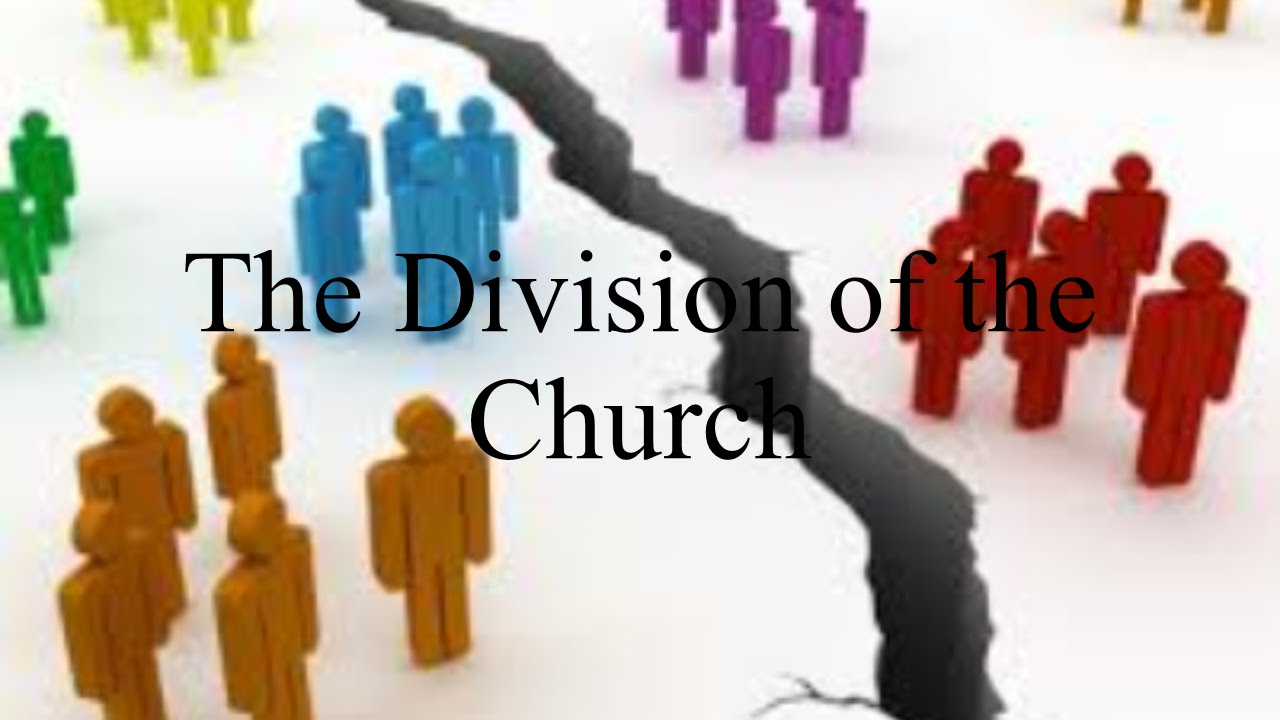
In the grand tapestry of faith, the threads of unity are meant to weave a vibrant, unbroken pattern—yet all too often, the fabric frays at the seams. Division within the church is not a modern anomaly but a timeless struggle, one that has echoed through centuries of theological debate, personal ambition, and human frailty. Whether sparked by doctrinal disputes, cultural clashes, or the simple weight of sin, disunity fractures the body of Christ, leaving wounds that fester in silence. Yet, within this brokenness lies the potential for redemption. By confronting conflict with humility, seeking reconciliation with purpose, and embracing diversity as a strength rather than a threat, the church can transcend its divisions and emerge stronger. This journey demands more than passive hope—it requires intentional action, a willingness to listen where we’ve been deaf, and a courage to love where we’ve been divided.
The Roots of Division: Why Conflict Takes Root in Sacred Spaces
Division rarely sprouts overnight; it germinates in the fertile soil of unchecked pride, unexamined traditions, and the silent erosion of trust. At its core, disunity often stems from a misplaced allegiance—not to Christ, but to ideologies, personalities, or institutional power. The early church grappled with this tension when Peter’s cultural bias threatened to fracture the fledgling community (Galatians 2:11-14). Today, the seeds of division are sown in the fertile ground of social media echo chambers, where theological nuance collapses into binary extremes, and in the pews, where generational gaps widen into chasms of misunderstanding. Even well-intentioned reforms can become wedges when they prioritize methodology over mission, or when leaders mistake uniformity for unity. To dismantle these barriers, we must first acknowledge their existence—not with finger-pointing, but with the humility of those who recognize their own capacity for division.
Theological Fault Lines: When Doctrine Becomes a Dividing Wall
Doctrine, meant to be a compass, can sometimes become a crowbar, prying apart what God intended to be whole. The church’s history is littered with schisms born of seemingly irreconcilable differences—Calvinism vs. Arminianism, liturgical vs. charismatic worship, the inerrancy of Scripture debated in academic halls and church basements alike. Yet, the most dangerous theological divisions are not those between denominations, but those that fester within them, where orthodoxy is weaponized to exclude rather than include. Consider the way the Eucharist, a sacrament of unity, has been wielded as a litmus test for belonging in some traditions. Or how eschatological views—once lively dinner-table debates—now fuel congregational fractures, with members eyeing one another with suspicion rather than shared hope. True theological fidelity does not demand uniformity of thought but a shared commitment to the person of Christ, whose teachings transcended rigid categories. The call is not to dilute doctrine but to hold it with open hands, allowing room for mystery and grace.
Cultural Clashes: Bridging the Gulf Between Us and Them
Culture is the invisible architecture of our lives, shaping how we worship, serve, and even read Scripture. When these cultural frameworks collide within a single congregation, the result can be a cacophony of clashing expectations—traditional hymns vs. contemporary anthems, formal liturgy vs. spontaneous prayer, or the unspoken rules of hospitality that vary from one family to the next. The global church is a mosaic of traditions, yet too often, we mistake our cultural expressions for divine mandates, elevating preferences to the level of doctrine. The early church’s Jerusalem Council (Acts 15) offers a blueprint for navigating such divides: listening, debating, and ultimately, prioritizing the essentials of faith over the negotiables. Today, this might look like a church plant in an urban center intentionally blending the rhythms of its immigrant congregation with the cadence of its millennial attendees. Or a rural congregation learning to embrace the digital fluency of its youth without abandoning the wisdom of its elders. Unity is not the erasure of difference but the celebration of it, where every voice is heard and no culture is deemed inferior.
Leadership in the Crosshairs: When Shepherds Become Stumbling Blocks
Leadership is a sacred trust, yet history is replete with shepherds who, through ambition, neglect, or outright abuse, have shepherded their flocks into the wilderness of division. A pastor’s tone—whether authoritarian or apathetic—sets the temperature of a congregation. When leaders prioritize growth metrics over spiritual health, or when they weaponize guilt to maintain control, the flock scatters. Conversely, leaders who model vulnerability, accountability, and a willingness to repent can turn the tide of disunity. Consider the apostle Paul’s admonition to the Corinthian church, where factions had formed around personalities (1 Corinthians 1:10-17). His response was not to silence dissent but to realign the community around the cross. Modern leaders must ask: Are we fostering a culture where questions are welcomed, or where dissent is equated with disloyalty? Are we shepherding with the scent of sheep on our robes, or the perfume of power in our steps? The health of a church is often a reflection of the health of its leadership.
Generational Gaps: The Silent Schism Between Young and Old
The generational divide in the church is not merely about music styles or worship preferences—it is a collision of worldviews, values, and even understandings of what it means to follow Jesus. Older generations may view the church’s decline as a failure of commitment, while younger believers often critique its irrelevance or hypocrisy. Yet, these gaps are not insurmountable. The early church thrived across vast cultural and generational divides because it centered on a shared story—the story of a God who became incarnate, who walked among us, and who calls each generation to participate in His redemptive work. Bridging this divide requires more than intergenerational potlucks; it demands mutual listening, where the wisdom of the aged is honored and the prophetic voice of the young is amplified. It means creating spaces where a 70-year-old can learn from a 20-year-old’s passion for justice, and where a teenager can find solace in the psalms that sustained their grandparents. The church’s future depends on its ability to become a family where no generation is an afterthought.
Conflict Resolution: From Division to Reconciliation
Conflict is not the enemy; unaddressed conflict is. The church’s call to reconciliation is not a suggestion but a mandate, woven into the fabric of the gospel itself (Matthew 5:23-24). Yet, reconciliation is not a quick fix—it is a slow, sacred process that begins with confession, extends through listening, and culminates in restoration. The first step is often the hardest: naming the division without assigning blame. This requires courage, especially in cultures where confrontation is taboo. Next comes the discipline of active listening, where we resist the urge to formulate our rebuttal mid-sentence and instead seek to understand the heart behind the words. Finally, reconciliation demands action—whether that means restructuring leadership to include marginalized voices, revisiting outdated bylaws, or simply committing to pray for one another with renewed intentionality. The process is messy, but the alternative—a church fractured and weary—is far worse.
The Role of the Holy Spirit: The Unseen Architect of Unity
In the grand narrative of the church, the Holy Spirit is the unseen hand guiding, convicting, and binding hearts together. Where human efforts falter, the Spirit’s presence is the difference between a congregation that merely tolerates one another and one that loves fiercely. The Spirit’s work is evident in the early church’s ability to transcend cultural and linguistic barriers (Acts 2:4-12), and it is no less active today. Yet, we often relegate the Spirit to the sidelines, treating unity as a strategic plan rather than a supernatural work. True unity is not achieved through committees or charismatic leaders alone; it is cultivated in the quiet places where individuals surrender their agendas to the Spirit’s leading. This might look like a church praying fervently for revival, not as a means to numerical growth, but as a plea for the Spirit to soften hardened hearts. Or it might manifest in the spontaneous unity of believers from different backgrounds, united in worship despite their differences. The Spirit does not erase division through force but through transformation—one heart at a time.
Looking Ahead: A Church Reunited, A Witness Restored
The vision of a united church is not a utopian fantasy but a biblical mandate, a foretaste of the new creation where every tribe, tongue, and nation will worship together (Revelation 7:9). Yet, this unity is not a passive dream—it is an active pursuit, one that requires sacrifice, patience, and a willingness to lay down our preferences for the sake of the gospel. The church’s witness in the world is inextricably linked to its unity; a divided church has little credibility when it preaches love. As we move forward, let us reject the lie that division is inevitable. Instead, let us embrace the hard work of reconciliation, the joy of diversity, and the hope of a church that reflects the beauty of its Savior. The road ahead is not easy, but it is holy. And in the end, it is not our efforts that will unite us—it is the God who calls us home.

