

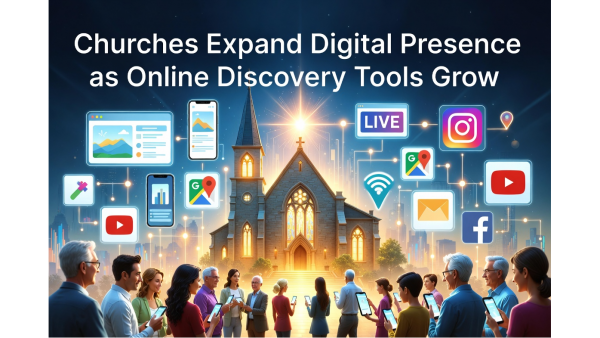
In an era where a single scroll can transport us from a bustling city square to a serene mountaintop, the digital age has redefined how we connect, learn, and worship. The church, once a sanctuary of brick and mortar, now finds itself at the crossroads of tradition and innovation, where social media emerges not as a disruptor, but as a bridge—one that spans the chasm between the sacred and the digital. This isn’t just about broadcasting sermons or sharing hymn lyrics; it’s about crafting a sacred digital footprint that resonates with the heartbeat of a community. Welcome to the transformative power of social media in the church, where pixels and prayers intertwine to create a tapestry of engagement that defies the boundaries of time and space.
The Digital Pulpit: Preaching Beyond the Pews
Gone are the days when a sermon’s reach was confined to the four walls of a sanctuary. Today, the digital pulpit stretches across continents, inviting seekers, skeptics, and believers alike into a conversation that transcends geography. Social media platforms have become the modern-day agoras, where the timeless truths of faith are not just proclaimed but dissected, debated, and embraced in real time. A pastor’s words, once confined to a Sunday morning, now echo through the feeds of millions, their resonance amplified by the algorithms that curate personal sanctuaries of content. This shift isn’t merely about accessibility; it’s about relevance. In a world where attention is the most coveted currency, the church must speak in a language that resonates with the digital native—a language of authenticity, immediacy, and vulnerability. The digital pulpit isn’t just a megaphone; it’s a conversation starter, a place where doubt and devotion dance in the comments section, and where grace is meted out in 280-character bursts.
Community in the Cloud: Building Sacred Spaces Online
The church has always been more than a building; it’s a family, a tribe, a collective of souls bound by shared beliefs and shared struggles. Social media has the power to recreate this sense of belonging in the digital ether, where virtual pews are filled with faces from every corner of the globe. Platforms like Facebook Groups and Discord servers act as modern-day cathedrals, where members gather not just to consume content but to commune, to pray, and to support one another through the mundane and the monumental. These digital sanctuaries thrive on interaction—prayer requests shared in real time, Bible studies dissected in live streams, and testimonies that weave through timelines like threads of gold. The key lies in fostering an environment where participation isn’t optional but organic, where the quietest voice in the room feels heard, and where the church’s mission transcends the Sunday service to become a 24/7 rhythm of connection. This is community in the cloud: ephemeral in form, eternal in spirit.
Yet, building such a community requires more than just a presence; it demands intentionality. It’s about creating rituals that mirror the sacred—weekly devotionals that land in inboxes like morning manna, prayer chains that pulse through group chats like a heartbeat, and virtual potlucks where recipes and stories are shared with equal fervor. The church must become a curator of these moments, a gardener tending to the soil of digital interaction until it blooms into something resembling the body of Christ.
Storytelling in the Scroll: The Art of the Sacred Narrative
In a world saturated with content, the church’s message must cut through the noise with the precision of a surgeon’s scalpel. This is where the art of storytelling becomes its most potent weapon. Social media isn’t just a platform; it’s a stage, and every post, every video, every tweet is a scene in a larger narrative that the church is writing for the world to see. The most compelling stories aren’t those that preach at their audience but those that invite them into the journey—stories of redemption, of struggle, of triumph over adversity. These are the tales that linger in the mind long after the screen has dimmed.
Consider the power of a short-form video that captures a congregation’s worship in a single, unfiltered moment—a child’s first time raising their hands in praise, an elderly member’s trembling voice singing an old hymn, the raw emotion of a testimony shared between sobs. These aren’t just clips; they’re windows into the soul of the church, windows that beckon the curious and comfort the weary. The church must embrace the language of storytelling, where vulnerability is strength, and where authenticity trumps polish. In doing so, it transforms from an institution into a living, breathing entity—one that breathes life into the digital landscape.
From Likes to Legacy: Measuring Impact in the Digital Age
But how does one measure the impact of a digital ministry? Is it in the number of likes, shares, or followers? Or is it in the quiet moments when a single post sparks a conversation that leads someone back to faith—or forward into a deeper understanding of it? The metrics of social media are often reductive, boiling down engagement to numbers that fail to capture the essence of what it means to build a digital legacy. Yet, these metrics are also a compass, guiding the church toward what resonates and what falls flat.
The true measure of impact lies in the stories that emerge from the digital soil. A comment from a skeptic who found solace in a shared post. A direct message from a young adult who rediscovered their faith after years of wandering. A live stream that becomes the catalyst for a local outreach program. These are the fruits of a digital ministry—intangible, yet undeniable. The church must resist the temptation to chase vanity metrics and instead focus on cultivating a digital presence that prioritizes depth over breadth, authenticity over algorithms. The goal isn’t to amass an audience but to cultivate a community, one soul at a time.
The Future Unfolding: Where Tradition Meets Innovation
The intersection of faith and technology is not a fleeting trend but a seismic shift in how the church engages with the world. The future belongs to those who can blend the ancient rhythms of worship with the cutting-edge tools of connection. Imagine a world where augmented reality guides pilgrims through the Holy Land from their living rooms, where AI curates personalized devotionals based on a user’s spiritual journey, or where blockchain secures the integrity of charitable giving. These aren’t distant fantasies but emerging realities that the church must prepare to embrace.
Yet, innovation must never come at the cost of the sacred. The church’s digital transformation should be guided by a North Star—one that asks not just “Can we do this?” but “Should we?” The tools may change, but the mission remains the same: to love, to serve, and to proclaim the good news. In this dance between tradition and innovation, the church finds its most authentic voice—a voice that speaks to the past while reaching for the future.
The digital age is not a threat to the church’s mission; it’s an invitation. An invitation to step beyond the confines of the familiar, to speak in a language that resonates with the modern world, and to build bridges that span the divides of time, space, and belief. The church’s digital presence is not just a website or a social media account; it’s a living testament to the power of faith to adapt, to endure, and to thrive. So let the pixels glow, let the algorithms serve, and let the digital age become the church’s most unexpected ally in its eternal mission.

