

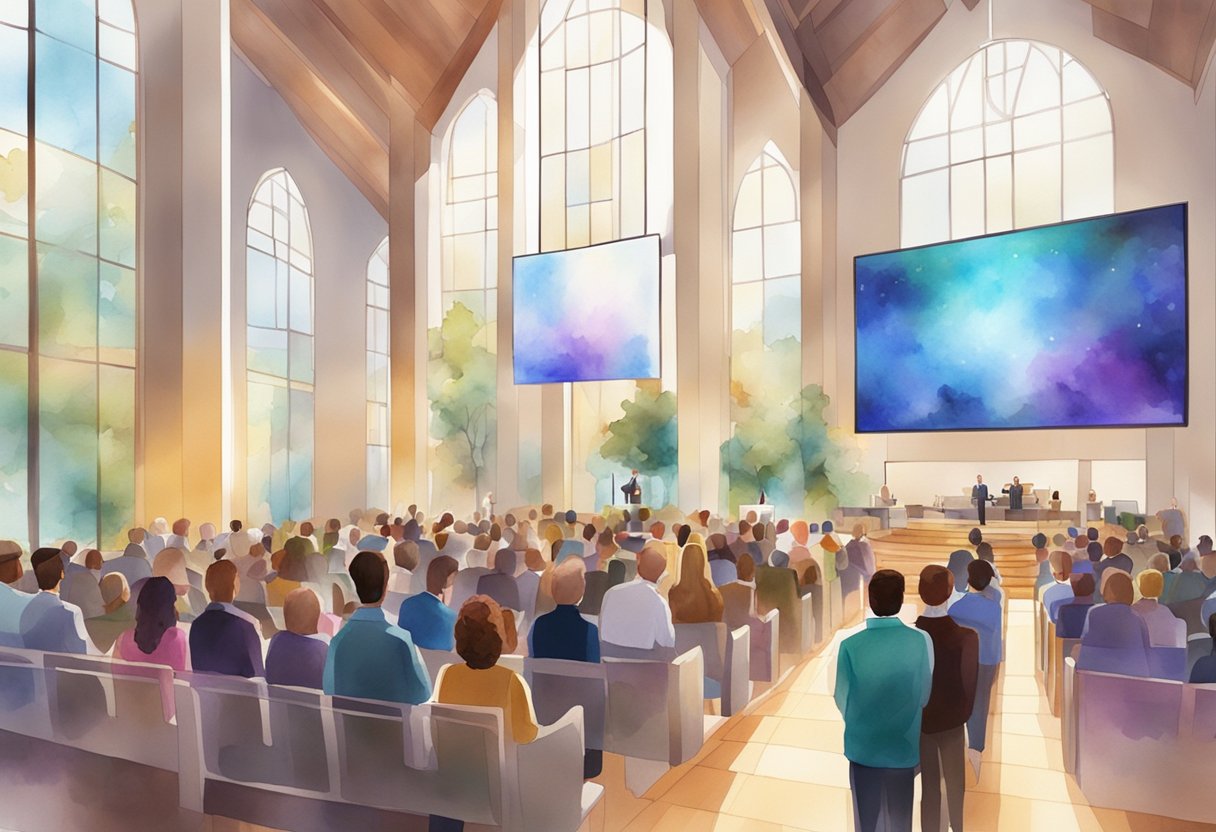
Across centuries, the sanctuary has always been a crucible for both ritual and revelation, a space where the ancient meets the momentary. Today, a new dimension is being woven into the fabric of worship: technology that amplifies the soul’s voice, renders the invisible visible, and extends the communal embrace beyond stone walls. From whispered prayers captured by directional microphones to immersive streams that transport the faithful into a digital holy of holies, the intersection of sacred practice and modern tools is reshaping how believers experience the divine. In this exploration, we chart the multifaceted landscape of church and worship technology, illuminating the diverse content types that can elevate, engage, and enlighten.
The Evolution of Sacred Soundscapes
Long before the first organ keys were struck, the acoustic architecture of cathedrals was engineered to reverberate chants across nave and transept. Contemporary sanctuaries now employ audiophile-grade mixing consoles, beam‑forming microphones, and real‑time acoustic modeling to sculpt soundscapes that are both sonorous and intimate. By integrating multitrack recording with spatial audio algorithms, worship teams can broadcast a live worship set that preserves the timbre of a soloist’s breath or the thunderous swell of a choir, delivering an experience that feels as if the listener were seated in the front pew. This evolution not only heightens aesthetic appreciation but also fortifies theological expression, allowing lyrical nuance to resonate more deeply within the congregant’s psyche.
Streaming the Sanctum: Live Broadcasts and On‑Demand Archives
The proliferation of high‑bandwidth internet and adaptive streaming protocols has made virtual attendance a viable liturgical act. Churches now broadcast live worship services through platforms that support 4K video, low‑latency encoding, and dynamic bitrate adjustment, ensuring crisp visuals regardless of viewer location. Moreover, on‑demand archives provide a repository of sermons, prayers, and musical interludes that can be accessed at any hour, catering to the rhythms of night‑shift workers, remote missionaries, and homebound seniors. These archives often incorporate searchable metadata—topic tags, biblical references, speaker profiles—allowing congregants to curate personal learning pathways that align with their spiritual growth.
Digital Signage and Immersive Visuals
Within the physical worship space, LED‑driven digital signage replaces static hymn boards with dynamic visual narratives. High‑resolution panels can project real‑time translations, lyric overlays, and scriptural citations, synchronized to the spoken word via central timeline software. In more avant‑garde settings, projection mapping transforms altar backdrops into living canvases, where abstract chromatic motifs pulse in concert with music, creating an ethereal ambience that stimulates both optic and emotive senses. This visual tapestry not only sustains attention but also deepens participatory engagement, as worshippers receive visual cues that guide collective response—be it a silent prayer, a responsive reading, or a communal gesture.
Interactive Applications and Congregational Engagement
Mobile applications have become a digital extension of the pew. Beyond conventional event calendars and donation portals, sophisticated apps embed interactive prayer boards, real‑time Q&A modules, and gamified devotional quests. Users can submit prayer requests that appear instantly on church screens, fostering a sense of communal intercession. Polling features enable pastors to gauge congregational sentiment on theological topics, allowing sermons to be dynamically tailored. Some apps even incorporate augmented reality (AR) experiences, where a smartphone camera overlays scriptural illustrations onto physical objects, inviting believers to explore sacred stories in a three‑dimensional context.
Social Media as a Liturgical Platform
Social networks now serve as contemporary agorae where faith communities convene outside formal worship hours. Platforms such as Instagram Reels and TikTok offer short‑form video snippets of sermons, liturgy highlights, and behind‑the‑scenes glimpses of choir rehearsals. Facebook Live enables parishes to host virtual prayer vigils, while LinkedIn articles provide theological treatises for professional audiences. The curation of content across these channels not only extends reach but also cultivates a narrative continuum—where daily inspirations, liturgical calendars, and community service opportunities are interwoven into a cohesive digital identity.
Accessibility and Inclusive Technology
Inclusivity stands as a moral imperative for any worship community. Assistive listening systems, real‑time captioning powered by speech‑to‑text AI, and sign‑language interpretation streams ensure that individuals with hearing impairments, visual limitations, or language barriers can partake fully. Screen‑reader compatible websites and alt‑text descriptions for images guarantee that digital worship materials are navigable for blind congregants. By embedding such accessibility features, churches embody the theological principle that the divine is accessible to all, regardless of physical condition.
Data‑Driven Insights for Pastoral Care
The digital footprints left by congregants—viewership logs, interaction rates, donation patterns—constitute a rich reservoir for pastoral analytics. Using anonymized dashboards, church leaders can discern which sermon segments sustain attention, which outreach events attract the most participation, and which community groups exhibit growth or attrition. These insights inform strategic decisions, from sermon series design to resource allocation for youth ministries. Ethical data stewardship remains paramount; transparent policies and consent mechanisms ensure that technology serves compassion rather than surveillance.
Future Horizons: Virtual Reality and AI in Worship
Emerging technologies promise to deepen the experiential reservoir of faith. Virtual reality (VR) environments can reconstruct historic sanctuaries, allowing worshippers to step into reconstructed ancient temples or contemporary chapels virtually, experiencing the architectural grandeur and acoustic resonance from any global location. AI‑generated hymns, guided by theological frameworks, may soon produce original compositions that echo a congregation’s liturgical tradition while introducing novel melodic structures. Meanwhile, AI‑driven sermon preparation tools can curate relevant biblical commentaries, enabling pastors to craft messages with greater depth and timeliness.

