

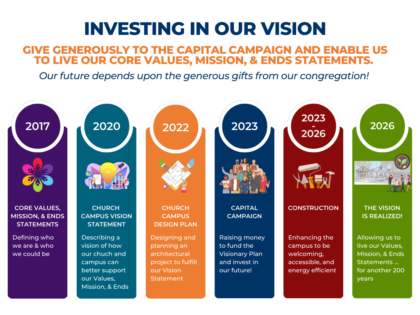
What if the future of your spiritual community wasn’t just something you hoped for—but something you actively shaped with open hands and open hearts? Church giving campaigns aren’t merely financial drives; they are sacred acts of co-creation, where vision meets generosity, and faith meets action. They are the alchemy that transforms dreams into brick-and-mortar legacies, into programs that nourish souls, and into ministries that ripple across generations. But here’s the playful yet profound question that lingers like incense in the sanctuary: What happens when the vision is clear, but the path to funding it feels shrouded in fog? That fog isn’t just uncertainty—it’s an invitation. An invitation to pause, reflect, and reimagine how generosity can become the compass guiding your community forward.
The Sacred Art of Vision Casting: Painting Tomorrow with Today’s Colors
Vision casting in a church isn’t about drafting a strategic plan in a boardroom—it’s about listening to the still, small voice that whispers through scripture, through prayer, and through the lived experiences of the congregation. It’s about asking not just “What can we afford?” but “What is God calling us to become?” A compelling vision isn’t a spreadsheet; it’s a story. It’s the tale of a community that dares to dream beyond its walls, that chooses to see scarcity as a canvas rather than a ceiling. When a church articulates its vision with clarity and passion, it transforms giving from obligation to opportunity. Members don’t just donate—they invest in a future they can see, touch, and feel. The key lies in making the vision tangible: a new sanctuary that hums with hymns, a food pantry that overflows with hope, a youth program that ignites young hearts with purpose. These aren’t just goals. They are sacred promises waiting to be fulfilled.
Generosity as Spiritual Practice: More Than Money, It’s Metamorphosis
Giving in the church isn’t transactional—it’s transformational. Every dollar contributed is a seed planted in the soil of faith, a declaration that material wealth is not an end, but a means to a greater end. When congregants give, they aren’t just funding a budget; they are participating in a spiritual metamorphosis. Their generosity becomes an act of worship, a tangible expression of trust in the divine. But here’s where the challenge emerges, like a quiet current beneath the surface: How do we move beyond transactional giving to cultivate a culture of generosity that feels as natural as breathing? It begins with storytelling. Not the dry recitation of financial reports, but the vibrant retelling of lives changed, of prayers answered, of communities reborn. When people see the impact of their giving, when they feel the ripple effect of their contribution, generosity ceases to be a duty—it becomes a joy. It becomes part of their spiritual identity. The most effective campaigns don’t just ask for money; they invite people into a story of shared purpose and divine collaboration.
Designing Campaigns That Captivate: The Alchemy of Strategy and Soul
A giving campaign isn’t a one-size-fits-all sermon—it’s a bespoke experience tailored to the heartbeat of the community. The most resonant campaigns blend strategy with soul, data with devotion. They begin with listening: surveys, small group conversations, and prayerful discernment to uncover what truly moves the congregation. Is it the dream of a vibrant children’s ministry? The need for accessible mental health resources? The call to plant a community garden that feeds both bodies and spirits? Once the vision is clear, the campaign becomes a journey. It might start with a stirring sermon, evolve into small group discussions, and culminate in a celebratory pledge Sunday where members write their hopes on cards and place them in a communal basket. The design must be immersive—visual storytelling through videos, infographics that show impact, testimonials from those who’ve already benefited. But the magic happens when the campaign transcends the practical and touches the poetic. When it doesn’t just say “give,” but whispers, “Imagine what we can build together.”
The Silent Foe: Overcoming the Inertia of “We’ve Always Done It This Way”
Every church has its ghosts—the traditions that linger like old hymns, the patterns that feel comfortable but may no longer serve the mission. The greatest challenge in any giving campaign isn’t financial; it’s cultural. How do you inspire a congregation to embrace change when the familiar feels safer than the unknown? The answer lies in reframing the narrative. Instead of framing the campaign as a disruption, present it as an evolution. Show how the new vision honors the past while propelling the future forward. Use language that evokes continuity: “We are building on the legacy of those who came before us.” Share stories of churches that dared to dream differently and saw their ministries flourish. Address fears directly but gently: “What if we don’t reach our goal?” Reassure with transparency—show how even partial funding can make a meaningful difference. The goal isn’t to erase the past, but to weave it into a tapestry of hope that includes everyone’s contribution.
Technology as a Bridge: Digital Tools for a Connected Faith
In an age where smartphones outnumber Bibles in many pews, digital tools aren’t just optional—they’re essential. A well-designed campaign leverages technology not to replace human connection, but to deepen it. Online giving platforms make it effortless for members to contribute, while social media amplifies the story beyond the sanctuary walls. Live-streamed updates, interactive pledge forms, and virtual small groups ensure that even those unable to attend in person feel part of the journey. But technology must serve the soul, not the other way around. The most effective digital strategies are those that feel personal, not impersonal. Automated emails should feel like a friend checking in, not a corporate reminder. Social media posts should tell stories, not just solicit funds. The goal is to create a seamless bridge between the digital and the sacred, where every click feels like a step toward something holy.
The Ripple Effect: How One Campaign Can Transform a Community
The impact of a giving campaign extends far beyond the initial funds raised. It ripples outward, touching lives in ways that can’t be measured in dollars. When a church successfully funds a vision, it sends a message: “We believe in the future. We believe in each other. We believe in something greater than ourselves.” This message transforms the culture of the congregation. It fosters a spirit of collaboration, where members see themselves as co-creators rather than passive attendees. It attracts new people who are drawn to the energy of a community that dares to dream. It strengthens partnerships with local organizations, creating networks of support that extend into the neighborhood. And perhaps most importantly, it deepens the spiritual lives of those who give. When people see their generosity bear fruit, their faith is renewed. Their trust in the divine is fortified. They become not just donors, but stewards of a shared legacy.
Conclusion: The Future Is a Gift We Build Together
Church giving campaigns are more than financial endeavors—they are acts of faith, of courage, and of love. They ask us to look beyond the immediate, to see the world not as it is, but as it could be. They challenge us to ask not just “How much can we give?” but “How much can we become?” The path forward isn’t always clear, but the vision doesn’t have to be perfect—it just has to be honest. Honest about the needs, honest about the dreams, and honest about the role each person plays in the story. When a church casts its vision with clarity and invites its members to contribute with joy, it doesn’t just build buildings or fund programs. It builds a future. And that future? It’s not something we wait for. It’s something we create—together.

