

Across centuries, believers have surrendered a portion of their harvest, wages, or bounty as an act of worship, a tangible testament to gratitude that reverberates through church walls and into community programs. In today’s hyperconnected epoch, the ritual of tithing has transcended the envelope‑stuffed offering plate, birthing an entire ecosystem of church giving platforms that marry ancient devotion with contemporary convenience. This article embarks on a narrative journey through the landscape of digital stewardship, exploring why modern parishes are gravitating toward sophisticated solutions, what features elevate a platform beyond mere transaction processing, and which providers currently set the benchmark for excellence.
The Spiritual Economy of Tithing
Every dollar that passes through a congregation’s ledger carries theological weight, a micro‑economy where faith and finance intersect. The term “spiritual economy” captures this duality: a marketplace where souls barter hope for resources, and where generosity becomes a measurable metric of communal health. In parishes that view offerings as a sacred covenant, the act of giving is no longer a perfunctory donation but a deliberate, soul‑fulfilling transaction. Platforms that recognize this nuance—honoring the emotional cadence of donors—stand apart from those that merely automate a transfer. The best solutions frame tithing as a spiritual discipline, employing language that evokes reverence while delivering seamless functionality.
Core Features That Elevate a Platform
When assessing digital sanctuaries for financial devotion, several pillars merit attention. Multi‑modal giving ensures that congregants can contribute via credit card, ACH, mobile wallets, or even cryptocurrency, accommodating a spectrum of financial habits. Recurring‑gift orchestration allows donors to schedule weekly, monthly, or seasonal contributions, mirroring the rhythm of liturgical seasons. Real‑time analytics empower pastors with instant insight into contribution trends, seasonal spikes, and donor retention rates. Customizable campaigns enable the launch of fundraisers for building projects, missions, or benevolence funds, each with its own branding and goal tracker. Finally, integration with church management systems (ChMS) synchronizes donor profiles, attendance records, and accounting ledgers, reducing duplicate entries and ensuring fiduciary fidelity.
Leading Solutions in the Digital Sanctuary
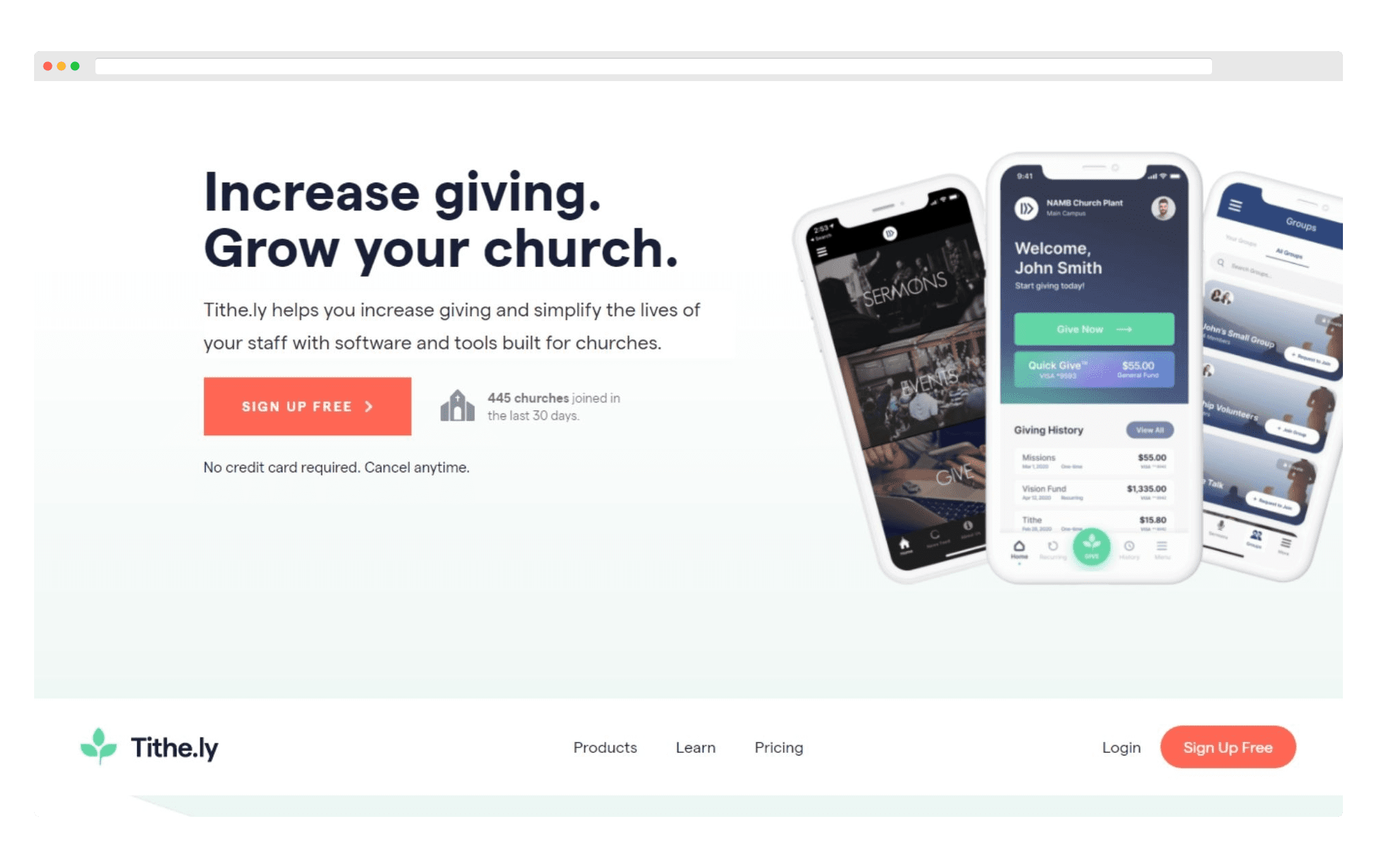
Several providers have risen to prominence, each carving a niche through innovative design and relentless focus on user experience. Tithely offers an intuitive interface that feels like a modern SaaS tool, complete with drag‑and‑drop campaign builders and a mobile app that lets users give with a single tap. Pushpay emphasizes omni‑channel disbursement, allowing churches to embed giving buttons on websites, in printed bulletins, and within social‑media posts, thereby meeting donors where they already spend their digital hours. GivingSpace differentiates by championing granular donor segmentation, employing algorithmic donor profiling that suggests targeted outreach based on contribution patterns. ChMeet blends video streaming with integrated giving, a potent combination for hybrid congregations that navigate both in‑person and remote worship. Each of these platforms delivers a suite of APIs that enable seamless data flow between the offering portal and the church’s internal bookkeeping tools.
Seamless Integration With Church Management Systems
For a digital ecosystem to thrive, the giving portal must coexist harmoniously with existing church management ecosystems. Modern ChMS solutions such as Realm, ACS Technologies, and Church Community Builder expose RESTful APIs that allow external giving platforms to push transaction records directly into member profiles. This bi‑directional sync ensures that when a congregant records a gift, the information cascades instantly into the finance module, the attendance ledger, and the donor stewardship database. Moreover, robust webhook support lets churches trigger automated thank‑you messages, receipt generation, and tax‑document compilation whenever a contribution lands. The result is a frictionless loop where generosity flows uninterrupted from donor intention to institutional acknowledgment.
Security, Compliance, and Trust Architecture
Given the fiduciary nature of tithes, trust architecture must be airtight. Leading platforms adopt end‑to‑end encryption, PCI‑DSS Level 1 compliance, and tokenized payment processing to shield sensitive data from prying eyes. Multi‑factor authentication safeguards administrative access, while audit trails log every interaction for accountability. Additionally, many providers embed compliance modules that automatically generate IRS‑compliant donation receipts, a feature that alleviates administrative burden during tax season. A transparent fee structure—often a modest percentage per transaction—ensures that the majority of each gift directly benefits ministry initiatives, reinforcing the church’s commitment to stewardship integrity.
The Horizon: AI‑Driven Philanthropy and Analytics
Artificial intelligence is poised to reshape how churches conceptualize generosity. Predictive analytics can forecast donation peaks around holidays, enabling proactive campaign planning. Natural‑language processing chatbots can guide first‑time donors through the giving process, answering FAQs in real time and reducing drop‑off rates. Sentiment analysis of congregational communications can uncover潜在的需求, surfacing opportunities for targeted benevolence programs. As AI tools become more accessible, churches can move beyond static reporting, embracing dynamic, data‑driven stewardship that adapts to the evolving hearts of their flock.
Choosing the Right Fit: A Decision Matrix
Selecting a platform is akin to discerning a spiritual path—requires reflection, prayer, and practical consideration. Pastors should evaluate budget constraints, congregation size, technical aptitude of staff, and desired integration depth. A matrix that weighs cost, feature breadth, ease of use, and security posture

