

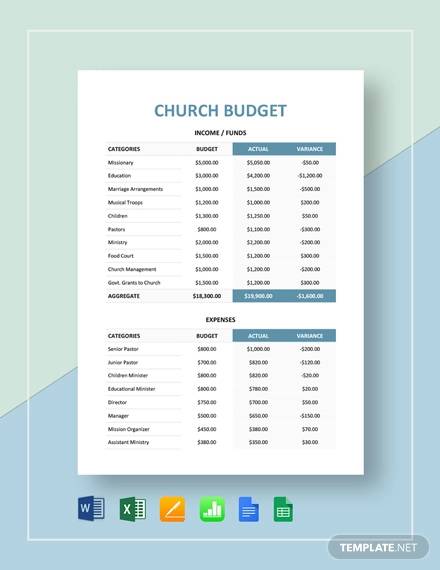
Ever wondered whether every dollar your congregation drops into the offering plate could sing a hymn of hope? Crafting a church budget is more than balancing digits—it’s an act of stewardship that intertwines spiritual mission with practical realities. The challenge lies in weaving a financial tapestry that honors the sacred commitments while remaining agile enough to respond to unexpected twists.
Discerning the Dual Purpose: Spiritual Mission and Fiscal Stewardship
At its core, a church budget is a covenant between the faith community and its vision. It translates the church’s core values—worship, outreach, education, and fellowship—into monetary terms. Fiscal stewardship, therefore, is not merely a bookkeeping exercise; it is a liturgical act of obedience. When the budget reflects the heartbeat of the congregation, it becomes a living document that guides decisions, fuels mission, and nurtures trust.
Cataloguing Divine Provisions: Income Sources
The first step in building a robust budget is an exhaustive inventory of revenue streams. Traditional tithes and spontaneous offerings form the cornerstone, yet modern churches often draw from diversified channels: rental income from facility usage, grant funding for community projects, fundraising events, and even digital giving platforms. Each source represents a monetary covenant—a promise of support that must be recorded, projected, and celebrated.
Mapping the Liturgical Ledger: Expense Categories
Just as a worship service follows an order, the budget must delineate expense categories with precision. Typical headings include personnel compensation, facility maintenance, utilities, worship supplies, educational curricula, community outreach, missions, and administrative overhead. Assigning each expense to a specific “liturgical line” ensures clarity and helps the congregation see how each dollar fuels the church’s ministries.
Harmonizing Priorities: Allocation Strategies
With income and expenses outlined, the next challenge is to allocate resources in a way that respects the church’s strategic priorities. A strategic prioritization matrix can rank initiatives by impact and feasibility. For example, if disciple‑making is the highest mission, a larger slice of the budget may be funneled into small‑group curricula, while a modest reserve is earmarked for building repairs. This balancing act mirrors the harmony of a choir—each voice must be heard, yet the whole must stay cohesive.
Buffering the Unforeseen: The Reserve Fund
Even the most carefully crafted plans encounter stormy weather. Establishing a contingency reserve—typically 5‑10 % of the total budget—acts as a financial umbrella. This reserve safeguards against unexpected repairs, sudden drops in giving, or emergent community needs. The reserve transforms a static budget into a dynamic, resilient framework that can weather fiscal tempests without compromising core ministries.
Tracking the Pulse: Monitoring and Reporting
A budget is a living organism; it breathes when monitored consistently. Monthly variance reports compare actual receipts and disbursements against projected figures. Visual dashboards—simple charts displayed in the church lobby or shared via digital platforms—provide at‑a‑glance insights. Transparent reporting nurtures accountability and invites the congregation to celebrate successes or address shortfalls promptly.
Engaging the Flock: Community Involvement and Transparency
Budget creation should not be a secretive endeavor confined to the treasurer’s office. Involve lay leaders, ministry heads, and even newcomers in the conversation. Hosting a “budget listening night” where members can ask questions, suggest priorities, and

