

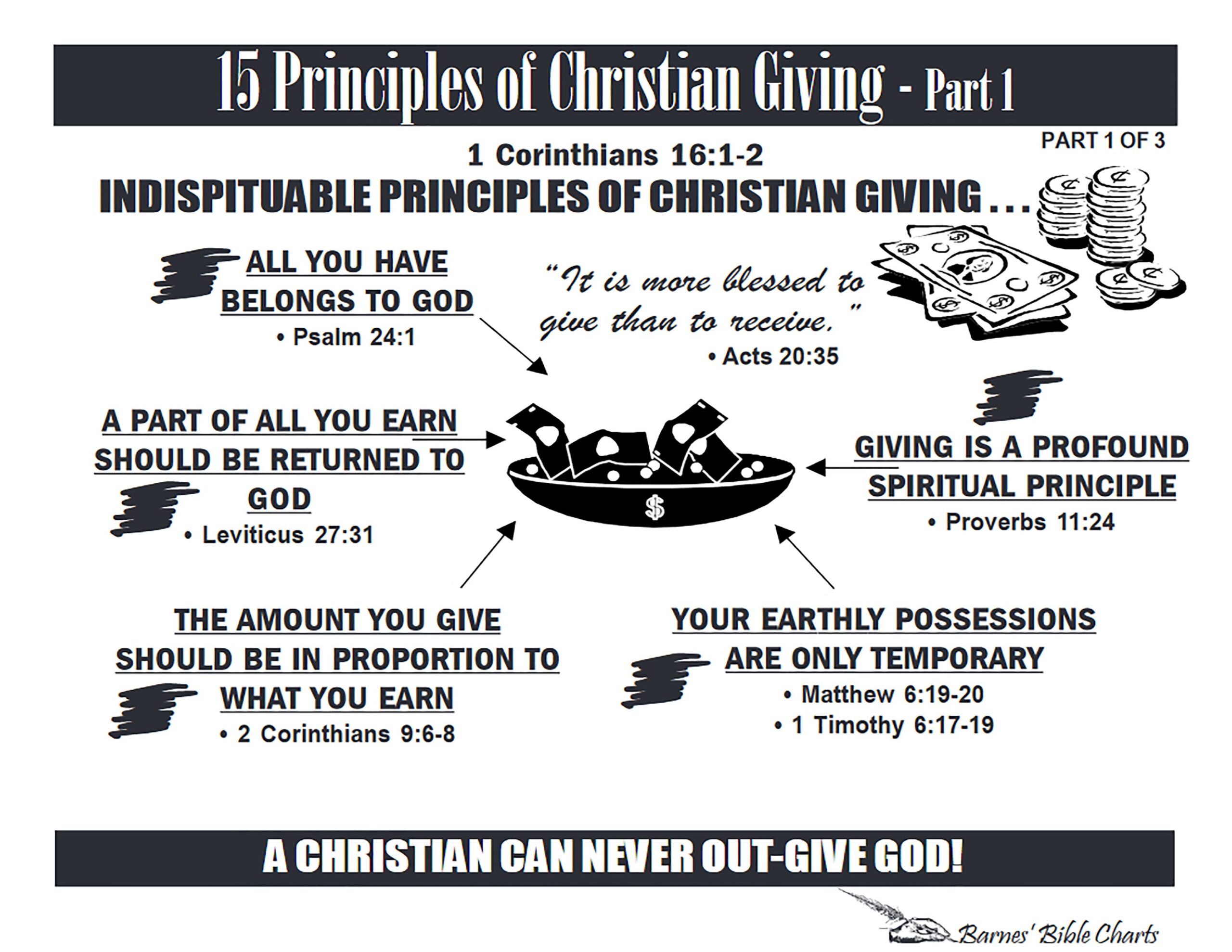
From the earliest breath of creation to the final echo of a disciple’s prayer, the act of giving pulses like a hidden river carving its way through the stone of human hearts. When we teach biblical principles of generosity, we are not merely dispensing rules; we are inviting learners into a narrative where the soul expands, the spirit rejoices, and the community flourishes. This guide unfolds a tapestry of Scripture, metaphor, and practical steps, all woven with a passionate tone that beckons every teacher to let the gospel of generosity ring clear.
The Biblical Heartbeat of Giving
Scripture portrays giving not as a mechanical transaction but as a relational heartbeat. Passages such as 2 Corinthians 9:7—“God loves a cheerful giver”—reveal that the motive behind the act matters more than the amount. The Hebrew word רָעָה (ra’ah), meaning “to shepherd,” underscores a caretaking dimension, reminding teachers that generosity is a stewardship of the divine flock. By anchoring lessons in this heart‑centered perspective, instructors invite participants to feel the pulse of God’s grace flowing through their own generosity.
Old Testament Foundations: Tithes, Offerings, and the Jubilee
The Old Testament frames giving as a covenantal rhythm. The tithe, a tenth of the harvest, was not a mere tax but a celebration of God’s provision (Leviticus 27:30). The concept of the Jubilee—land resting, debts released—offers a striking metaphor of resetting the economic slate. When teaching, highlight the cyclical nature of these practices: a rhythm that restores balance, redistributes blessings, and models divine justice. Use the vivid imagery of “fields left fallow to breathe new life” to illustrate how generosity can rejuvenate a community.
New Testament Principles: Grace, Sacrifice, and Cheerful Giving
The New Testament amplifies the principle of cheerful giving through Christ’s ultimate sacrifice. In John 3:16, the divine Gift—Jesus—models a generosity that costs everything. Teachers can draw a parallel between the costly offering of the cross and the cheerful, voluntary offerings of believers. The apostle Paul’s admonition in 2 Corinthians 9:6–11 illustrates the principle of sowing sparingly versus reaping bountifully, encouraging participants to envision their contributions as seeds that sprout in the soil of God’s kingdom.
The Metaphor of the Overflowing Vessel
Imagine a vessel, cracked and empty, that gradually fills as believers pour out their resources—and then, astonishingly, begins to overflow. This metaphor captures the paradox of biblical giving: the more we give, the more we are replenished. The vessel’s overflow symbolises the abundant life promised in John 10:10. In teaching, let this image guide the lesson: each act of generosity repairs the vessel, allowing grace to stream out and refill it with blessings beyond measure.
Practical Strategies for Teaching Generosity
Effective instruction blends doctrine with lived experience. Begin with a narrative hook—an anecdote of a historic giving moment, perhaps the early church’s shared meals in Acts 2:44‑45. Then transition to interactive elements: role‑play scenarios where participants decide how to allocate limited resources among urgent needs. Incorporate visual aids such as a “giving tree” where each leaf represents a donor’s contribution, reinforcing the idea that collective foliage forms a robust canopy.
Storytelling: The Parable of the Sower and the Talents
Stories embed truth deeper than abstract statements. Recount the Parable of the Sower (Matthew 13:1‑9) and link it to the parable of the Talents (Matthew 25:14‑30): each seed or talent represents a resource entrusted to believers. When the sower scatters seed, it may fall on barren ground, but when it lands on fertile soil, it yields a hundredfold. In teaching, encourage learners to identify their own “soil”—the conditions that either foster or hinder generous response.
Interactive Learning Activities
Hands‑on activities cement theoretical concepts. Conduct a “Generosity Lab” where participants allocate mock budget items, then reflect on the emotional resonance of each decision. Another activity, “The Giving Circle,” invites a small group to pool resources for a community project, after which they discuss how the experience mirrored Paul’s collection for Jerusalem (cf. Romans 15:25‑27). Debriefing questions such as “What fears arose?” or “How did gratitude shift your perspective?” stimulate personal introspection.
Creating a Culture of Generosity Within Community
Teaching does not end in the classroom; it must permeate community life. Model generosity publicly—share testimonies of personal giving, celebrate milestones where collective contributions made a difference. Implement a “Generosity Charter,” a written covenant that outlines shared values, accountability measures, and creative ways members can contribute. This charter acts as

