

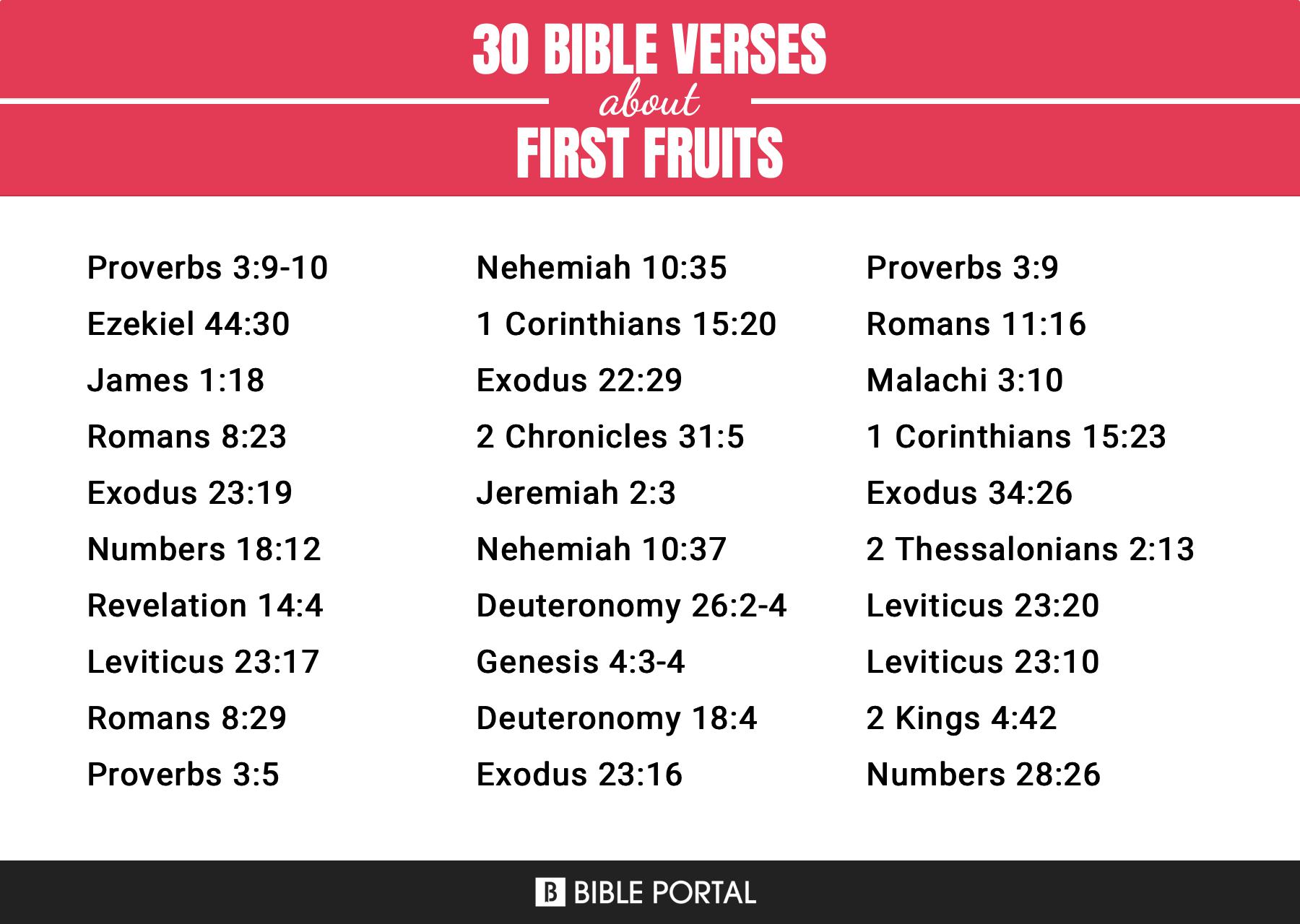
The concept of “firstfruits” in the Bible is a beautiful tapestry woven into the fabric of ancient agricultural practices and spiritual symbolism. At its core, the term refers to the initial harvest reaped from the land, an offering that reflects gratitude and reverence for God’s providence. As we delve into its multifarious meanings, we uncover layers of significance that transcend mere ritual, reaching into the very heart of faith and community.
In the Old Testament, firstfruits are meticulously prescribed in various passages. The Israelites were commanded to bring the first ripe produce of their fields to the Temple, a gesture symbolizing recognition of God as the originator of all blessings. This act is not merely a transactional exchange; it is a profound act of worship and acknowledgment. Picture farmers, with calloused hands and hopeful hearts, presenting their yield—their labor, dreams, and sustenance—before the Divine. It becomes a ritual of trust, a tangible expression of faith that God will provide not only once but continually.
There’s a whimsical poetry in the timing of this offering. Typically associated with the feast of Pentecost, the anticipation surrounding the first harvest reflects a symbiotic relationship with the Earth. As the season shifts and crops are brought forth, so too do celebrations arise, infused with joy and communal spirit. This cyclical rhythm of planting, cultivating, and harvesting underscores a theological theme: every gift is a divine gift, and gratitude is an indispensable response.
Moreover, firstfruits extend beyond agricultural symbolism. The New Testament imbues the term with richer meaning, particularly in the context of Christ’s resurrection. The Apostle Paul refers to Jesus as the “firstfruits” of those who have died, illuminating the pivotal connection between agricultural concepts and spiritual resurrection. This metaphor unravels the narrative of hope; just as the first grain appears in spring, heralding the promise of a full harvest, Christ’s resurrection signals the promise of eternal life for believers. This breathtaking allusion elevates the concept from the mundane to the metaphysical, instilling it with a profundity that resonates through centuries.
It is pertinent, then, to reflect on the implications of this biblical notion in contemporary contexts. In a world increasingly dominated by consumerism, the practice of recognizing firstfruits becomes a countercultural act of thanksgiving. When individuals offer the first of their earnings or resources—whether time, talent, or treasure—they embody a spirit of surrender, reshaping societal norms around ownership and abundance. The modern-day act of giving can reclaim the scarred earth of greed through acts of kindness, echoing ancient traditions while fostering connection in community.
Thus, the narrative of firstfruits invites introspection and challenges believers to consider the posture of their hearts. Are we inclined to offer our best? The metaphor extends beyond the material realm, inviting a holistic approach to life and faith. It invites individuals to present the “firstfruits” of their character—those qualities that mirror divine grace, such as love, patience, and kindness. In essence, it implores us to cultivate a life of intentionality, whereby our actions become a manifestation of our gratitude.
In conclusion, the biblical concept of firstfruits is a rich metaphor, reflecting not only the agricultural roots of ancient Israel but also the profound spiritual truths that continue to flourish today. It teaches the invaluable lesson of offering one’s best and recognizing the sacred nature of all that we possess. As these ancient rituals blend seamlessly with modern applications, they beckon us toward a life marked by gratitude, community, and enduring faith—a life that is not just lived, but celebrated.

