

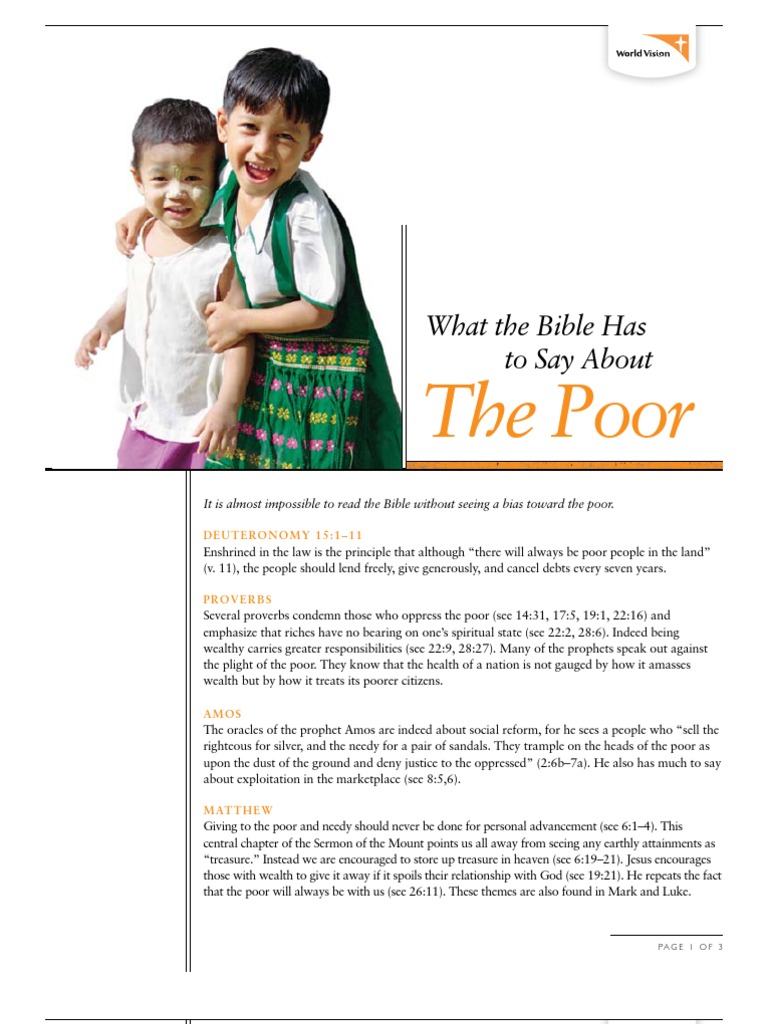
The Bible, a profound repository of spiritual and moral guidance, addresses the plight of the poor with remarkable frequency and fervor. This attention is not merely a nod to social justice; it unveils a deeper theological and ethical discourse concerning humanity. The narrative of poverty extends beyond mere economic status; it delves into issues of identity, dignity, and the divine expectation of compassion.
First and foremost, the Old Testament articulates a mandate for the Israelites to care for the disenfranchised. With astute poignancy, the scriptures delineate the welfare of the poor as a sacred obligation, stitched intricately into the fabric of societal conduct. In Leviticus 19:9-10, a directive emerges: “When you reap the harvest of your land, do not reap to the very edges of your field or gather the gleanings of your harvest. Do not go over your vineyard a second time or pick

